Mr Selous, I presume?

Mr Selous, I presume?

For some reason, when the infamous H.M. Stanley uttered the words ‘Dr Livingstone, I presume?’ upon finding the famed explorer and missionary in Ujiji after an epic 8-month search through central Africa, he immortalised the now-famous line. Except that Mr Stanley most likely never said it at all. History has shown that hunters, explorers and adventurers of old sometimes added more than a little flair to their tales and journals. In fact, they might have been on the border of being rather shady characters, like the ivory hunter Bvekenya Barnard who helped give Crook’s Corner its name in the Pafuri area of South Africa. Or Burton and Speke with their public post-expedition fallout about who really found the source of the Nile. Despite this, there is no denying that all these rugged men lived extraordinary lives in Africa and saw incredible things during times that will never be again.

One of the more well-known big game hunters, explorers and authors was F.C. Selous. His fame did not necessarily relate to his hunting prowess, but rather to the fact that he published his remarkable writings widely at a time when few hunters in Southern Africa did so. In fact, he learnt the trade from much more legendary hunters such as Jan Viljoen who sadly did not commit much of their adventures to paper. Selous hunted during the late 1800s in Southern Africa and the Congo basin and in one of his books he vividly describes his adventures and route up from South Africa to Victoria Falls and the Chobe River.
Gallery background
Gemsbok / Kgalagadi

When we ventured North towards the Falls about 150 years later, it was not to find riches in ivory, but definitely to seek adventure – much like Selous. It thus made sense to look for the trail he and others like him most likely followed, as Botswana’s Northeast corner is an area of true wilderness. Enter the hunters road – whispered about in hushed tones around overlanding campfires and even marked Enter at Own Risk on the Tracks4Africa maps. This off-the-radar public road runs all along the Zimbabwean border from Nata to Kazungula for about 300 km. It follows the old trading route that ivory hunters would have used, and runs through wild country on both sides. Hwange National Park borders most of the one side, and various forest reserves and unfenced wilderness the other.

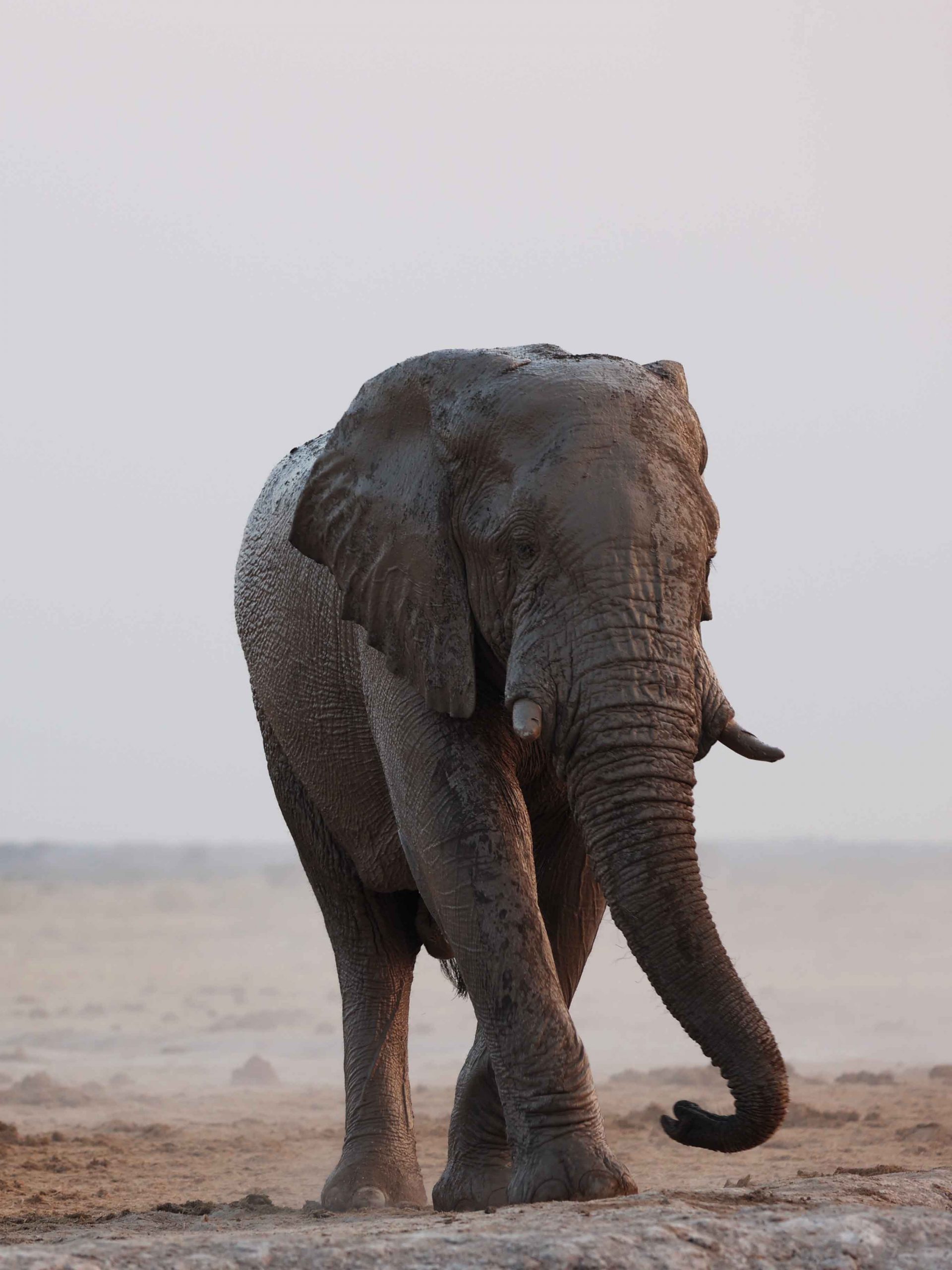
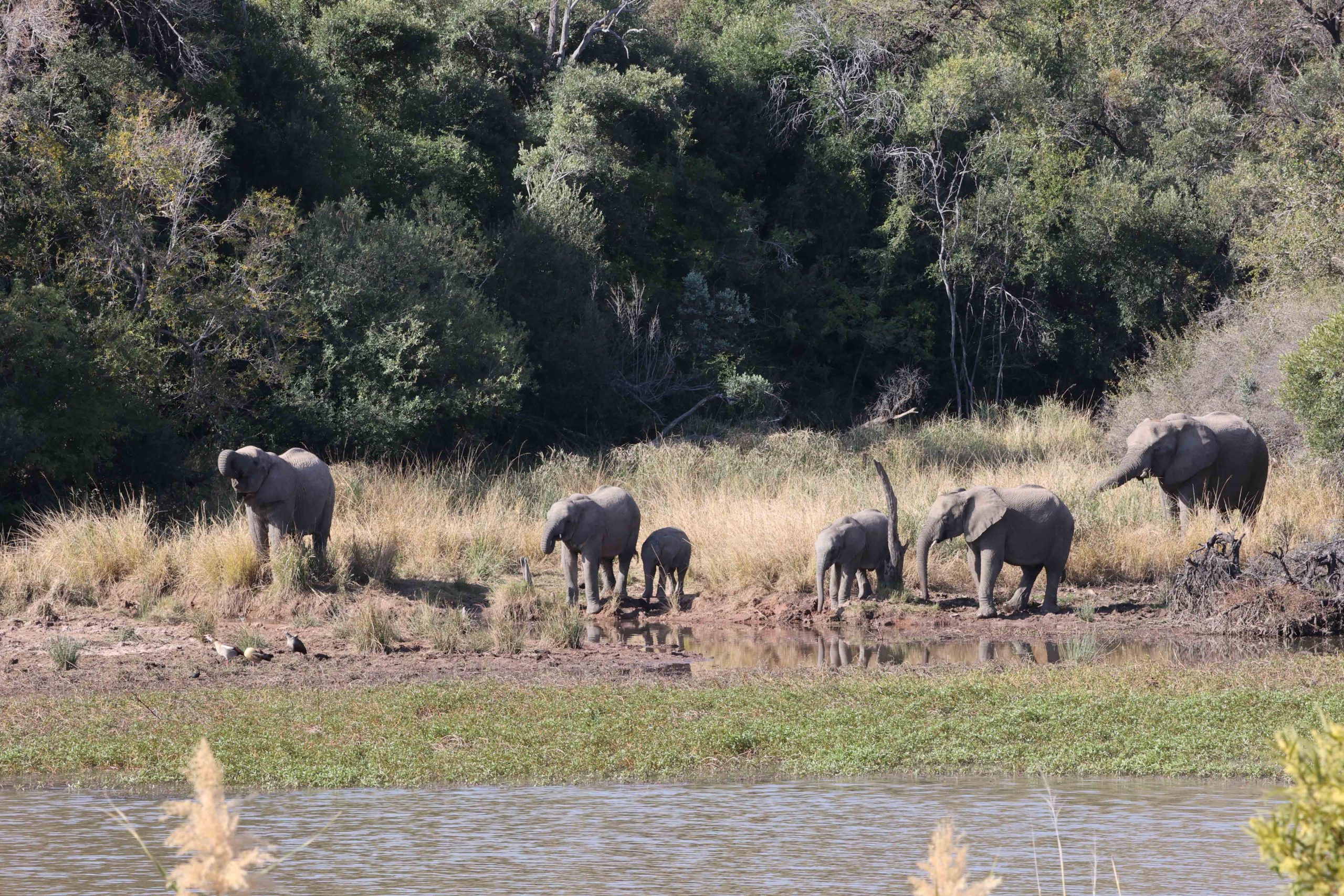
We drove this infamous road from South to North and quickly found adventure in the lowermost sections. The term is used loosely here, and can be translated as losing our way, taking a very disused patrol track we probably shouldn’t have, clearing the road of multiple overturned elephant trees, scratching Baloo properly with overgrown Mopanis, removing grasses and seeds from the radiator, and encountering a bachelor herd of elephant bulls that very likely don’t see humans often. And that was just the first hour or two.
Gallery background
Gemsbok / Kgalagadi

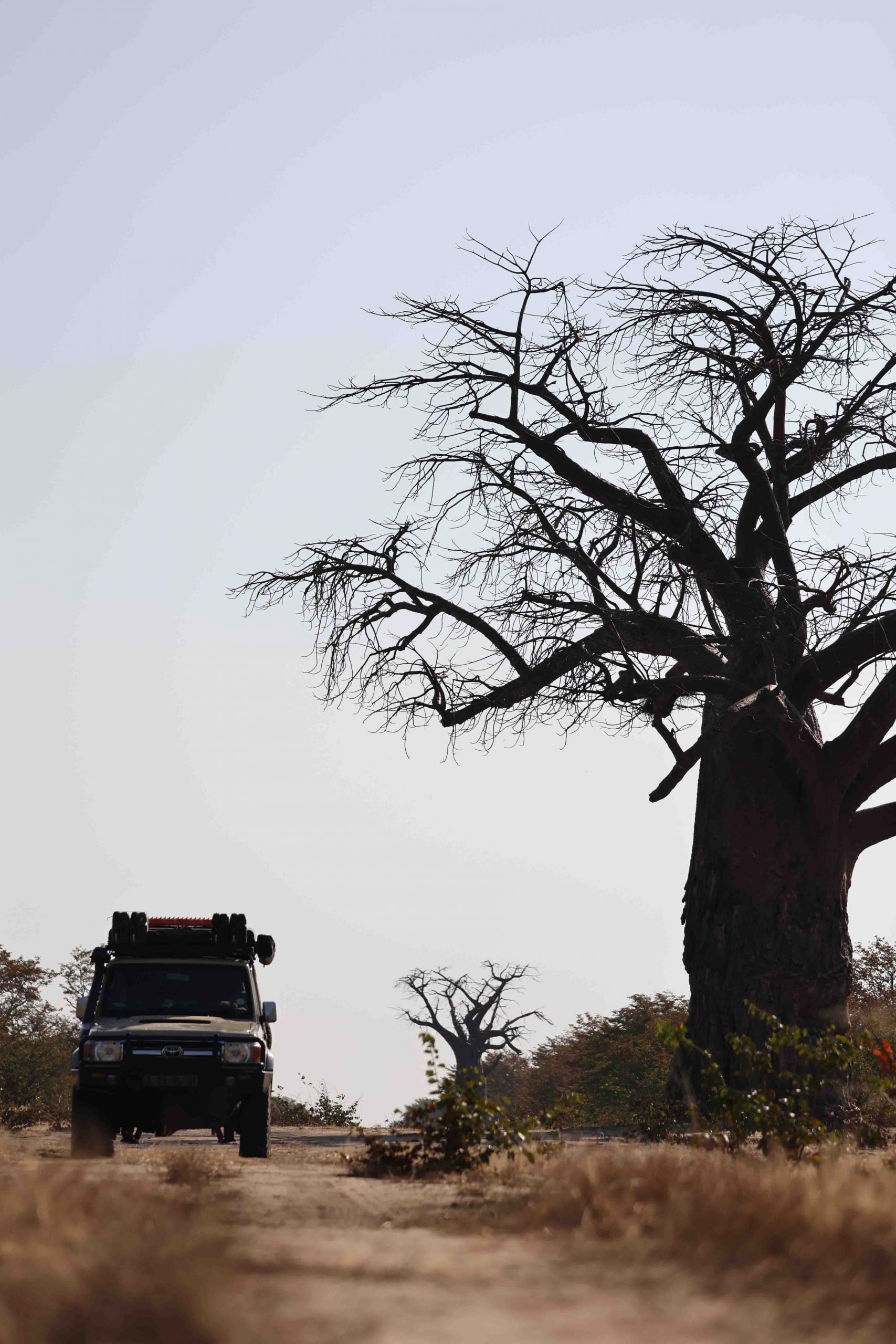
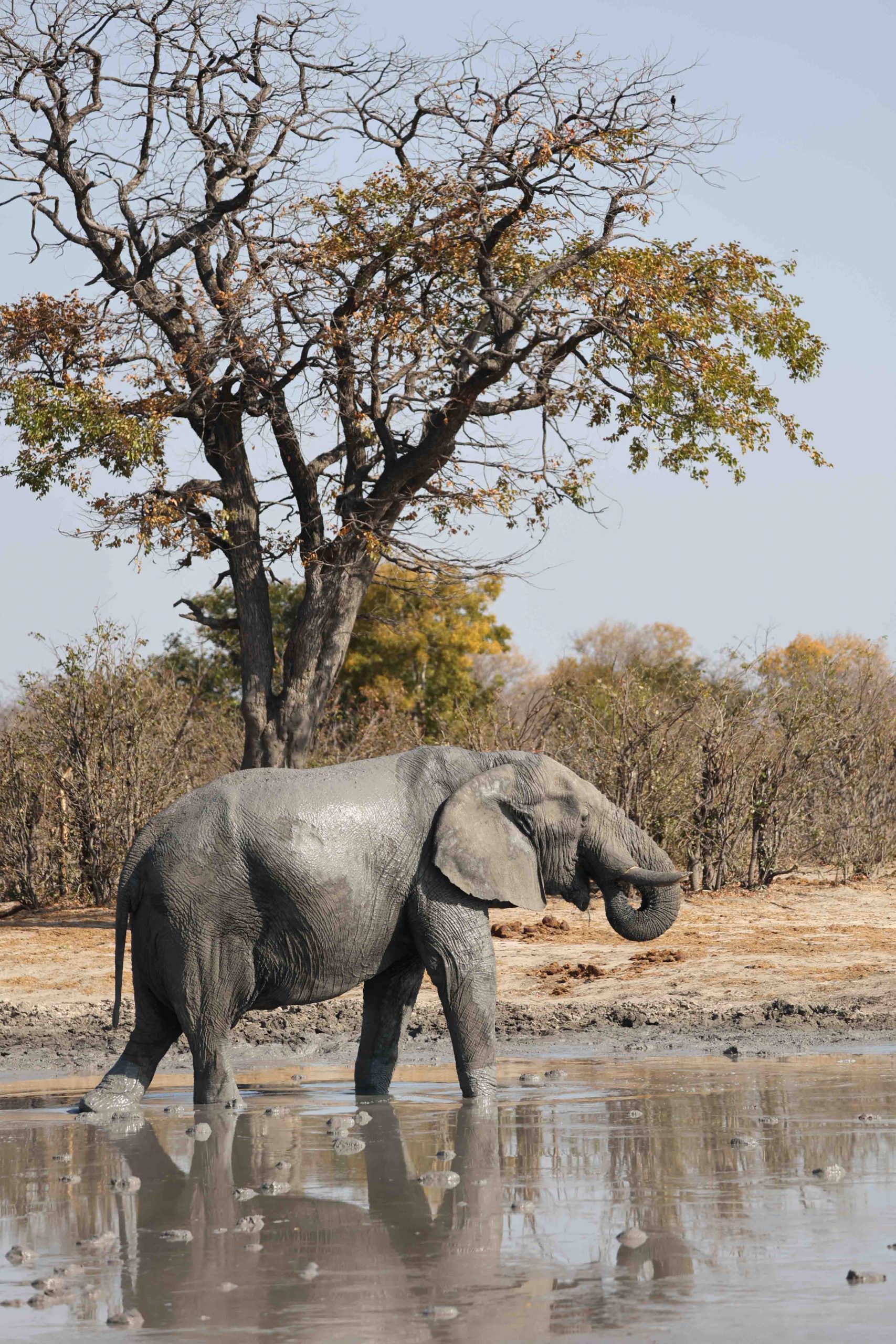
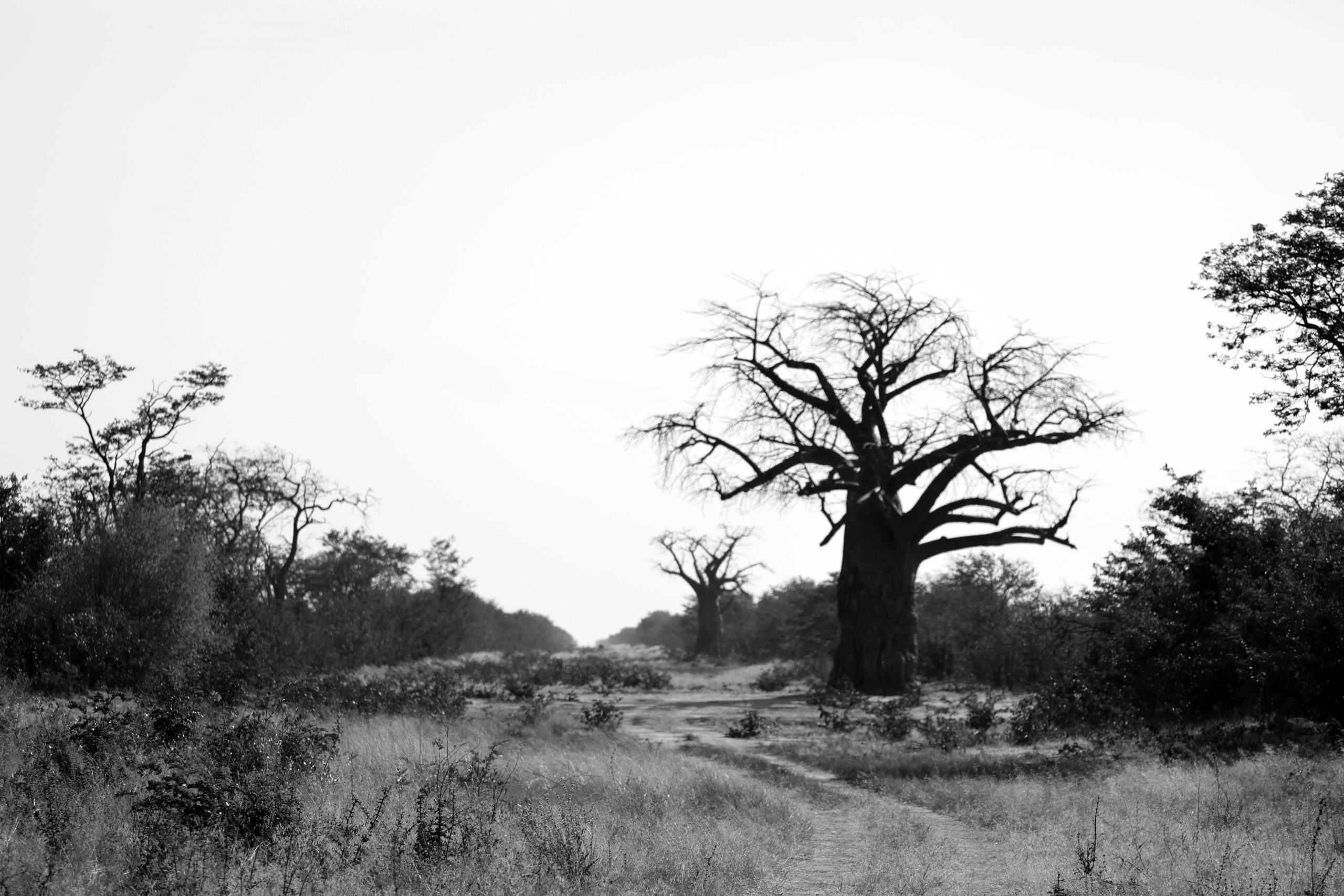
The serious bundu bashing sections thankfully passed, and from there the route mostly followed the border through a variety of stunning landscapes. Mopani forest gave way to Baobab-studded bushveld, countless Rhodesian teaks and grassy marshlands with dry black cotton soil. These areas were tough enough on the suspension when dry, and surely renders this road impassable in the wet season. Wildlife wonders abounded – we saw plains game, herds of waterhole elephants and even sable. Birding highlights included ground hornbills, a shikra, Meyer’s parrots and various shrikes and rollers.

For the record, since some folks seem to make up their own rules, no – you may not wild camp on this road. Apart from the patrolling parks board vehicle that made sure we understood this, we did not encounter another human all day long. If you get stuck out here without proper preparation, you will be in a real pickle. It is one of those rare places that give you a very profound sense of lonely wilderness, and it was easy to pretend we were making our way instead in our ox wagon with Mr Selous two centuries ago – the road condition surely needed no imagination. Iron cooking pots dangling beneath the wagon (or an Engel fridge). Crates of salt, rice, and ammunition loaded on the back (or some Jerry cans of Diesel). Cloth and beads for trading packed away inside (or a credit card).
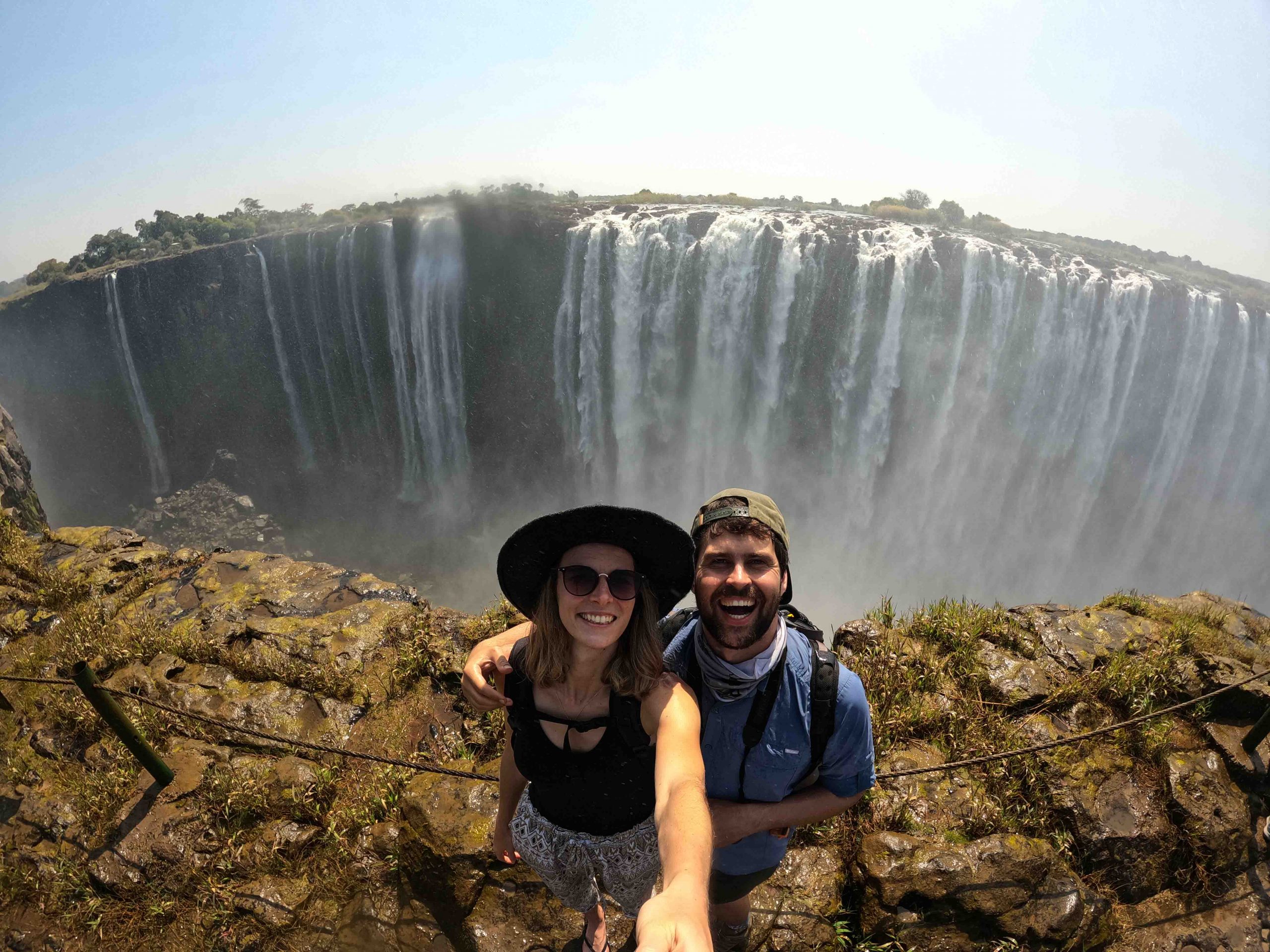
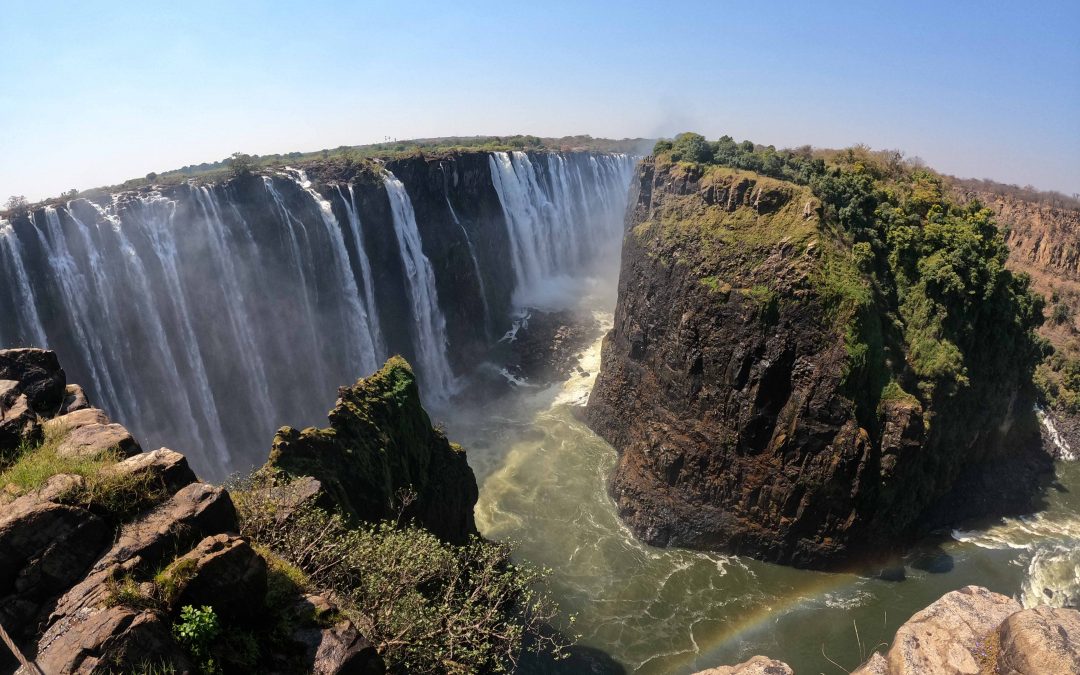
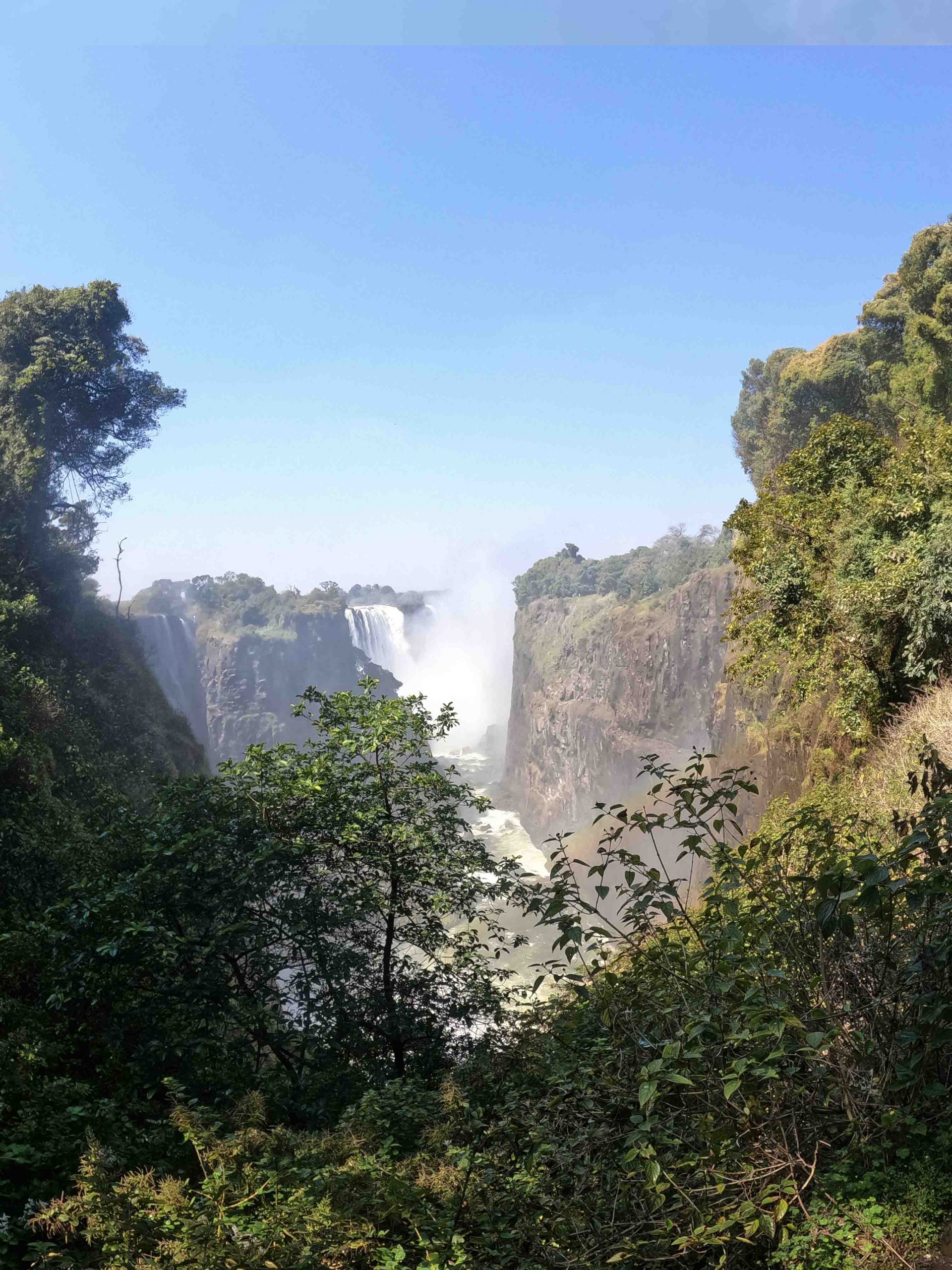
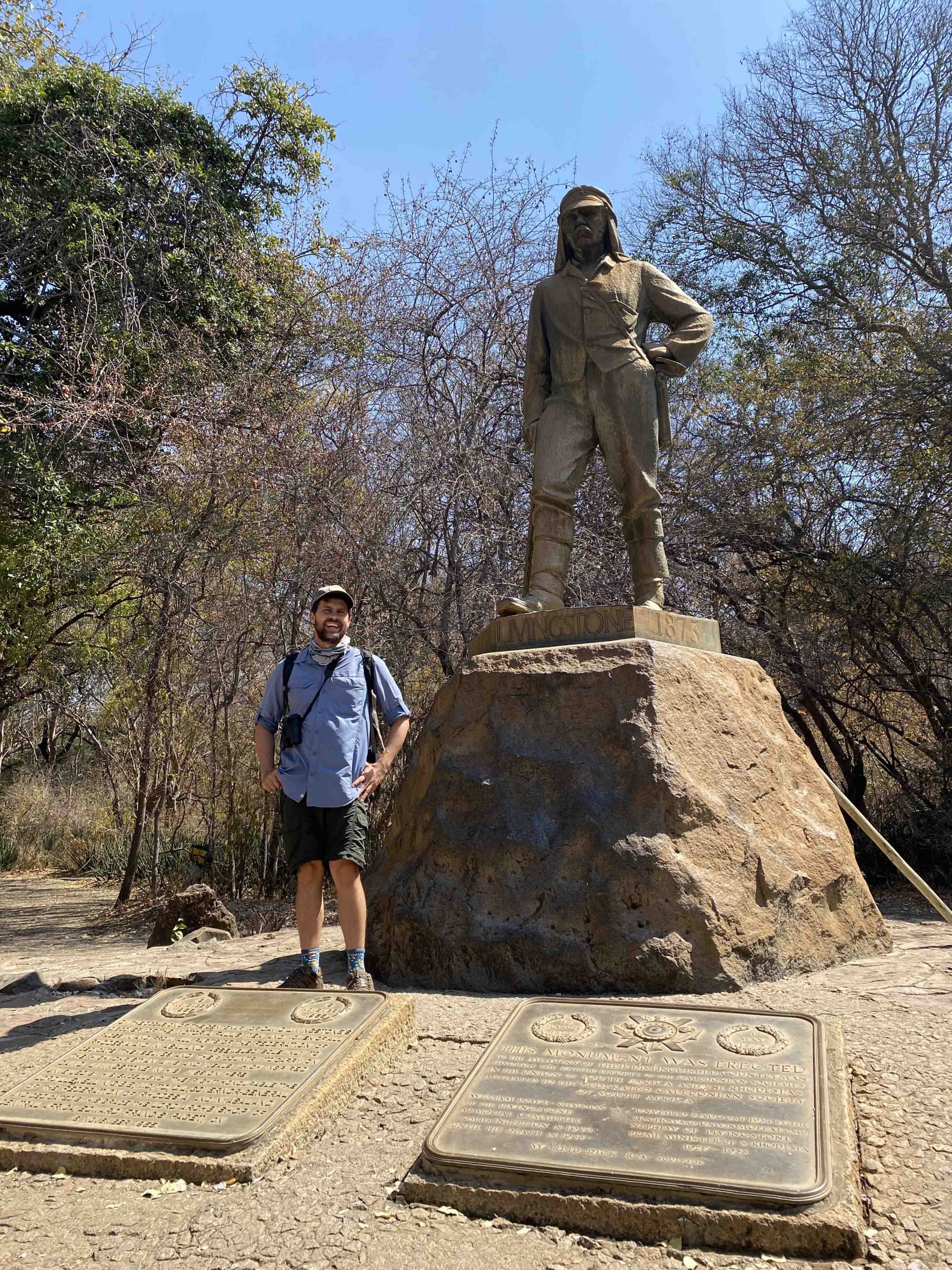
We arrived at Victoria Falls almost disappointed that the road and our game of make-believe was over. However, nothing can describe seeing Africa’s share of the seven natural world wonders for the first time. A spectacle in every sense of the word – from its immense scale and depth, to the rainy mist and the tropical smells of the forest surrounding this lush wonderland. Having breakfast at the Lookout Café must surely qualify as the grandest view for a coffee in the world, and a cold beer on the Vic Falls Hotel veranda speculating about the cost of the high tea is priceless. Our day spent here seriously whetted our appetite to return to Zimbabwe for much longer. 

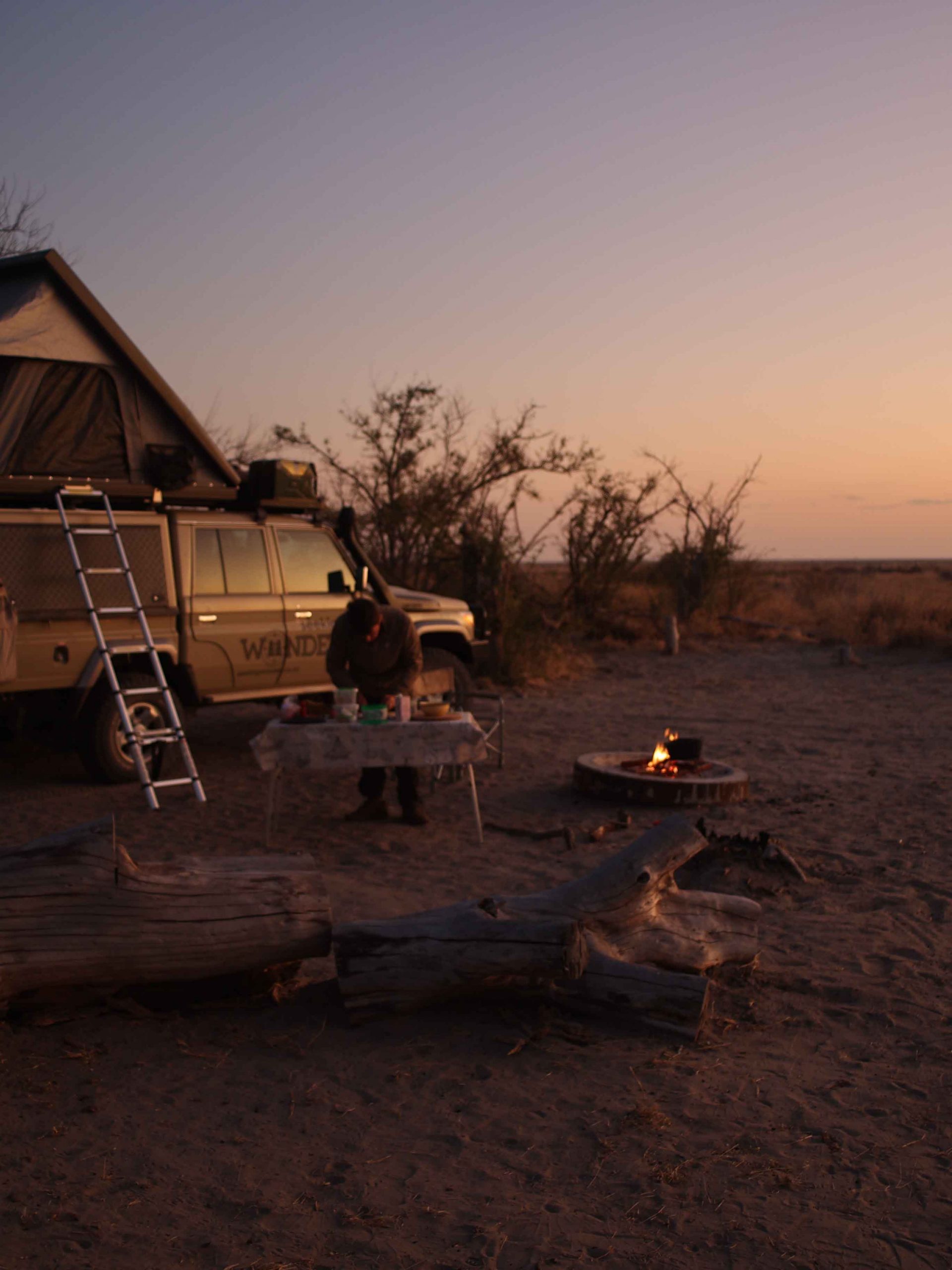
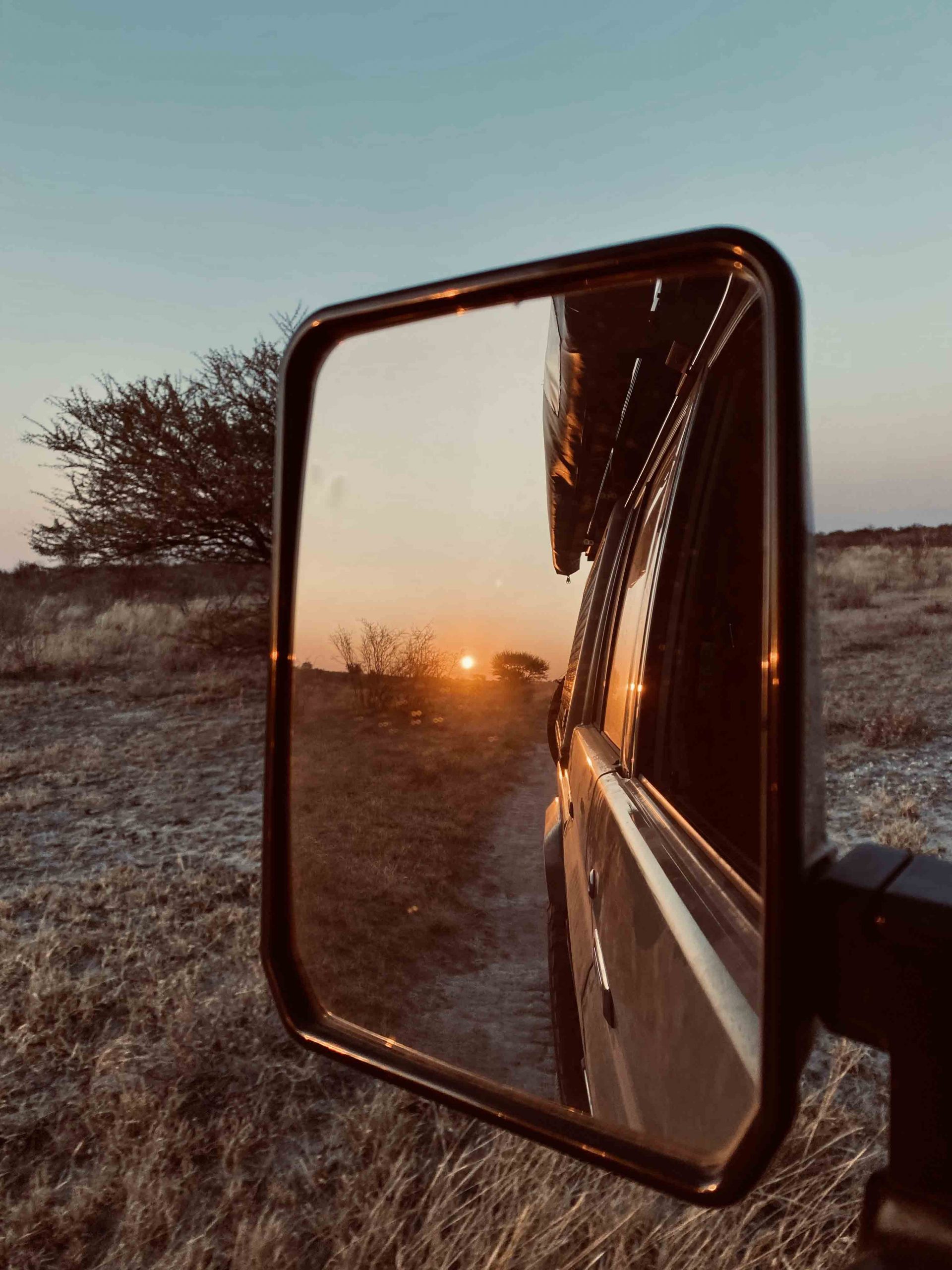
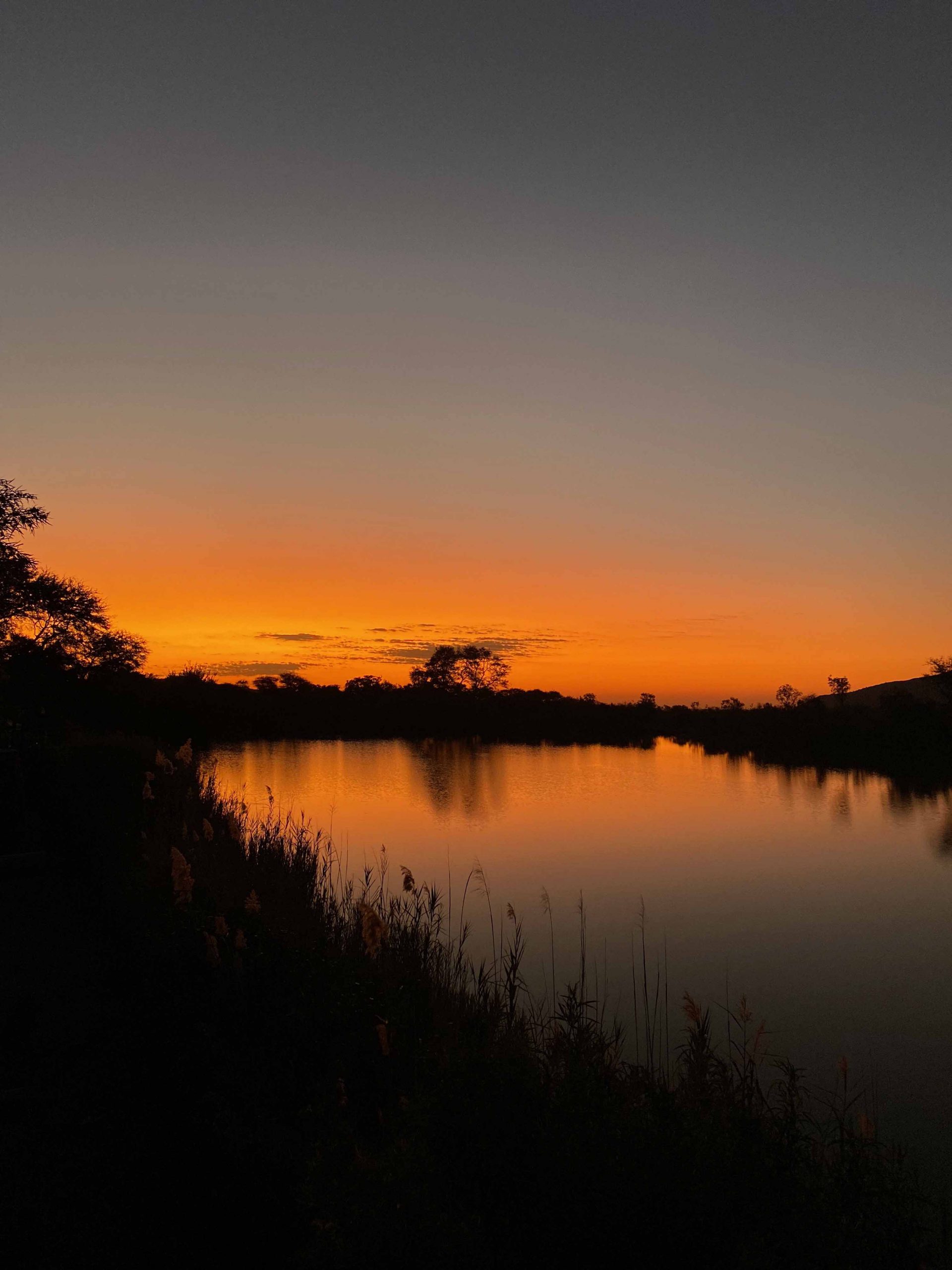
We drove into our campsite on the banks of the Chobe with the sun setting over the glistening water and I wondered whether perhaps you really needed to live centuries ago to experience extraordinary things in Africa. As I parked the Cruiser, I noticed there was a newcomer in the camp tonight. Faced away from us, an old man sat alone by his fire, smoking his worn-out pipe while gazing into the embers with the memory of a thousand adventures in his eyes and the peace of Africa in his heart. I quietly walked over to him and asked, ‘Mr Selous, I presume?’
Male lion / Kgalagadi
Agama / Kgalagadi
Pan Planning

Pan Planning

Fail to plan and plan to fail. A favourite exam-time saying. In general, we like to think we plan our adventures well. For the most part, we tend to err on the safe, left-brained, checklisted, homework-done side of trip planning. However, an exciting and sometimes sweaty palm-inducing part of African travel is that you simply cannot plan for everything on your spreadsheets and 4×4 community reads.

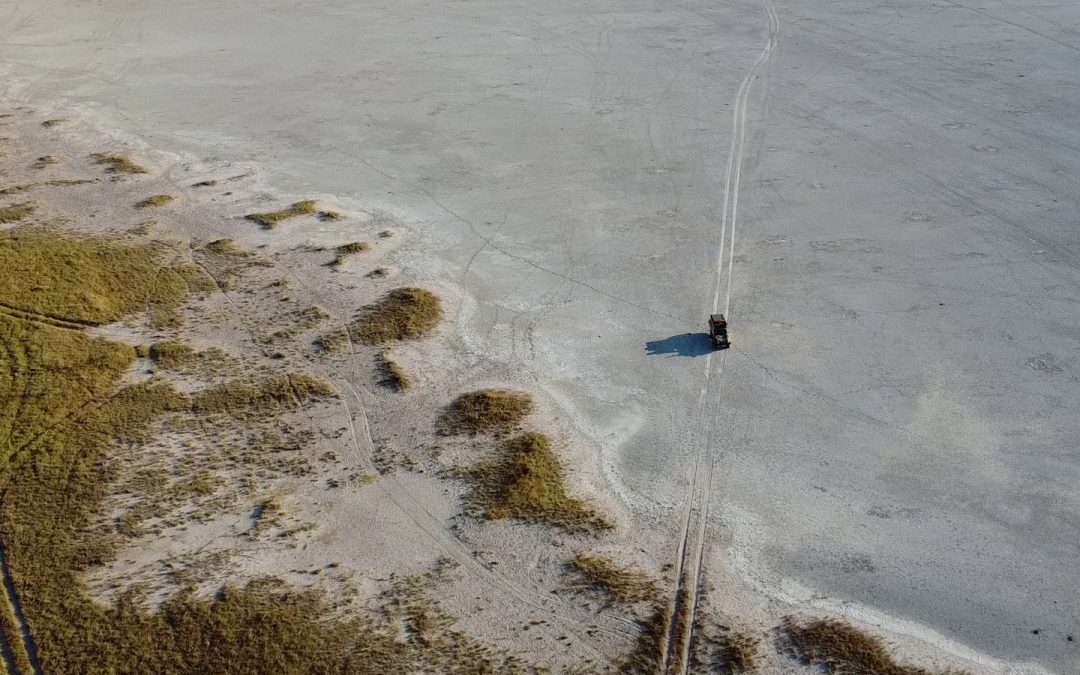
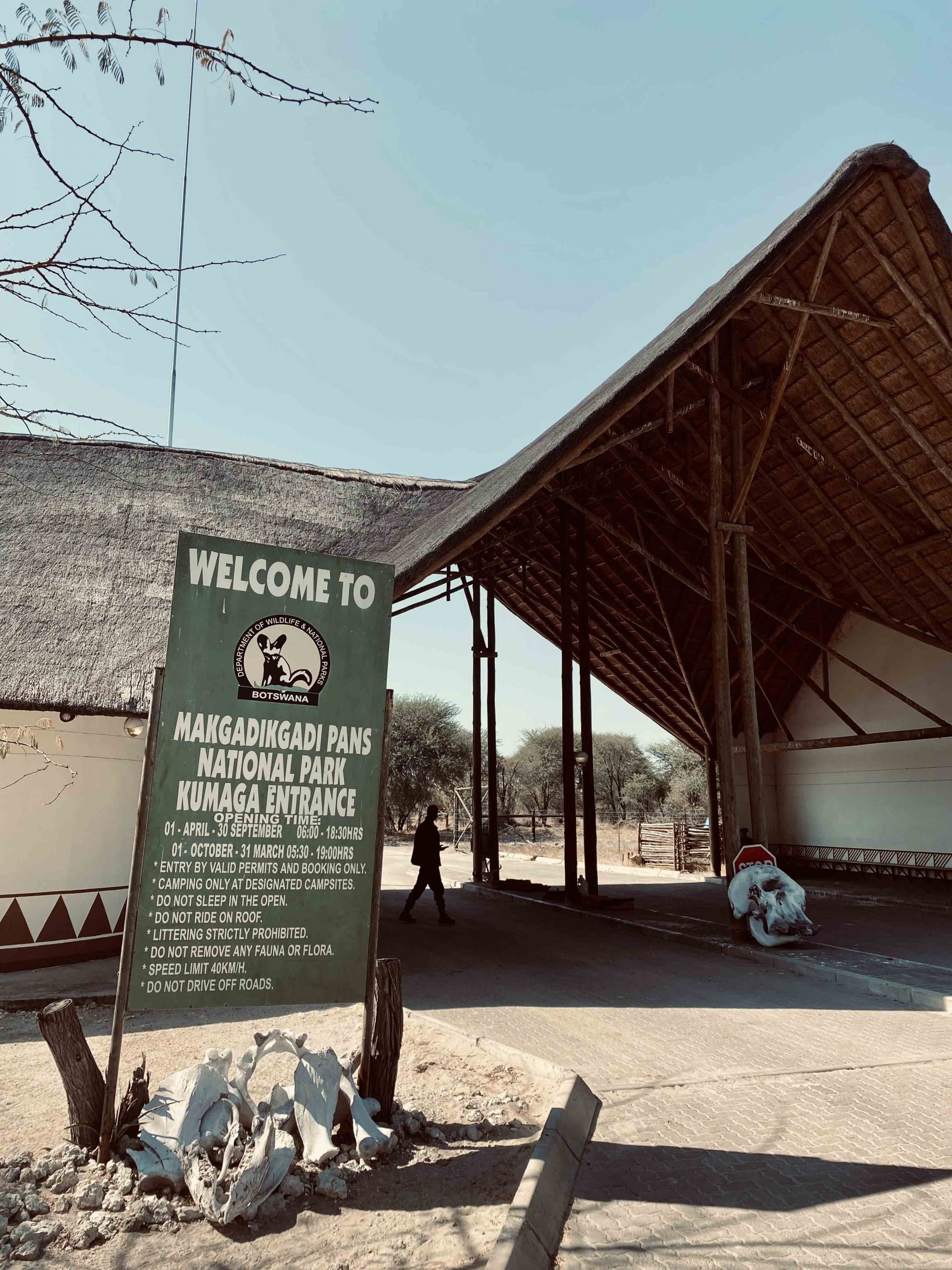
The Makgadikgadi National Park (NP) is situated in central Botswana, just Northeast of the Central Kalahari Game Reserve. Separated by a national road, the Nxai Pan NP is very close and these parks are often visited together. When we went there early August, we learnt a few things in situ that might help make an equally memorable trip for anyone thinking of heading this way.

Gallery background
Gemsbok / Kgalagadi

1. Shot left

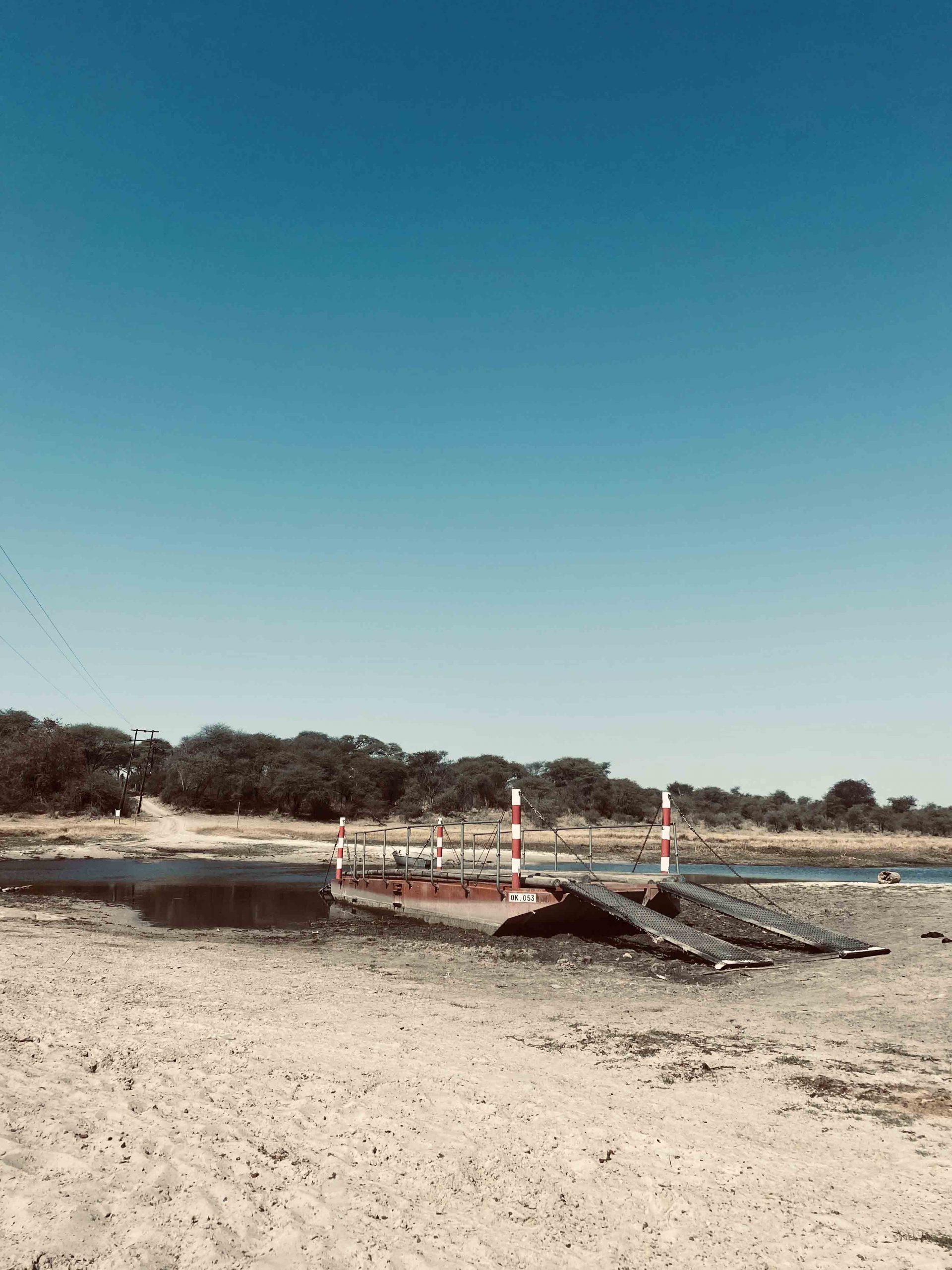
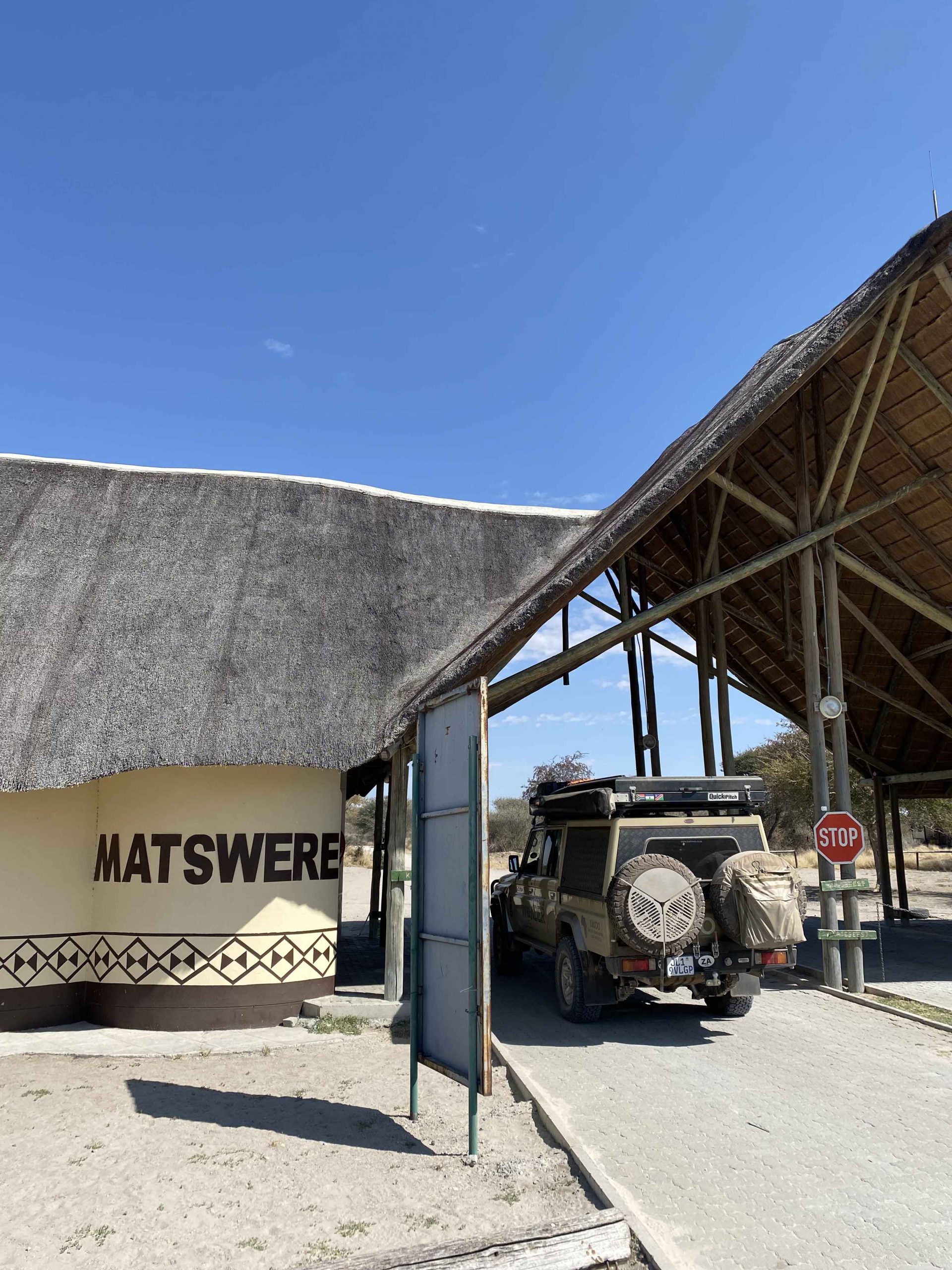
Coming from the South, one of the entrances to the Makgadikgadi NP is at Khumaga and to reach it, you have to cross the seasonal Boteti river. Most guidebooks will tell you there is a neat pont that ferries you and your trokkie across when there is water in the Boteti. In dry seasons you just drive through. Simple. What they don’t tell you is that should you arrive after a long wet season and happen to time your crossing the day after they stopped the pont operations, you are on your own. What we can confirm is that a) there are some obese crocodiles in this river and b) there are two tracks through the crossing: one left that looks deep, and one right that looks shallow. We chose to go right, and found a bull hippo-size depression in the middle of that crossing. What followed, more or less in order, were inappropriate language, scenes from Titanic, clenched ‘knuckles’, and baitfish in the intercooler (literally). In the simple words of the gate guard shortly thereafter: ‘Ah, you should have gone left’.

2. Sundowners with a zebra

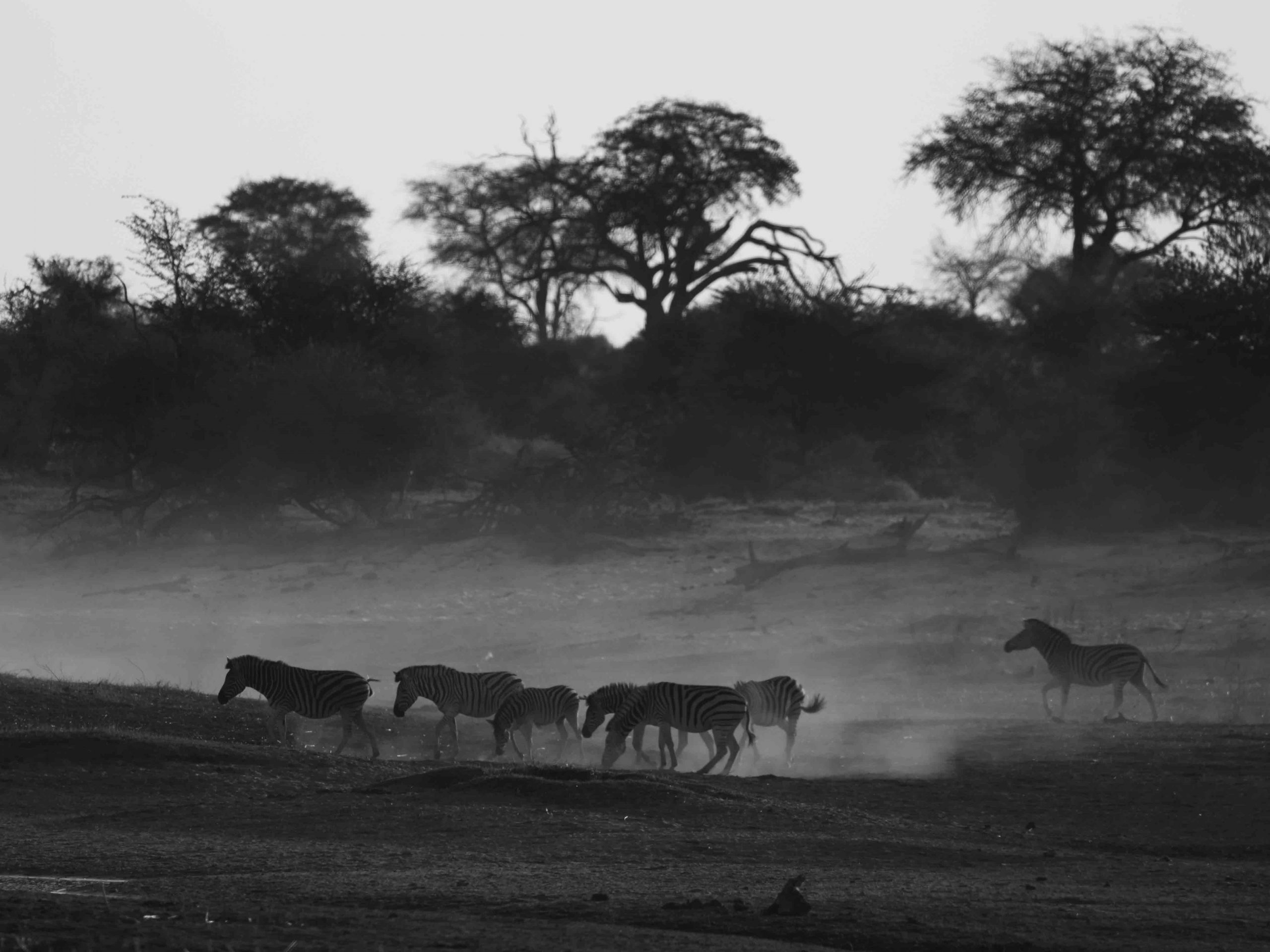
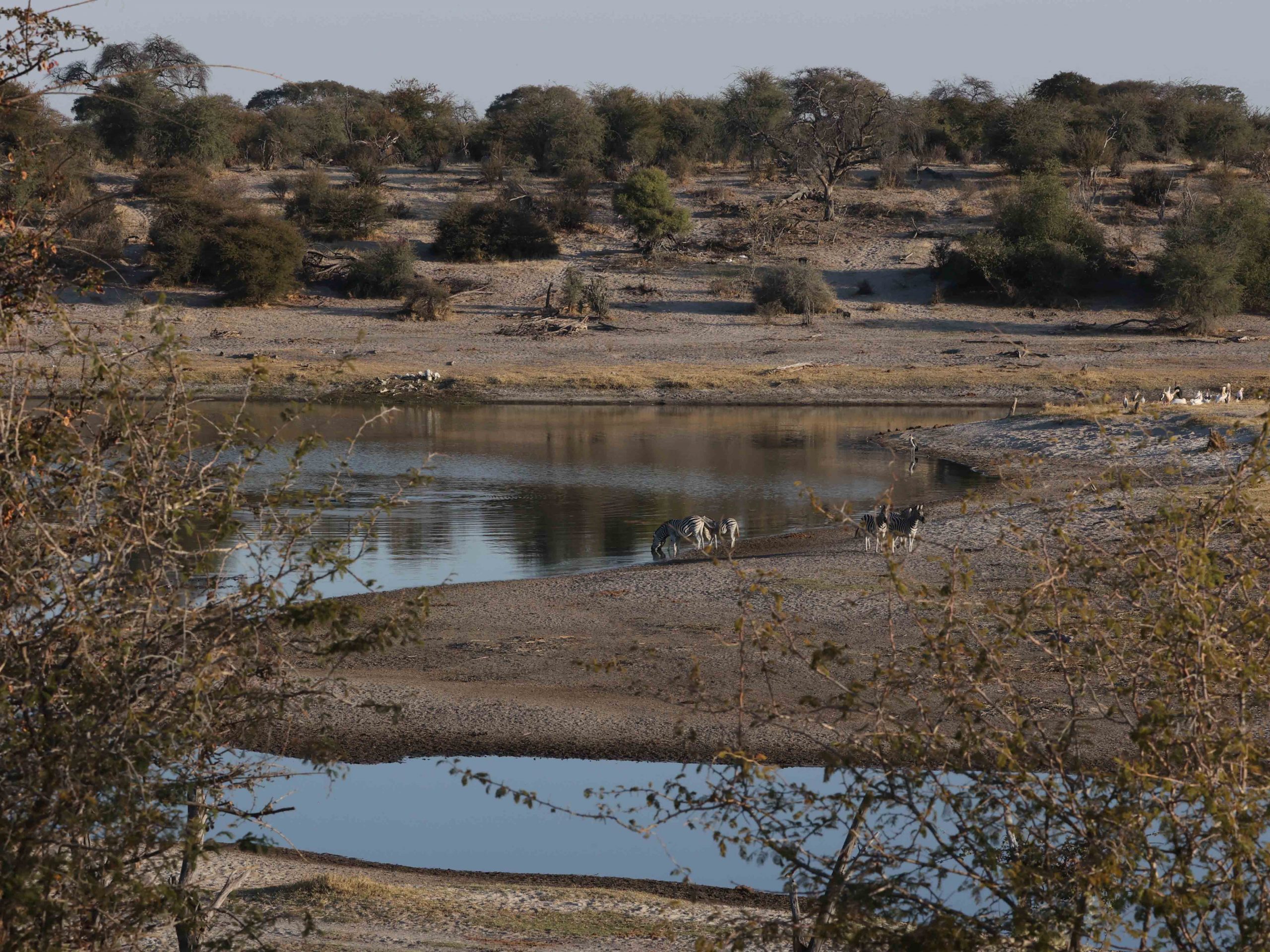
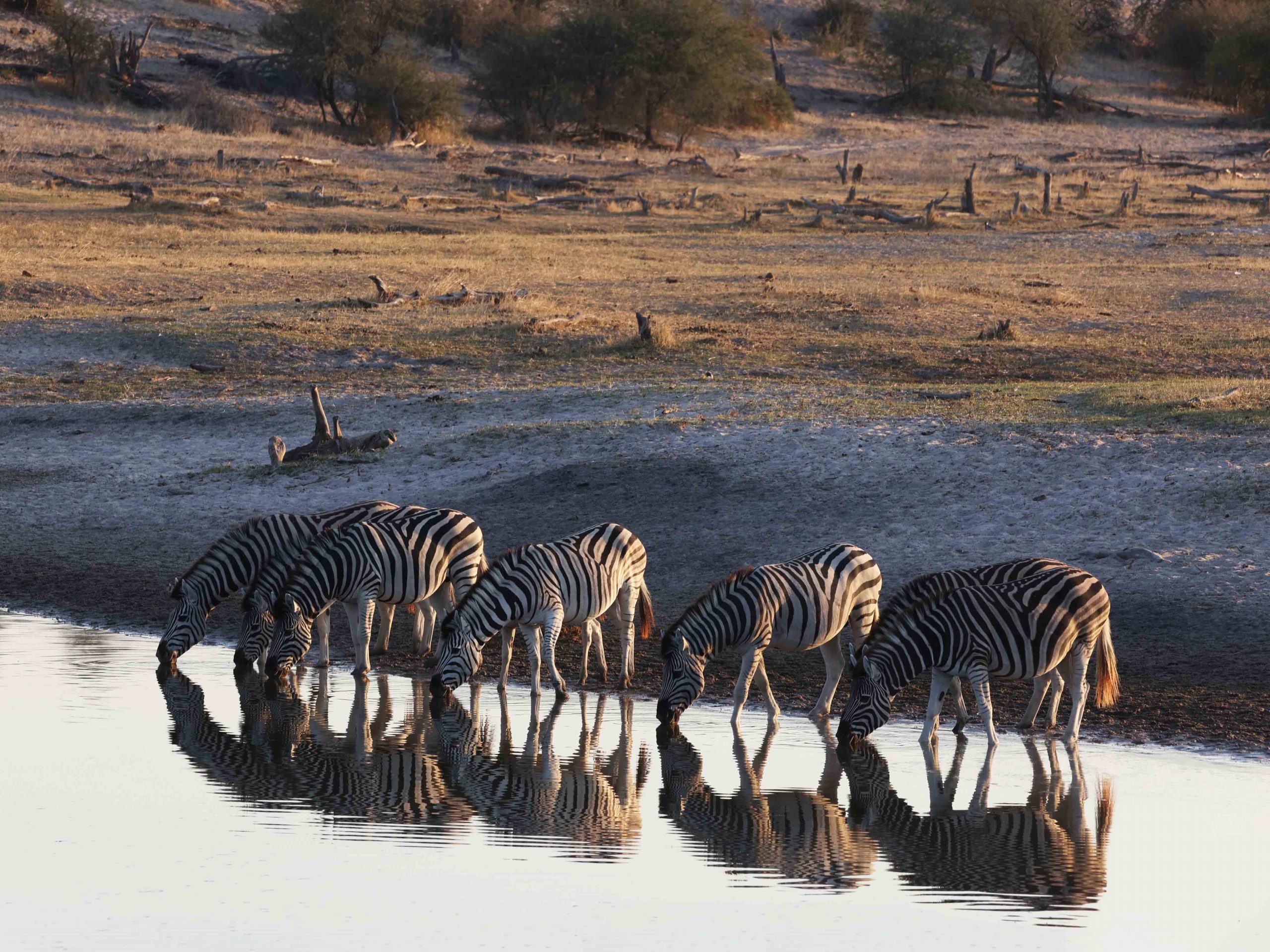
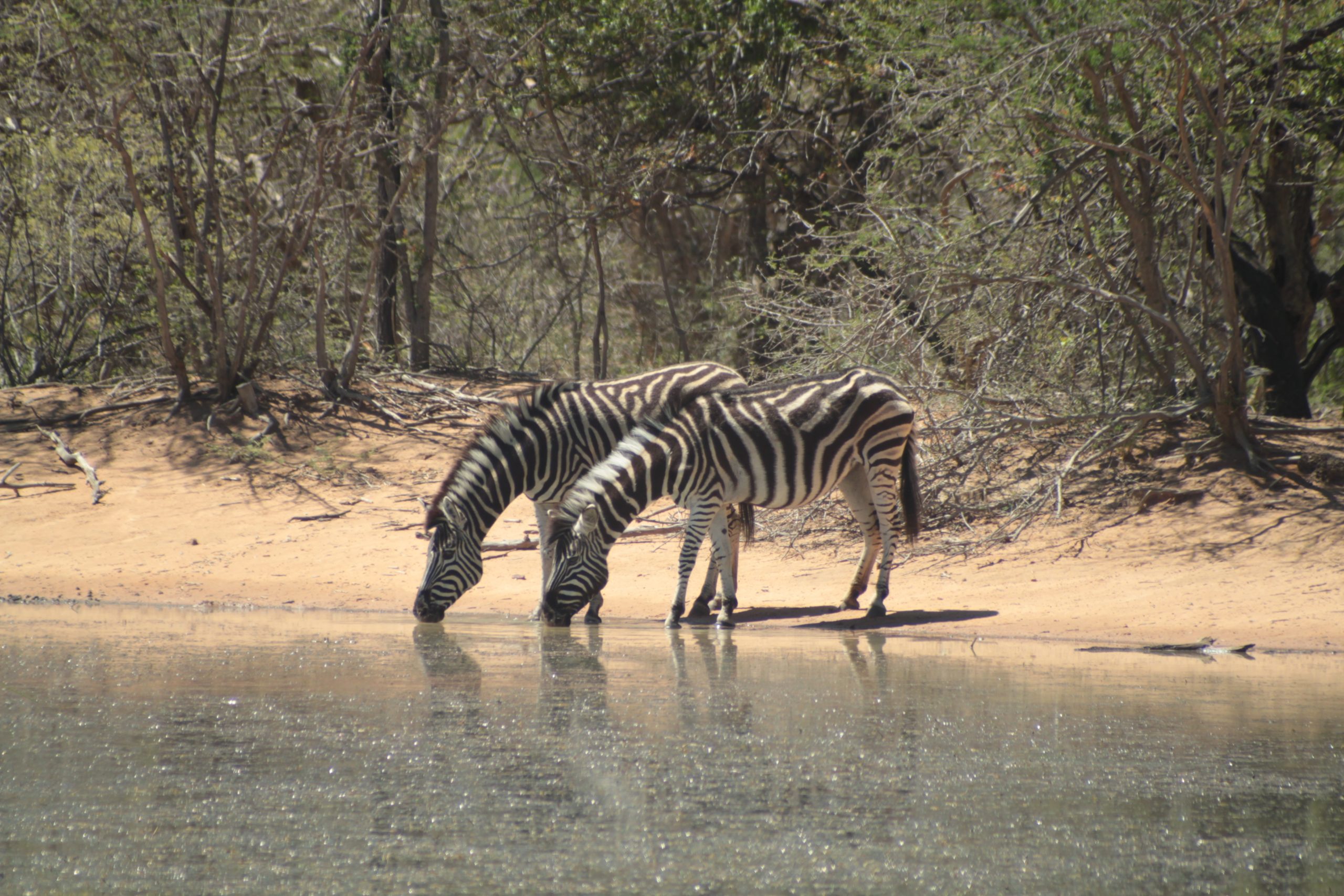
Khumaga campsite is situated on the Boteti river and this area is distinctly different from what we expected from a park with the word pan in it. This Western edge of the park is riverine bushveld and an interesting fact is that it plays host to a massive Zebra migration in favourable years. Along with various other water-dependent animals like elephants, these guys come down en masse in the afternoons for a drink in the river. There is a sand road that takes you down the bank to drive right in the riverbed, and it was a rare privilege to share this drive with hundreds of thirsty zebras kicking up golden-lined dust in the late afternoon.

Gallery background
Gemsbok / Kgalagadi

3. The hills are alive

Heading East toward the Ntetwe pan, the bushveld gives way to open grasslands that eventually becomes pans that once formed part of an ancient mega-lake. The grasslands stretch for as far as you can see and are studded with beautifully tall Mokolwane palms – a truly spectacular wilderness. There are two wild campsites and we stayed at Njuca Hills, raised on top of a little hill. Most visitors tend to overlook this area due to lower game densities, but really shouldn’t. We shared our home with a caracal whose tracks were all over the campsite. We baked late morning flapjacks overlooking millions of swaying grasses with a lone Gemsbok for company. We recommend these hills to anyone.

4. Early morning rock n roll

After entering the Nxai Pan NP gate, there is a very straight gravel road that takes you up toward the main pans and camps. In true Botswana fashion the gate guards don’t make much of it but, quoting a retired Capetonian we met here, ‘jaaa boet, the road is quite k@k hey’. Relentless soft sand sinkplaat par excellence. Having driven it a few times, we can confirm it is indeed a lot better early in the morning before the sand has heated up and softened.

5. Baobab bliss

We visited the legendary Baines Baobabs around the Khudiakam pan on a very windy day and listened to the baobabs speaking as the wind blew through their peculiar rootlike branches. An evening encamped under one of these ancient trees is something that everyone should do at least once in their lives. Sitting around a campfire beneath it, you cannot but wonder about the wonder of wild places. If you listen quietly enough, perhaps it will whisper stories of times gone by, in the fire glow it has seen so many times before.

 6. Waterholed up

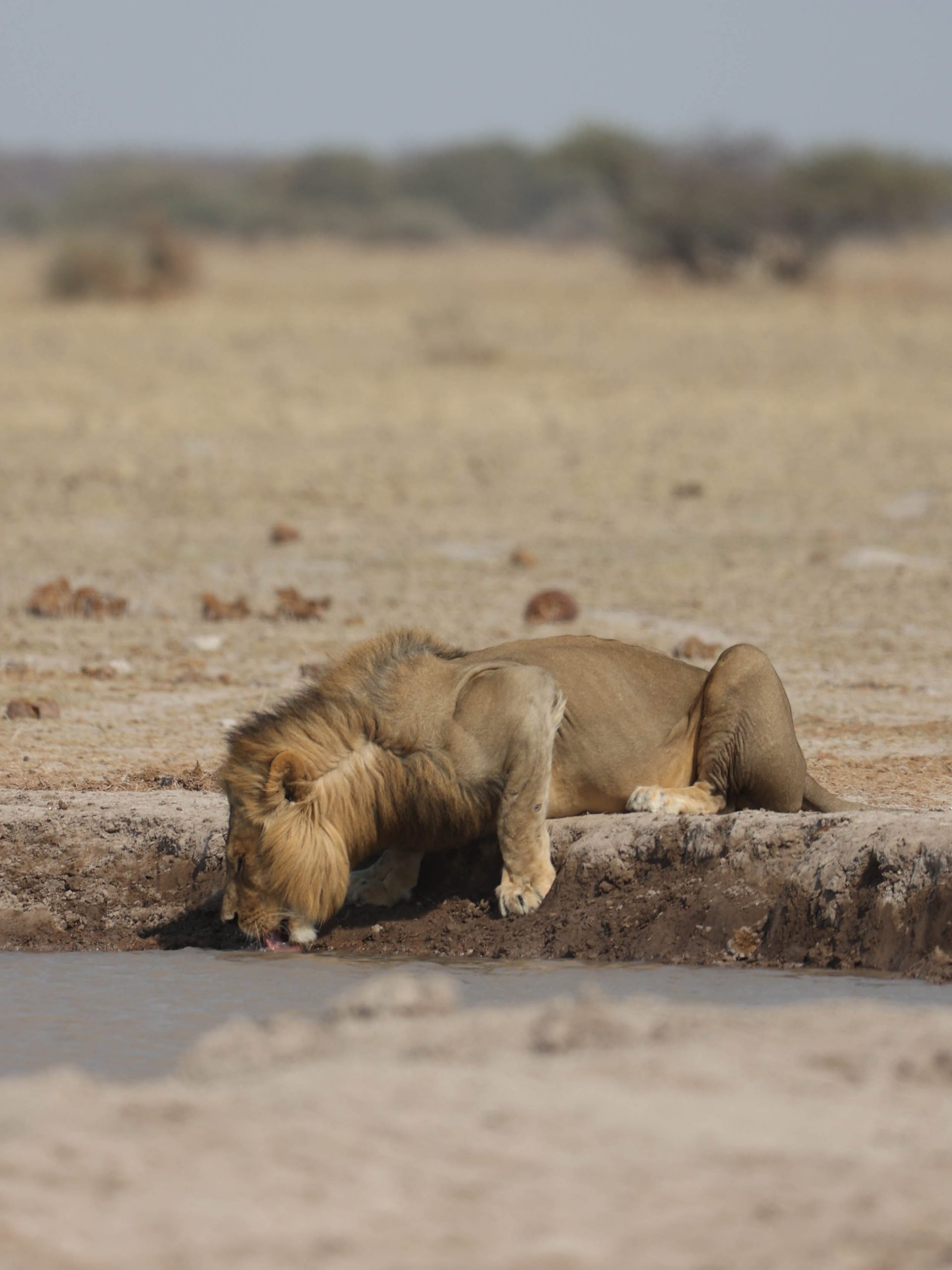
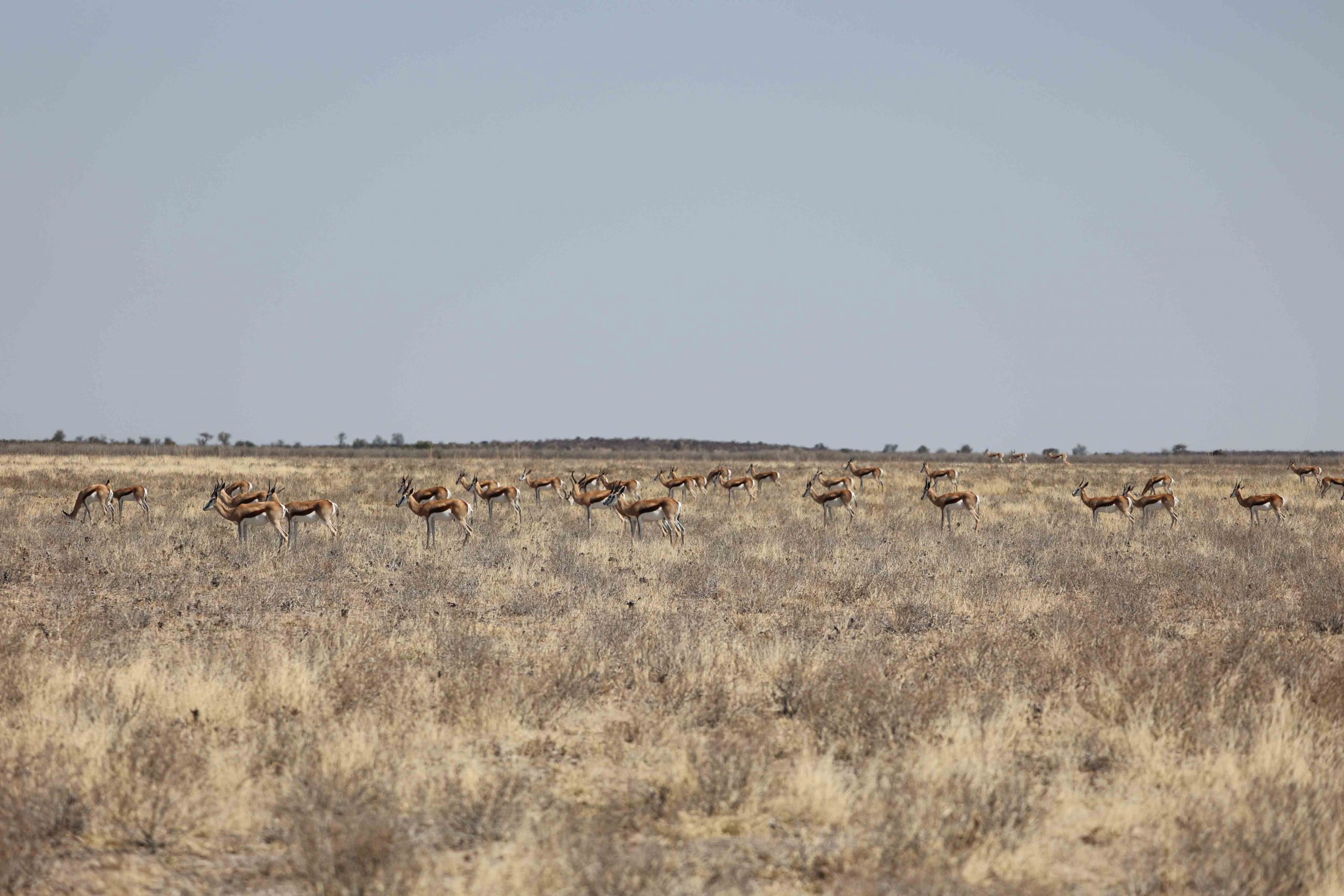
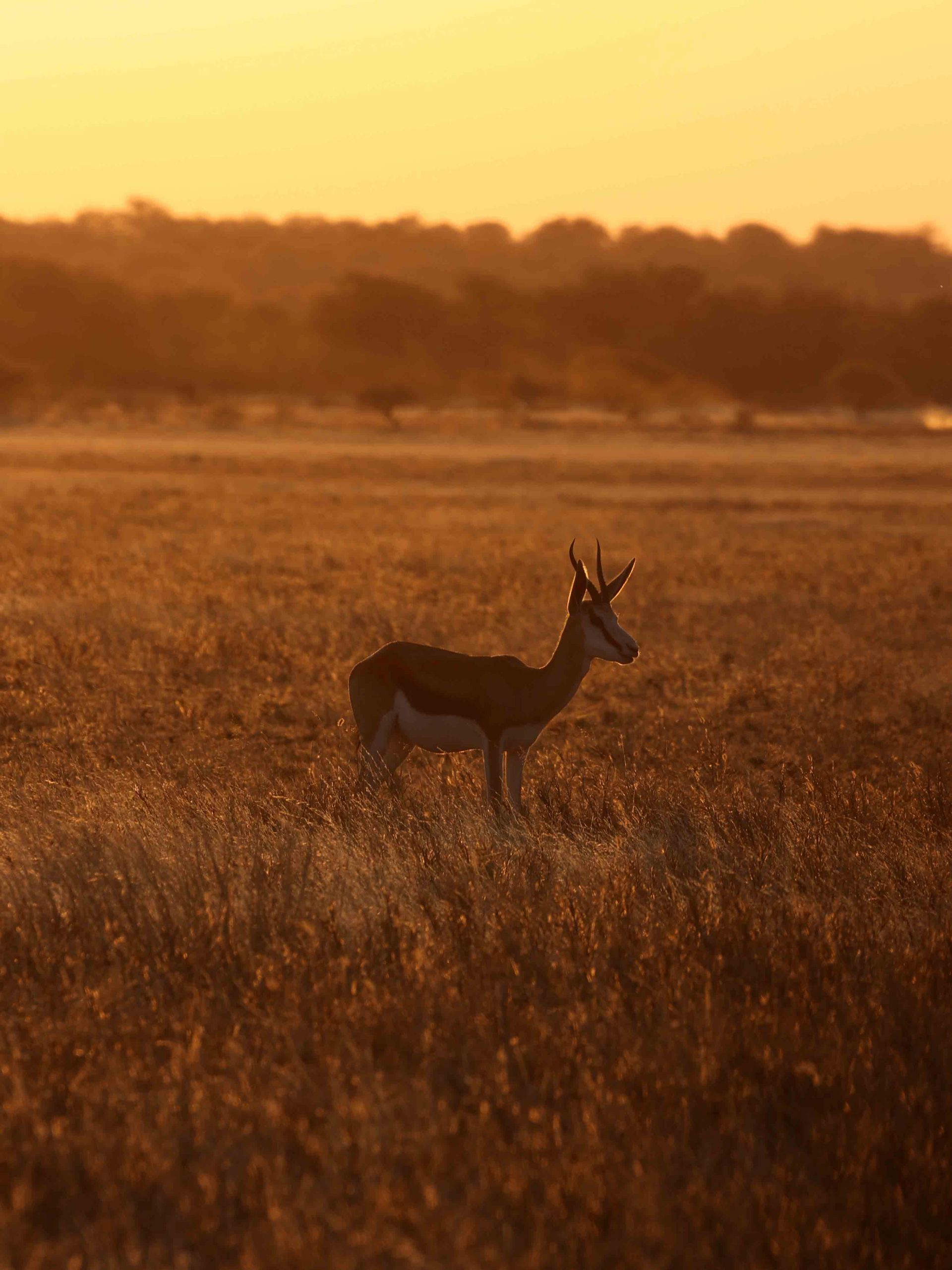
South camp at Nxai is full of surprises. Although remote like the best of them, they not only had Wi-Fi at reception but also a little shop fully stocked with everything from cold beer to Doritos. Creature comforts aside, with only one waterhole having water throughout the year in the area, we decided to hole up next to it and catch up on work. Here we were treated to what is probably the most rewarding dry-season game viewing in this area. Some of the waterhole visitors included a beautiful male lion, a rare white-hooded vulture, an African hawk eagle, a bachelor herd of 22 bull elephants, and massive herds of springbok and blue wildebeest.

7. Strangers in the night

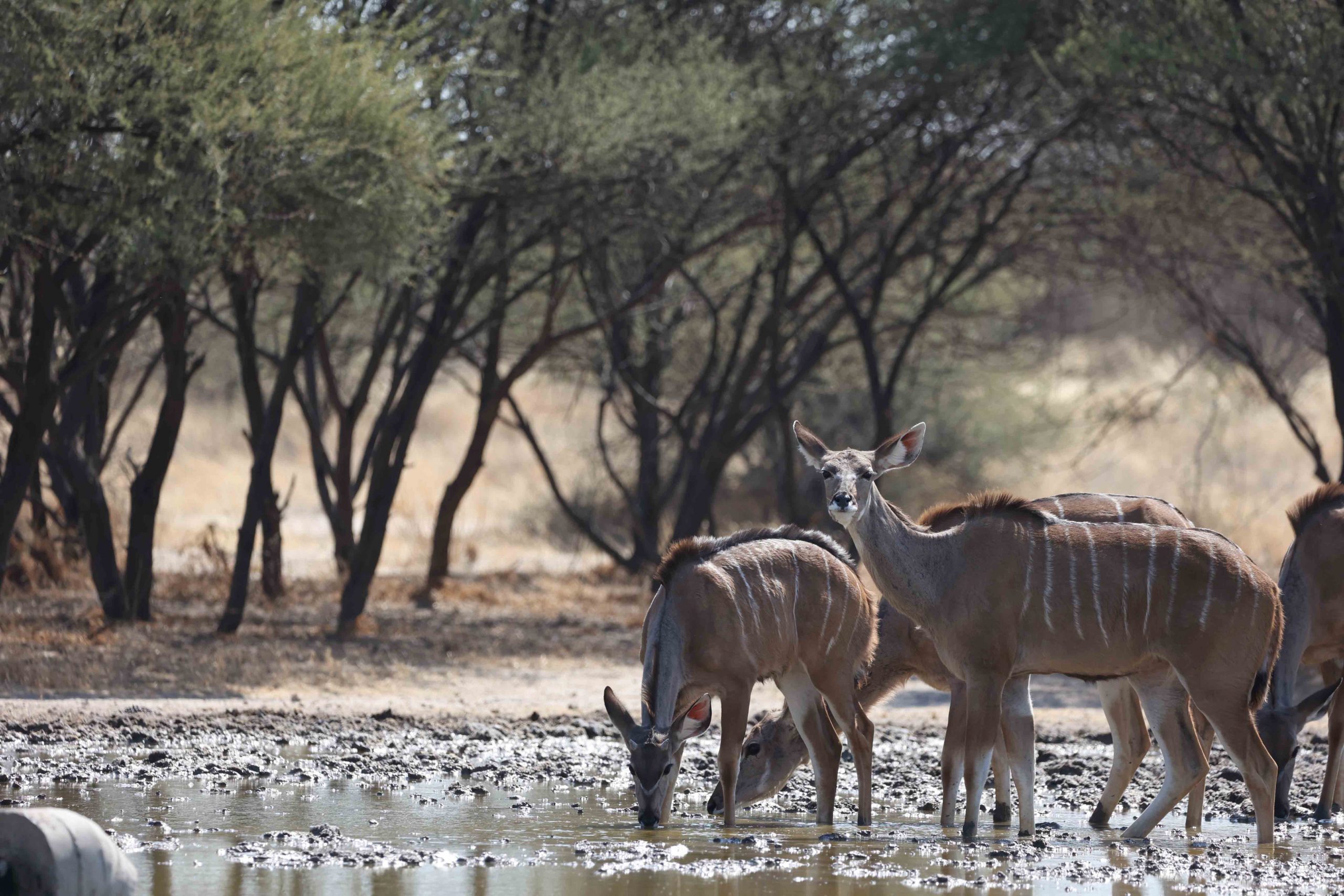
The campgrounds at South camp were rewarding in itself. Not only did we camp underneath what must be some of the largest purple-pod cluster-leaves alive, we were also treated by night time visitors. Black-backed jackals made a curious nuisance of themselves, smelling around the campfire for leftovers. But it was the silent dark giants that stole the show. A few bull elephants regularly came through the camp at night. Gentle as they are, their curiosities were satisfied by quietly feeding just where the fire glow ends. 

Male lion / Kgalagadi
Agama / Kgalagadi
Jackal tracks / Kgalagadi

The Makgadikgadi and Nxai Pan National Parks are ancient, special places that merit more than a casual visit. If you deem it worthwhile, and it is, perhaps you too can take heed of some of the advice we found out along the way. Or you can find your own adventure. Whatever you do, enjoy the ride and never plan too much.

Elephant / Mapungubwe
Centre Stage Kalahari

Centre Stage Kalahari

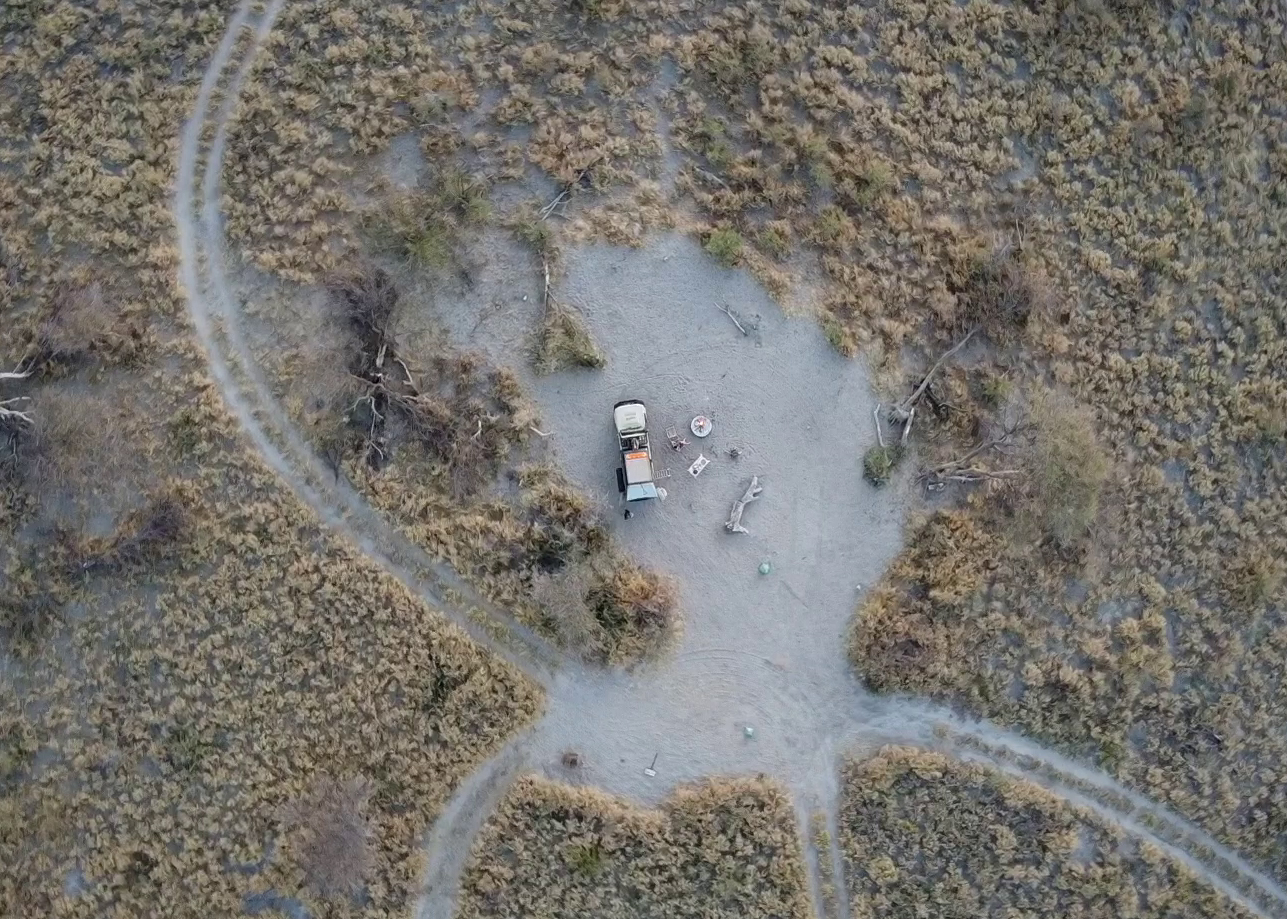
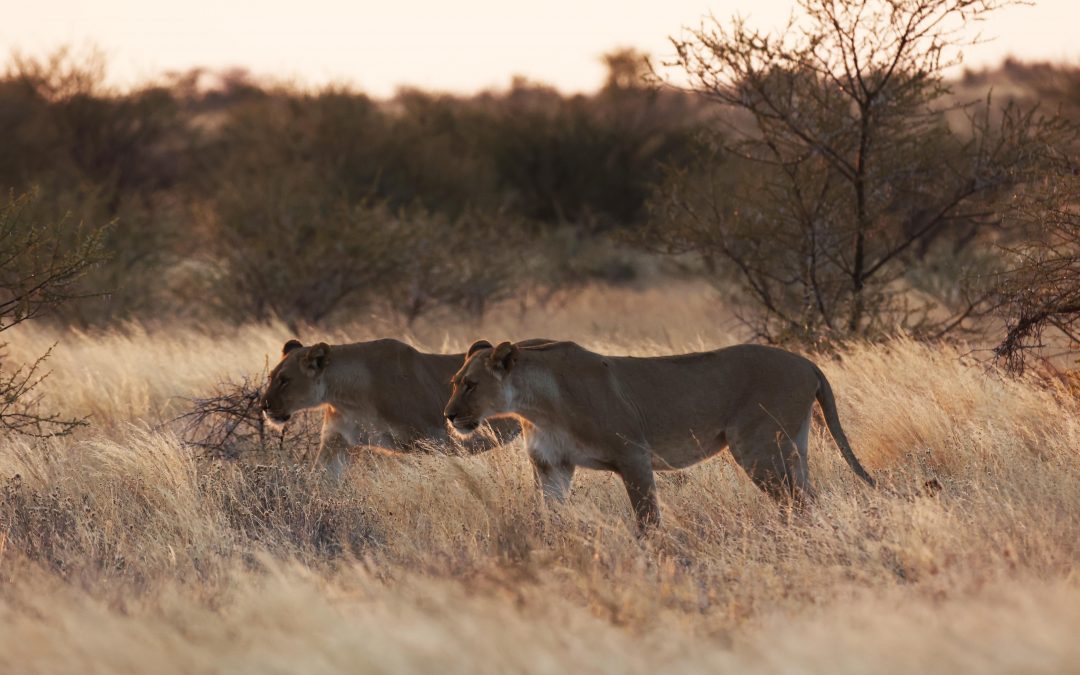
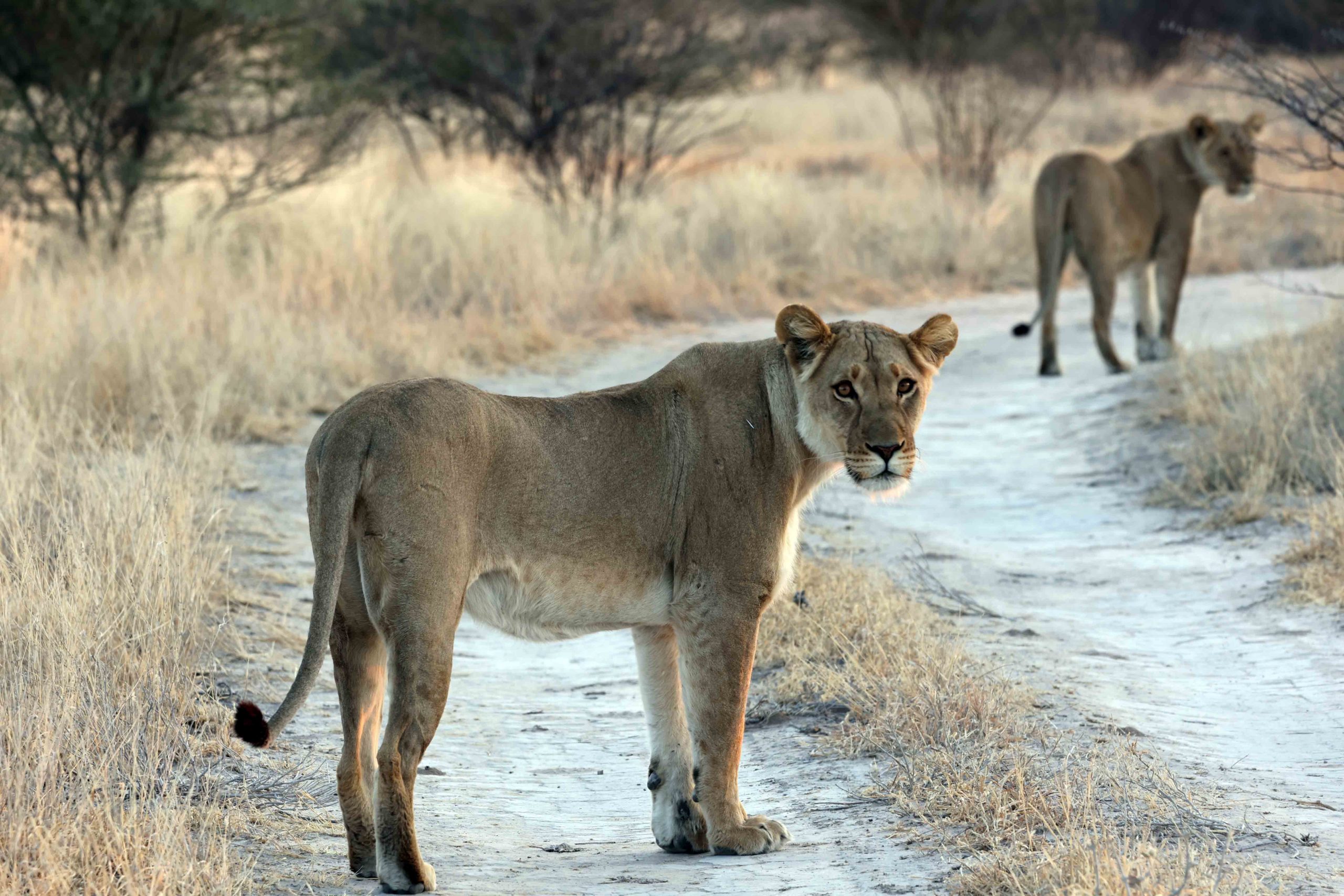
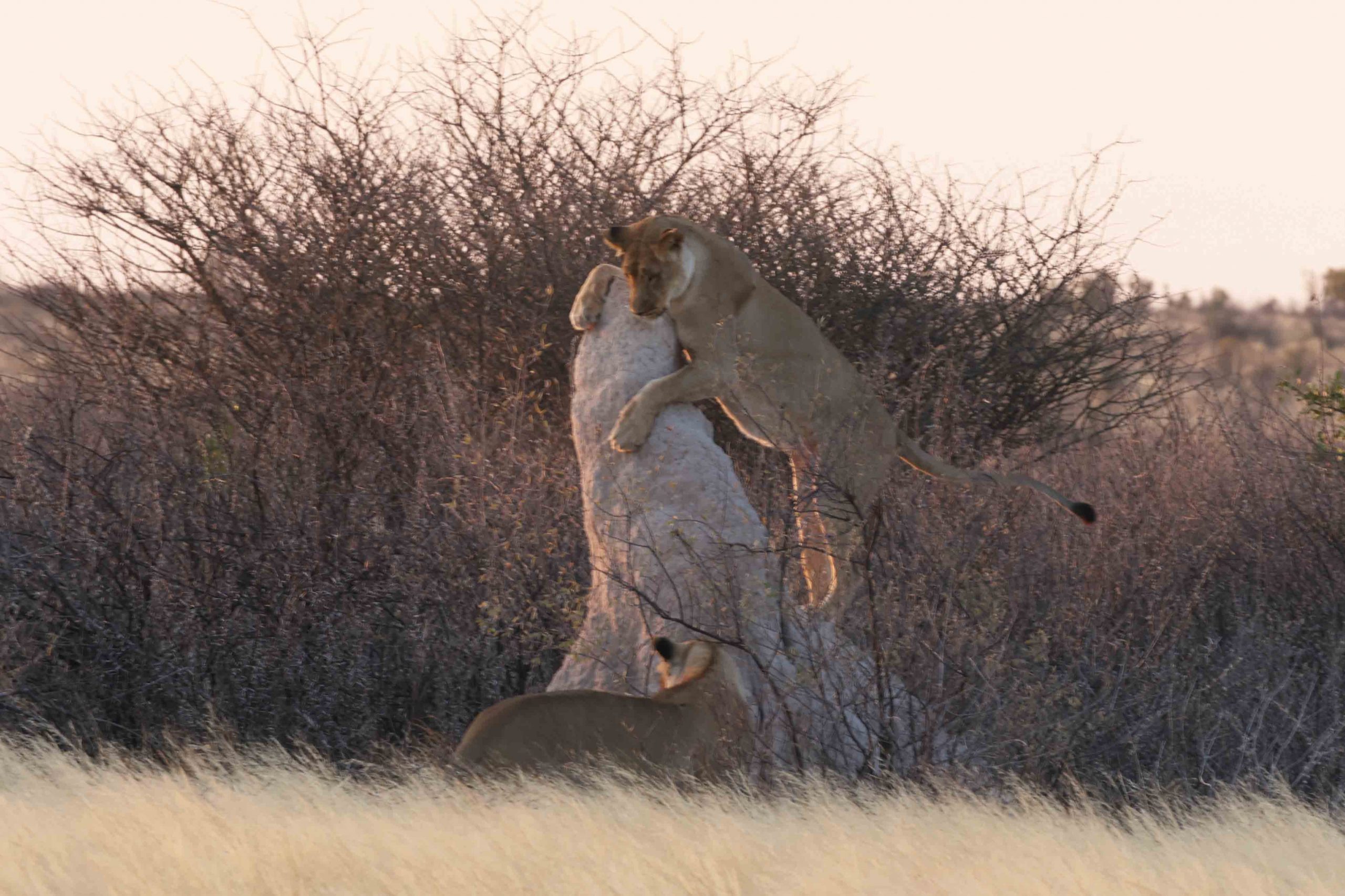
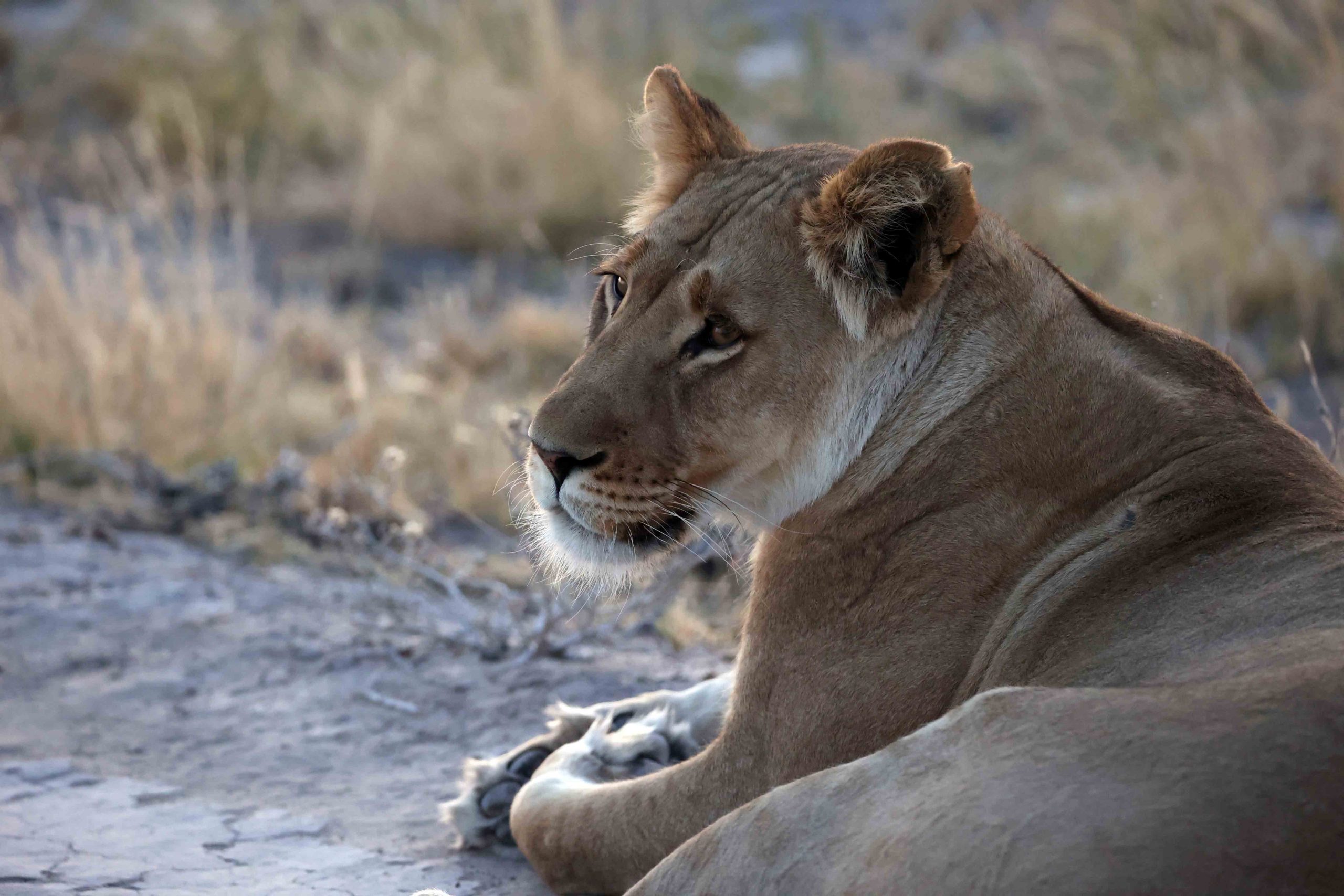
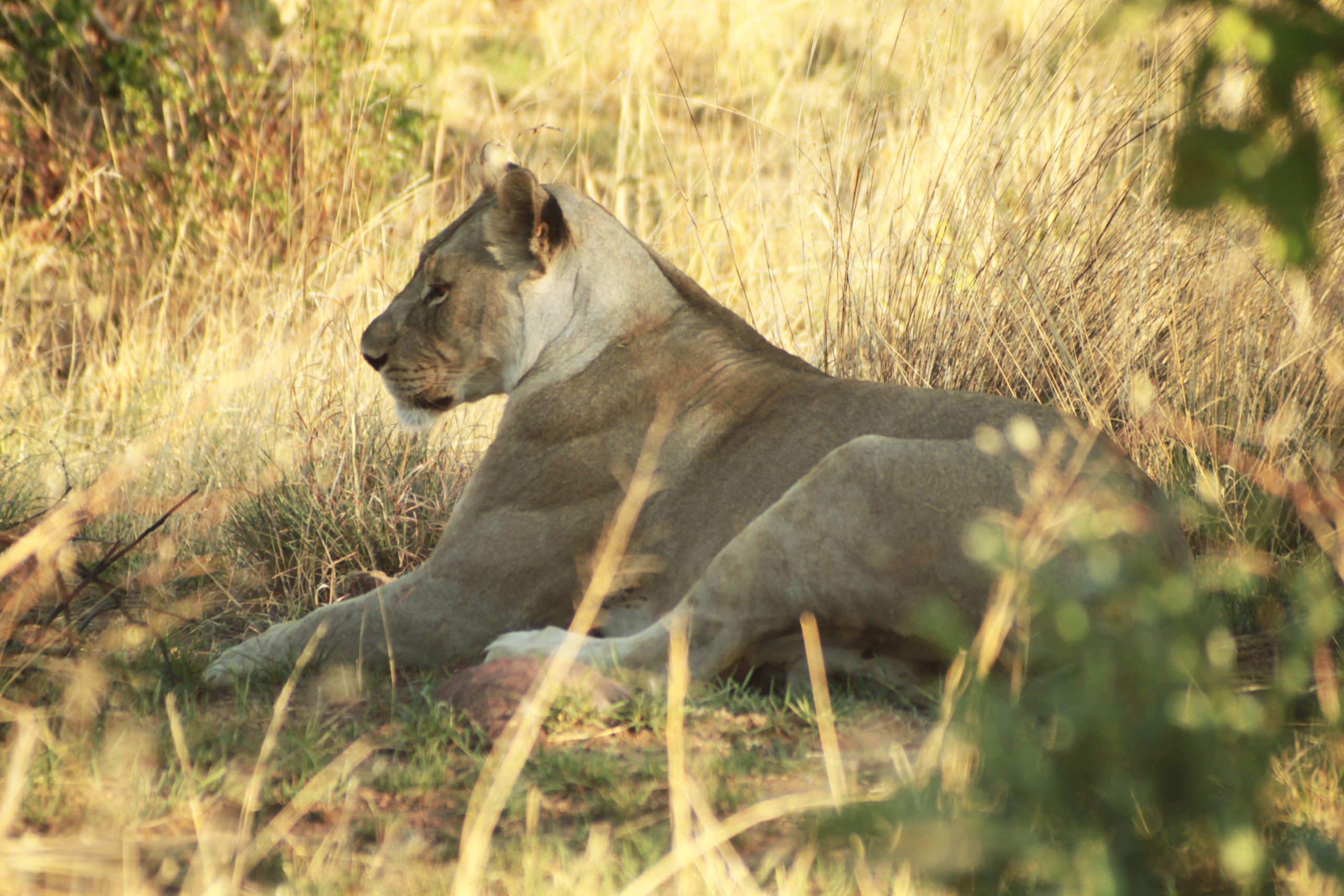
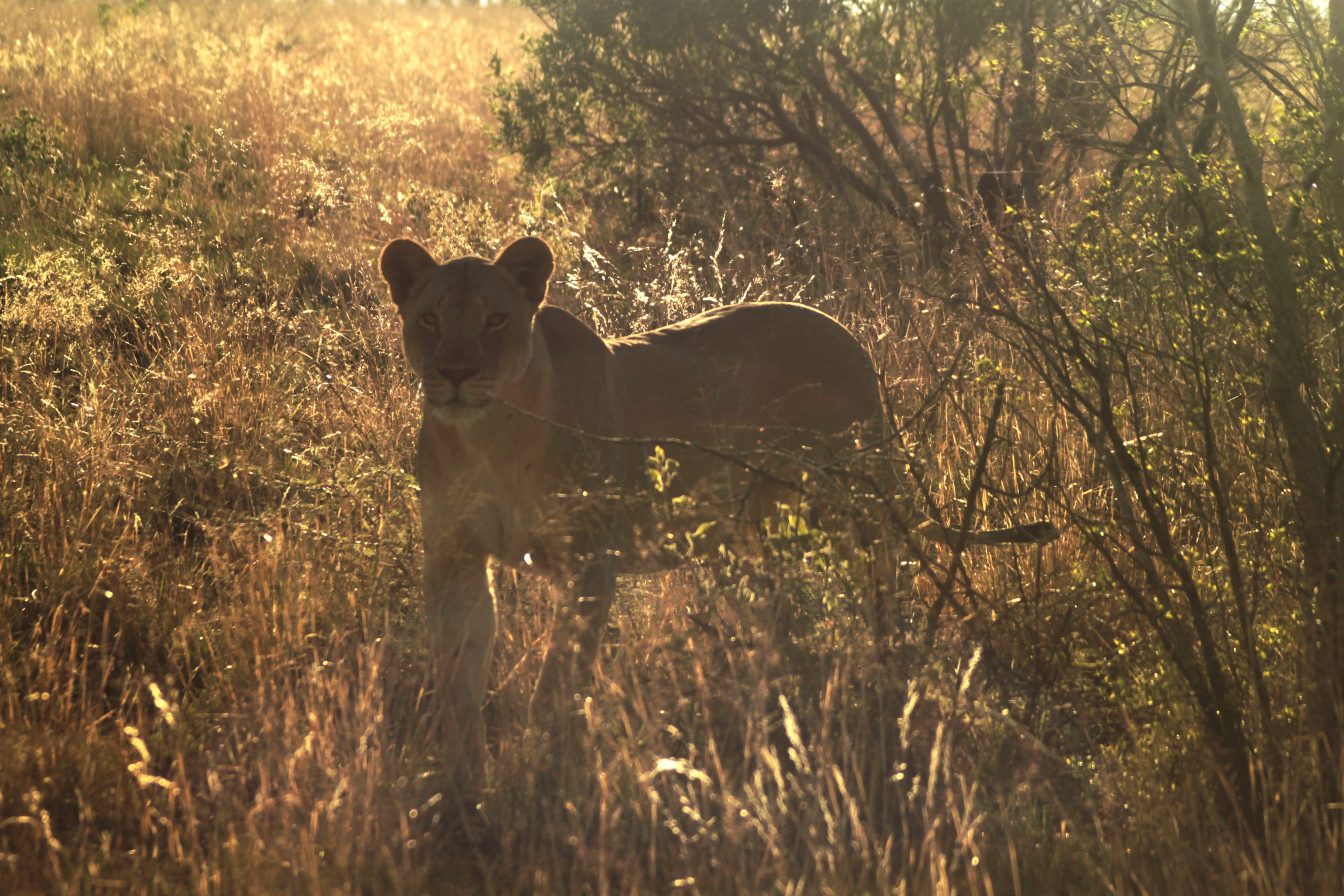
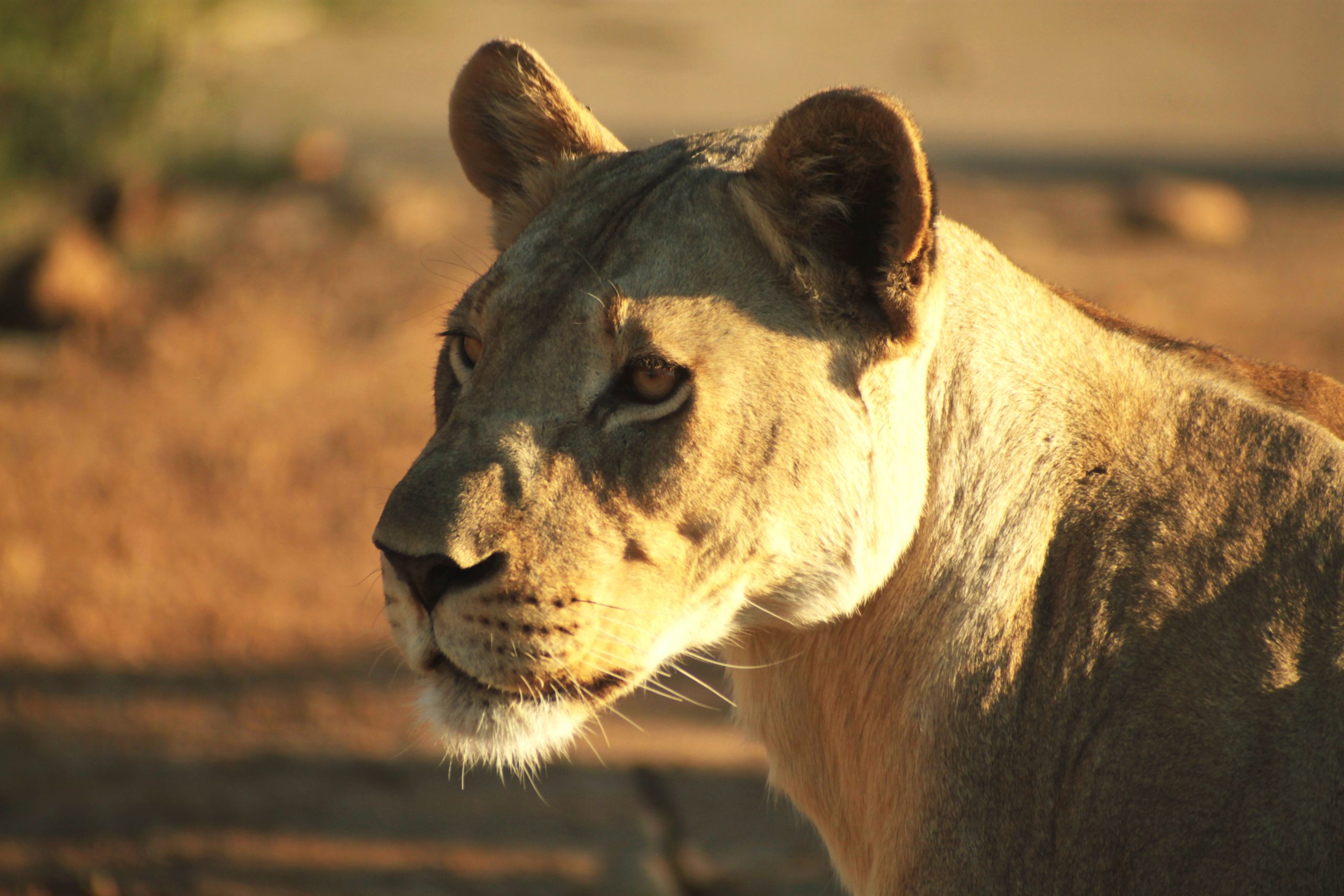
‘Finish up your dinner, the lions will be here soon,’ I said with more confidence than I had. There comes a time when all the big talk of wild camping in the Kalahari is reduced to reality as it gets really dark and ominously quiet around the last glowing embers of the fire. We had chanced upon two beautiful lionesses late one afternoon at the Letiahau waterhole in the Central Kalahari Game Reserve and followed them as they came out to the sandy jeep track and walked straight towards our campsite. We had left them in the road at sunset to go set up camp after both displayed very cheeky and inquisitive (read scary) attitudes towards Baloo the Cruiser. Anyone who has seen hungry young lions after sunset will understand. After the new world record time for a beef potjie was set, we hastily crept into the rooftop tent which now seemed very low. We had seen how easily those two mischievous girls climbed a termite mound. If tracks are anything to go by in these parts, the lions stick to the roads and their road led straight to our campsite. The stage was set.
Gallery background
Gemsbok / Kgalagadi

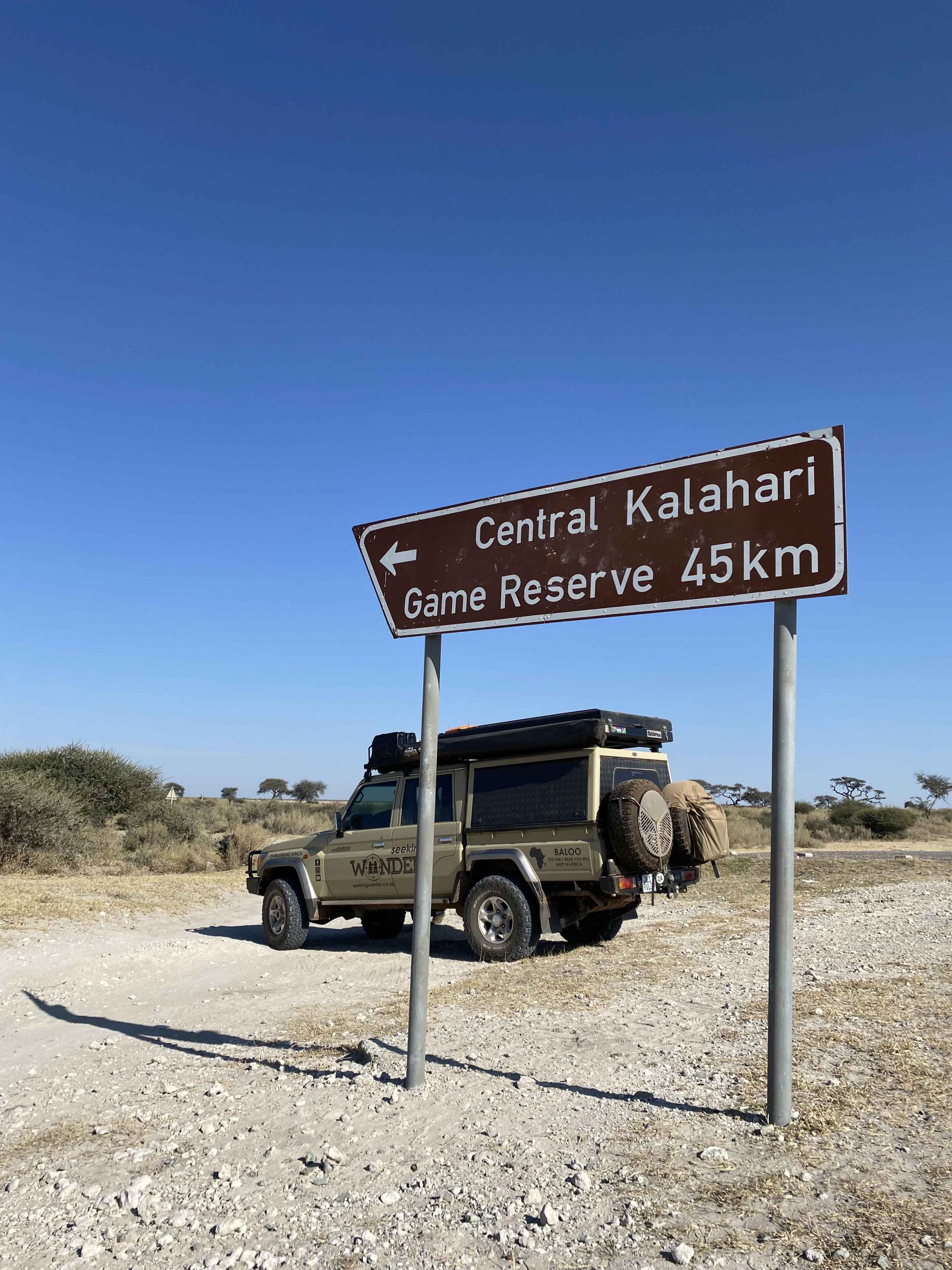
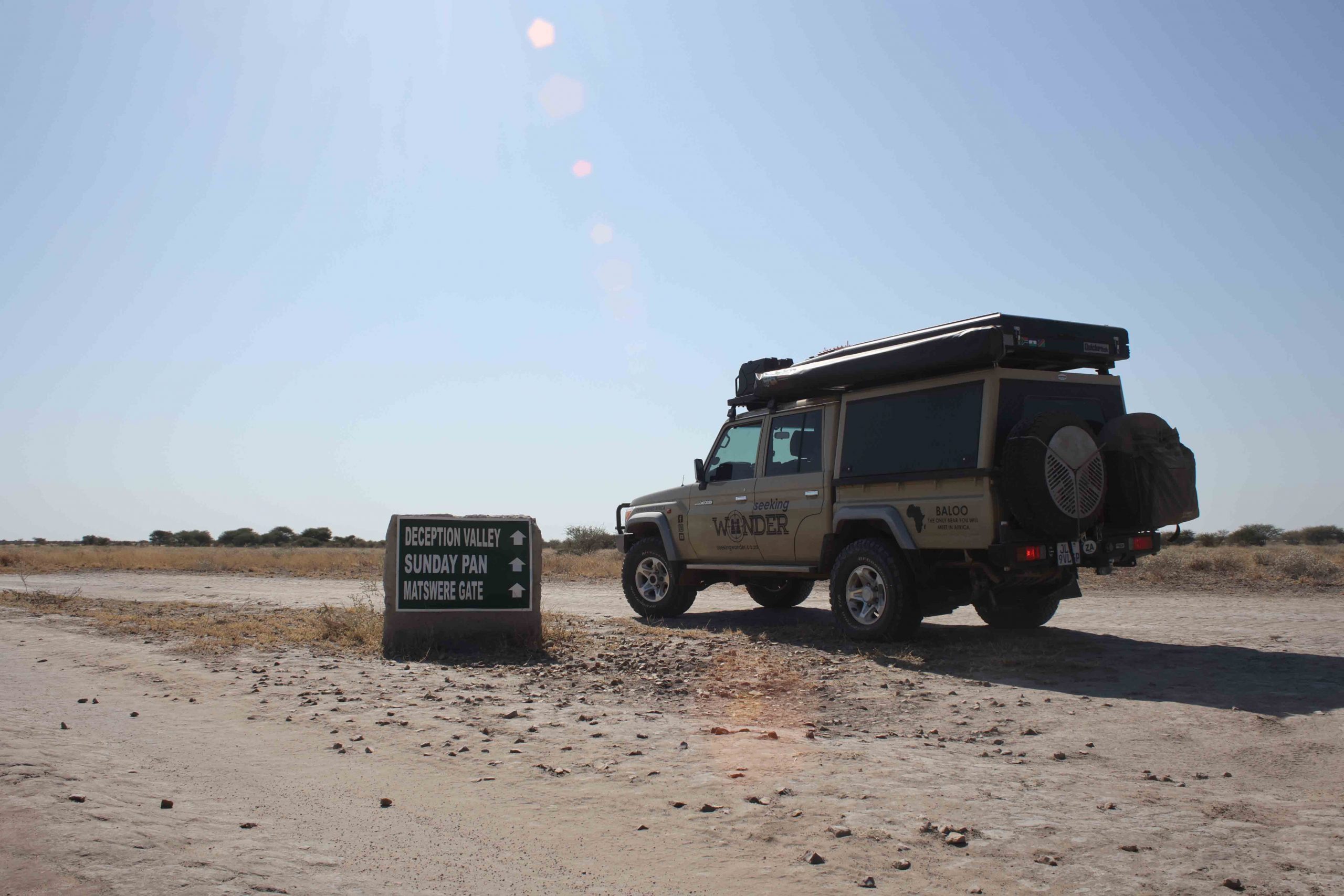
We had arrived in the CKGR five days prior. We had camped at Sunday pan, Passarge valley, and Deception valley, driving a full circle route of the popular Northern section of the park to where we were now at Letihau. The sheer scale of the CKGR is something that cannot be described in words. You can fit almost 3 Kruger Parks into it – it’s that big. In fact, it is the largest reserve in Africa, which is something to brag about if you ask us. Originally proclaimed in the 1960s to preserve not only the game but also the indigenous Basarwa bushmen’s traditional way of life and hunting grounds, this park is an absolute haven for free roaming and migratory animals.

Male lion / Kgalagadi
Agama / Kgalagadi
Jackal tracks / Kgalagadi

Much like its smaller cousin Mabuasehube, most of the action happens in and around the various large pans. There are also so-called valleys, which are essentially grass-filled pans stretching for miles in ancient dry riverbeds, almost like in the Kgalagadi. It is in one of these where Mark and Delia Owens wrote Cry of the Kalahari in the 1970s after spending seven years here doing research. And we thought our remote work setup was impressive!

Up before dawn, we spent our mornings chasing the sunrise, smelling the wet grass and searching for the wonderful creatures that call this place home. Much to our delight and surprise, we encountered African wild cat four times. These sly little felines look like domestic cats with raised suspensions and when spotted they stage an escape that will impress Houdini. A group of mobbing pipits and starlings showed us a pair of irritable honey badgers running in the tall grass one morning. These toughies do not like standing still for photos! Another highlight was when Simoné expertly spotted a stump-impersonating leopard from a country mile away, basking in the early morning sun while evaluating the lunch potential of every springbokkie in the pan.

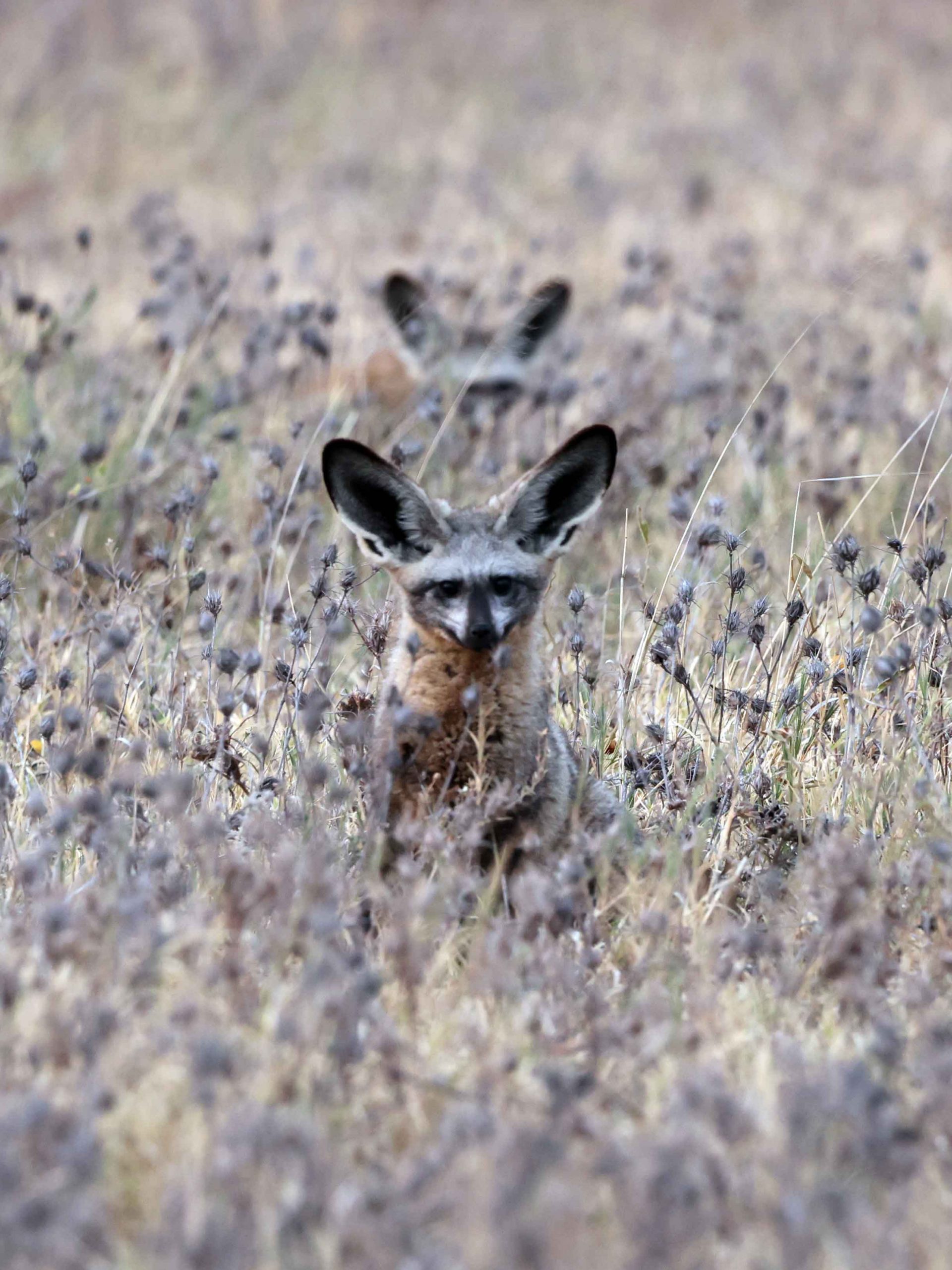
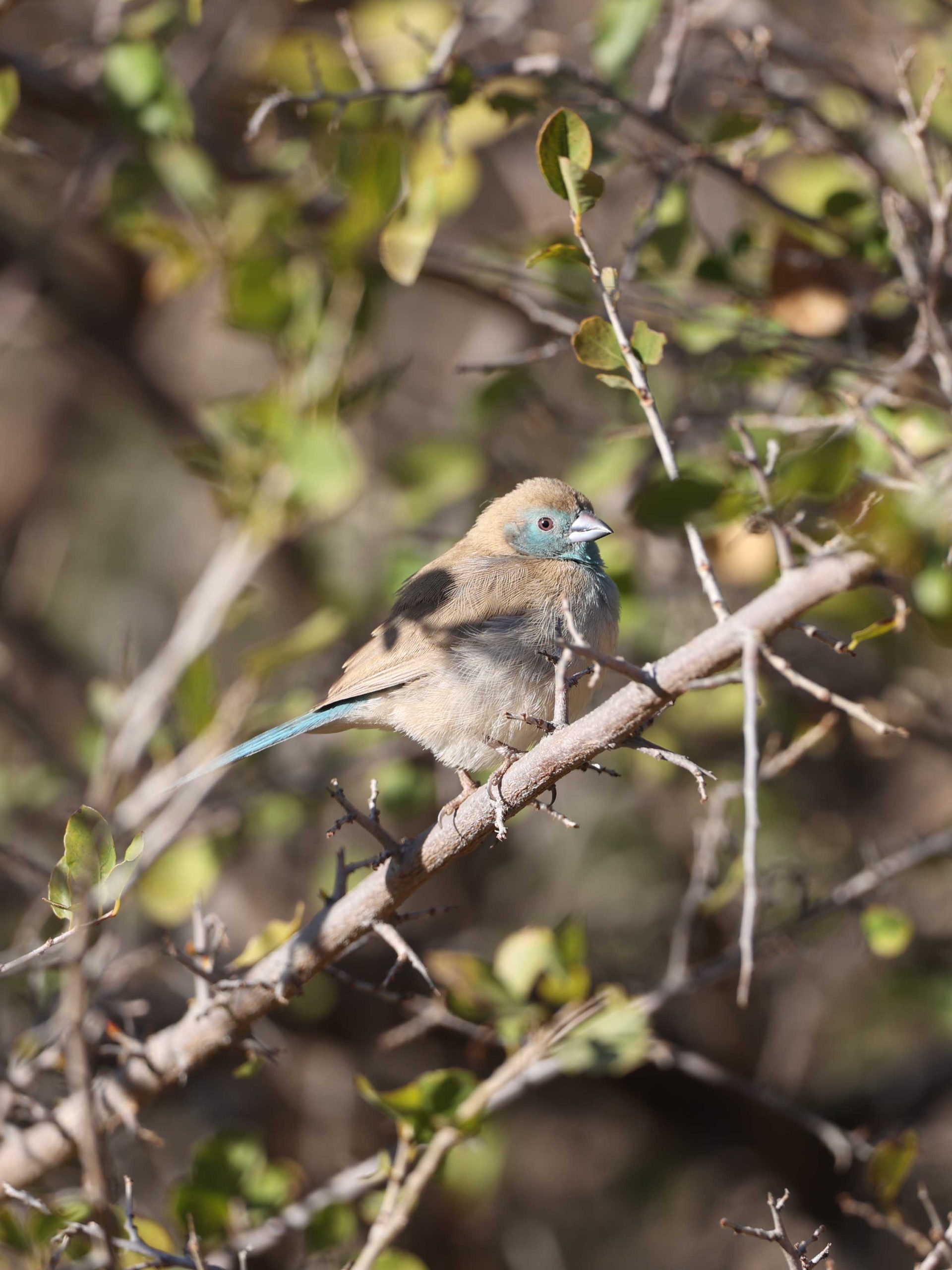
The smaller creatures and birdlife were equally wonderful. A double-collared courser with a chick, Burchell’s sandgrouse, countless hunting raptors, buffy and African pipits, fawn-coloured larks, blue and violet-eared wax bills, secretary birds and enough kori bustards and Northern black korhaans to last a lifetime. Bat-eared foxes were out and about in the mornings, working the pans with their bouncy furry gaits. Every evening the barking geckos reminded us why they are also called klipkappertjies. Our personal highlight came in the form of an elusive little aardwolf resting in the pan late one afternoon. A shout out of thanks to the kind black-backed jackal that pointed us in the aardwolf’s direction, otherwise we would never have spotted it.  

The park’s facilities, or rather the intentional complete lack thereof, keeps it wild and wonderful. The sense of remoteness starts hitting home when the gate guard simply says ‘see you in a week’ and off you go into the bush past a tattered old sign stating Xade Gate: 280 km. The roads were not too bad, although it will be a completely different story in the wet season, judging from the lunar landscape tracks left by summertime Cruisers ploughing like John Deeres.

Male lion / Kgalagadi
Agama / Kgalagadi
Jackal tracks / Kgalagadi

So did the large tawny cats turn up, sniff around curiously or bump the tent and steal the show like many sensation-driven stories and memories? Maybe, maybe not. But when we consider the real centre stage of collective magical experiences we had in the Central Kalahari this past week, perhaps it simply does not matter.                  

Elephant / Mapungubwe
The Wallflower

The Wallflower

Most people have at some stage in their lives been or known a wallflower. The quiet guy at the braai who doesn’t have an opinion about last weekend’s game. The shy girl at the high school sokkie who sits on the side-line when everyone else dances. As backward as society usually is, wallflowers mostly get overlooked. But they shouldn’t. Braai guy might well be a most interesting photographer and shy girl might be an accomplished jazz musician who merely despises sokkie music. More often than not those same flowers bloom most beautifully when they are only given the chance.

Gallery background
Gemsbok / Kgalagadi
Lioness / Marakele
Gemsbok / Kgalagadi

Marakele National Park seems to be a SANParks wallflower. We have visited it twice, once just after lockdown and again more recently as the start of our extensive Botswana-Namibia trip. Going back to a place usually says something about it in itself. Rightfully so, because there is something about Marakele that we just cannot get enough of.

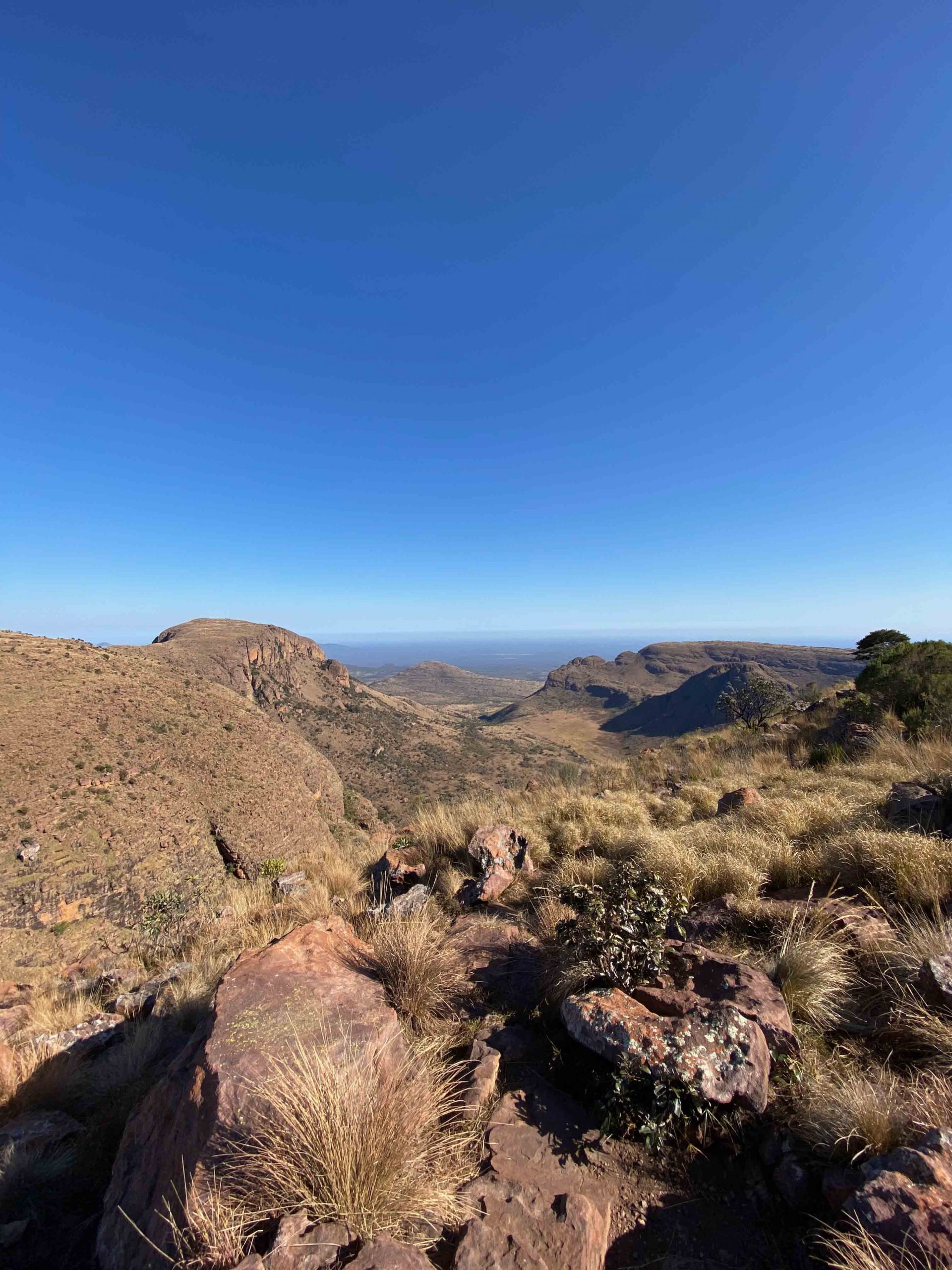
Some people base their opinion of a national park solely on the number of animals they see, and those people should avoid Marakele and rather visit a zoo where you are guaranteed sightings. However, if the idea of spectacular mountains, extensive valley views, elephants by the dozen, unexpected big five encounters, unfenced campsites, remarkable birdlife, diverse trees and grasses, and the most beautiful Waterberg view from your water-side canvas tent appeals to you, then you should pay attention.

Male lion / Kgalagadi
Agama / Kgalagadi
Jackal tracks / Kgalagadi

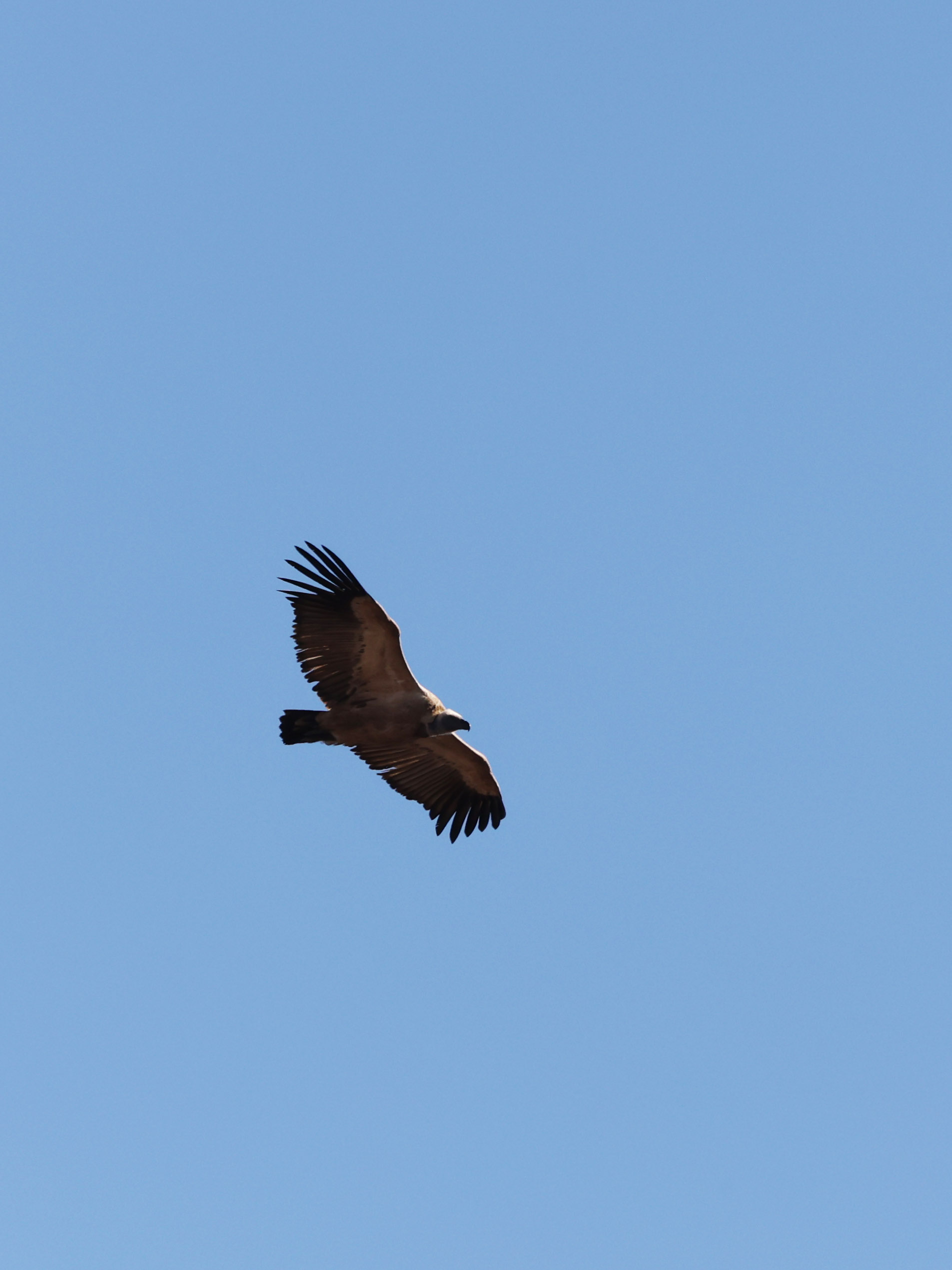
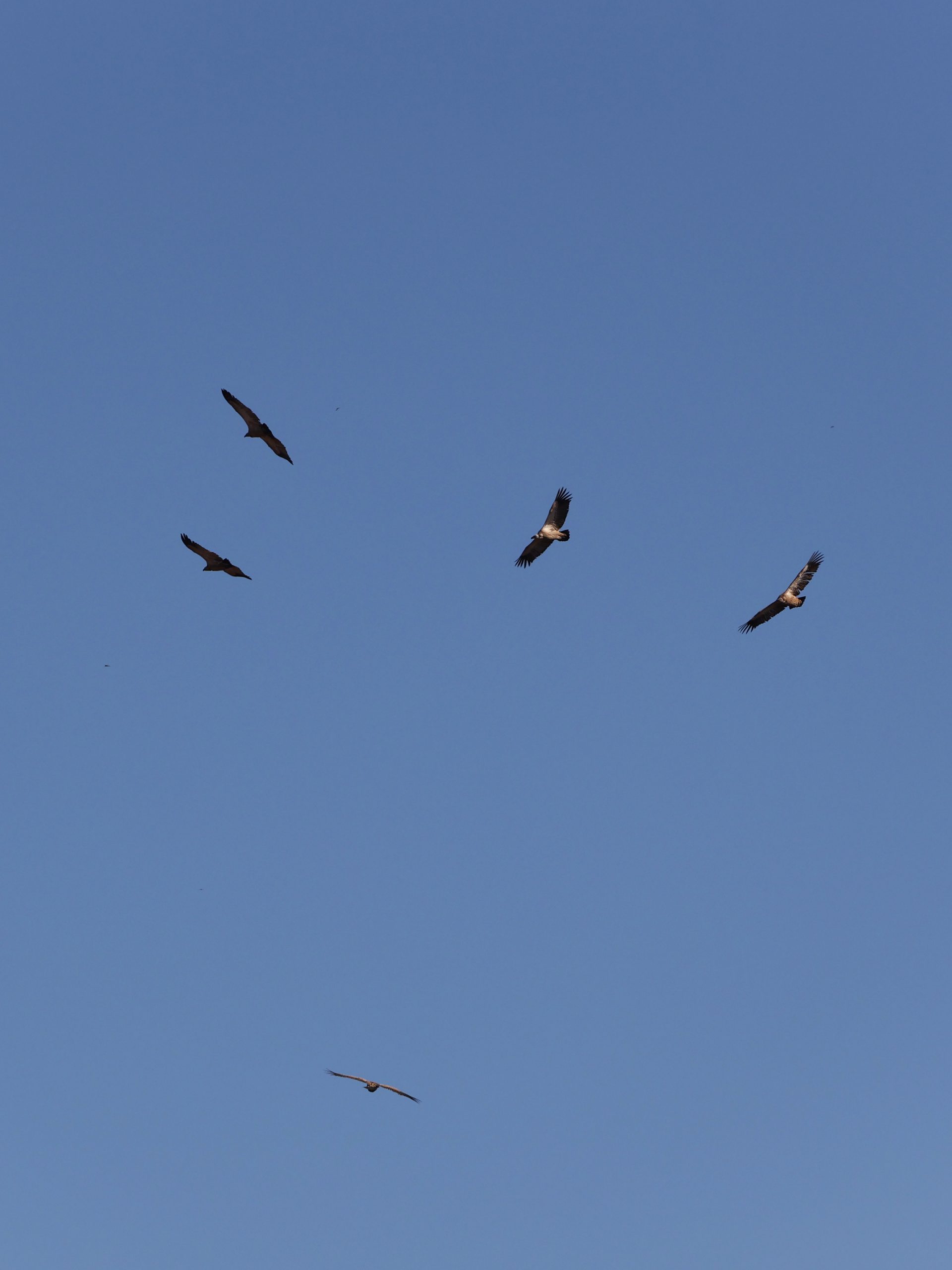
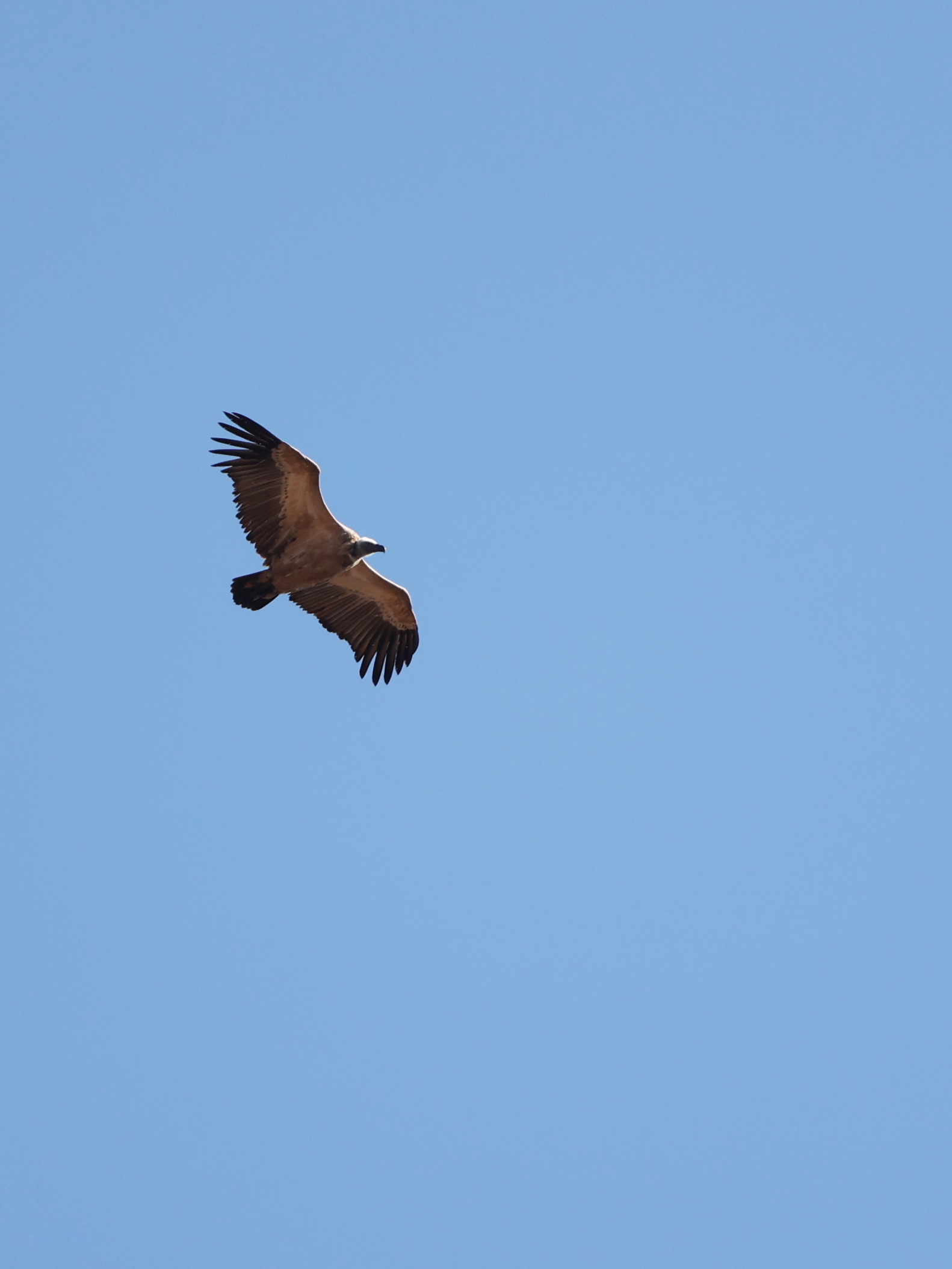
Marakele is just outside Thabazimbi in the Limpopo province. This means it is a 3-odd hour drive from the Gauteng weekender hub. The wonderful Waterberg is its main cover page feature. A very steep but well-maintained road takes you right to the top where a mountain top viewpoint overlooks the valley and the outstretched surrounding bushveld for you to see everything the light touches (cue Mufasa). Here you can also get up close to a breeding colony of threatened Cape vultures, one of the few left in the country. It is a rare privilege to behold their mighty 2.5m wingspan at eye level.

The park is divided into two sections, the bigger area containing the big five and the other being where the wonderfully unfenced Bontle campsite is located. We camped here for a few nights and enjoyed the inquisitive local birdlife including cheeky hornbills, chattering white-browed sparrow weavers and beautiful crimson-breasted shrikes. Wildlife roams lazily through the camp so we had a group of blue wildebeest over as dinner guests and listened to the kudus browsing next to the tent at night. The ablutions are neat and clean, and the honorary rangers added a nice touch by labelling most trees around camp for those attempting to learn new tree names.

Elephant / Mapungubwe

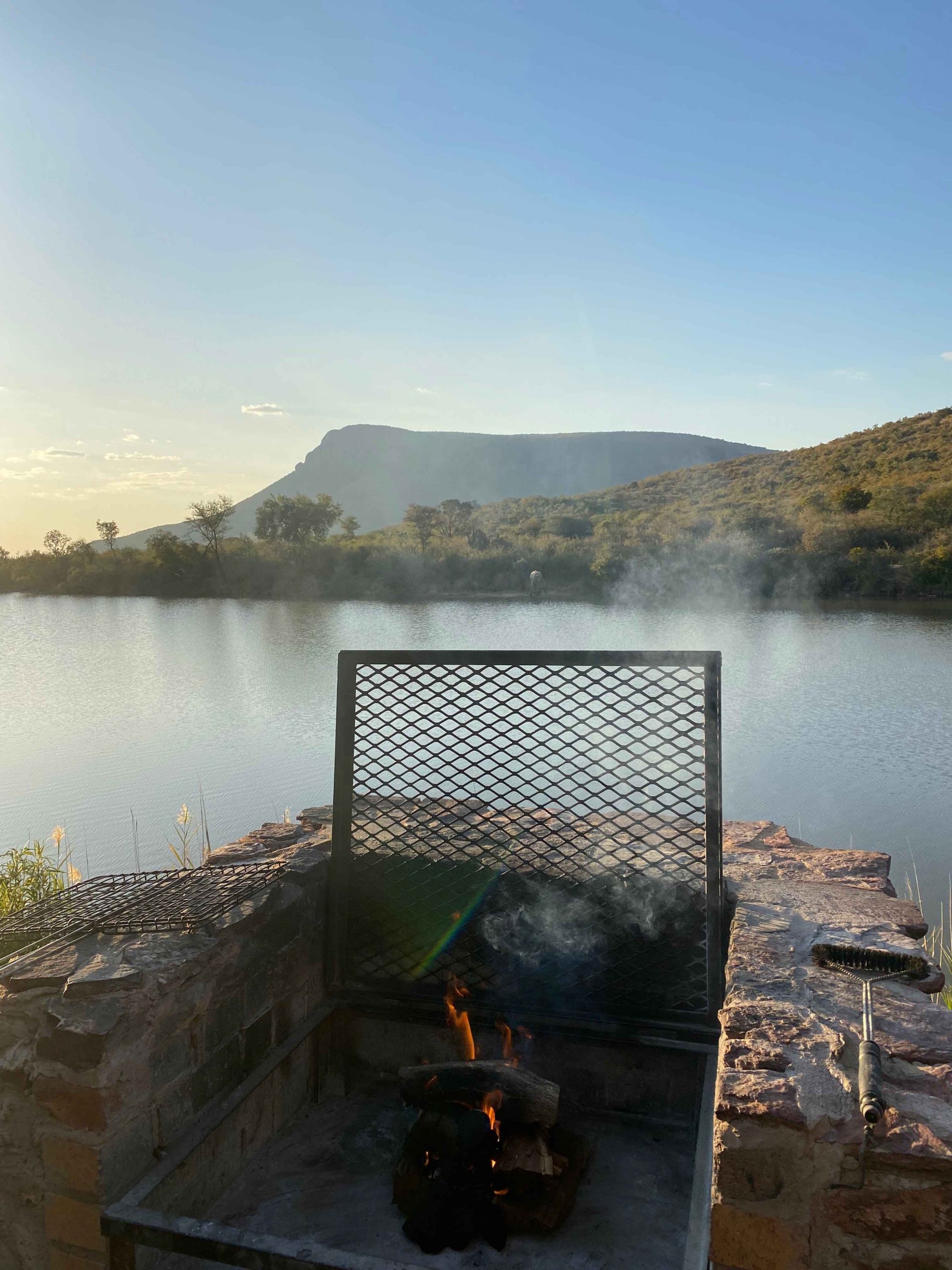
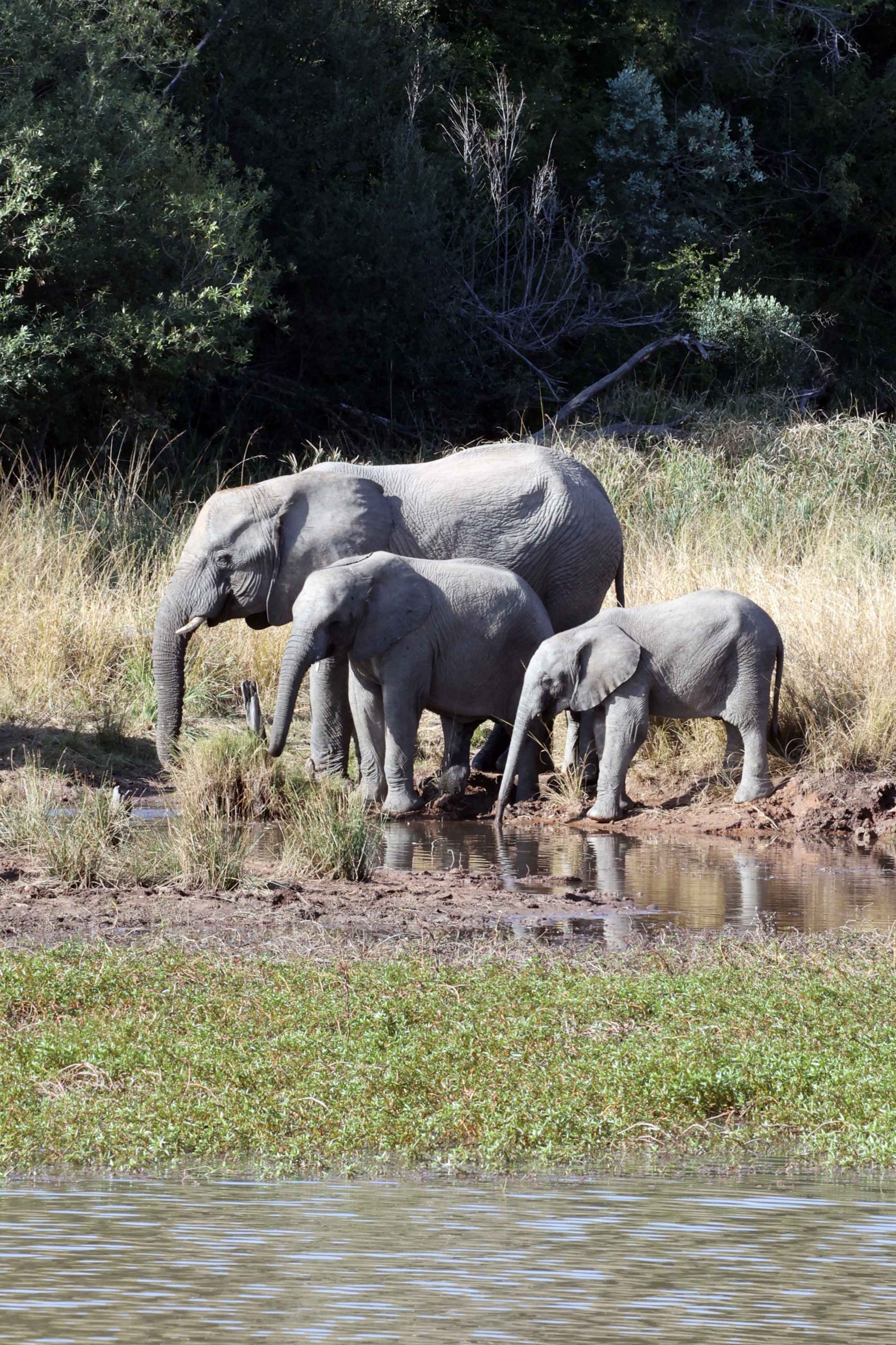
If possible we also recommend a stay at the Tlopi tented camp in the larger section of the park. We spent a few nights in one of the simple and very tidy safari tents, all of which overlook a dam with the majestic Waterberg mountain cliff faces rising in the background. This is the type of place where you can easily spend the entire day relaxing, reading or getting acquainted with the birds and animals slaking their thirst. Enjoying a late afternoon sundowner on the patio with a herd of elephants while the sun sets against the mountain seemed to us like we just walked into an Amarula commercial.

Drives around the park are always a highlight. The dramatic landscapes are enough to keep you awe-struck and whilst the animal densities are not very high, we have had very memorable sightings. A beautiful lioness once emerged from the golden-lined late afternoon grasslands next to us. In fact, we have encountered most of the big five here. Various other highlights abound such as surprisingly patient klipspringers on the mountains, banded mongoose colonies browsing the campsite undergrowth, and the uncommon Shelley’s francolins calling in the early morning sun.

Elephant / Mapungubwe

For some reason, the park doesn’t get as many visitors as some of its more famous brethren. People overlook it and rather point to Kruger for a long weekend. We say, make time to talk to braai guy and ask shy girl to dance. Go to Marakele, and give the wallflower a chance.

Introducing Baloo

Introducing Baloo

There seem to be two givens in the 4×4 world. First, opinions are fiercely subjective. Ask five experts what their recommendation is on any particular vehicle item and you will receive as many different answers, usually somewhat biased toward the product they are trying to sell you. Second, at its core 4×4 modification is a spiralling black hole in which the smallest cost increment seems to be R 10,000. It can therefore be a tricky business to make up your mind as to what your individual needs and preferences are in a world filled with target-chasing salesmen, endorsed YouTube videos, and strong opinions from everyone and their dog.

Whilst there are many cases of hedge fund managers throwing $-sign bags at brand new vehicles for their first ever weekend away from Sandton, our journey with Baloo and his beloved predecessor Rubi (a 2-door Jeep) has been based on a systematic process over years, figuring out what works for us on the road and then changing and developing sequentially. Our approach has always been as minimalist and practical as possible to serve our particular adventures.

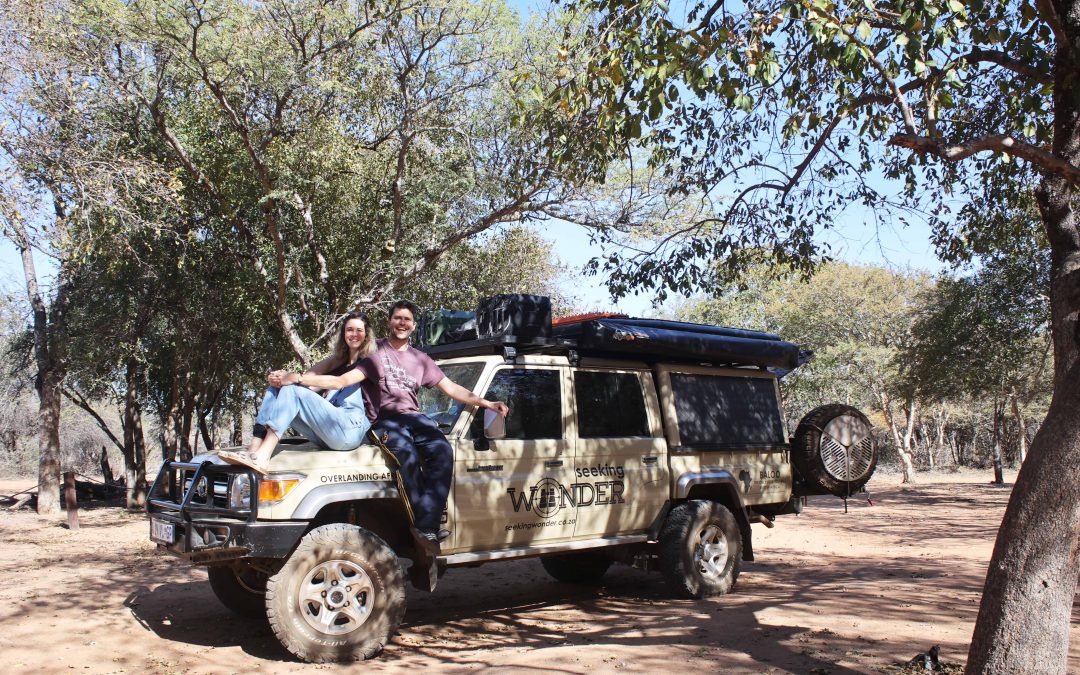
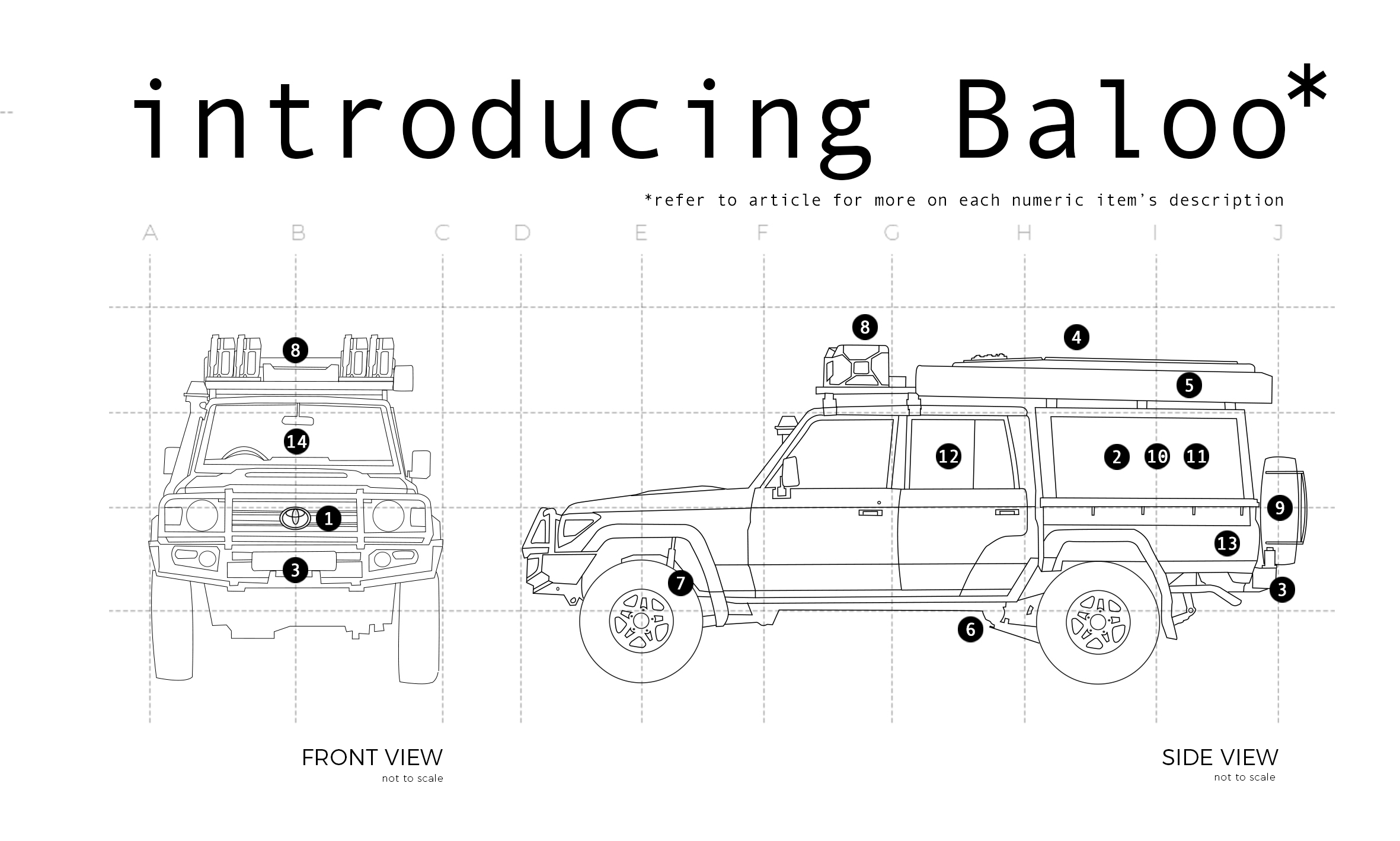
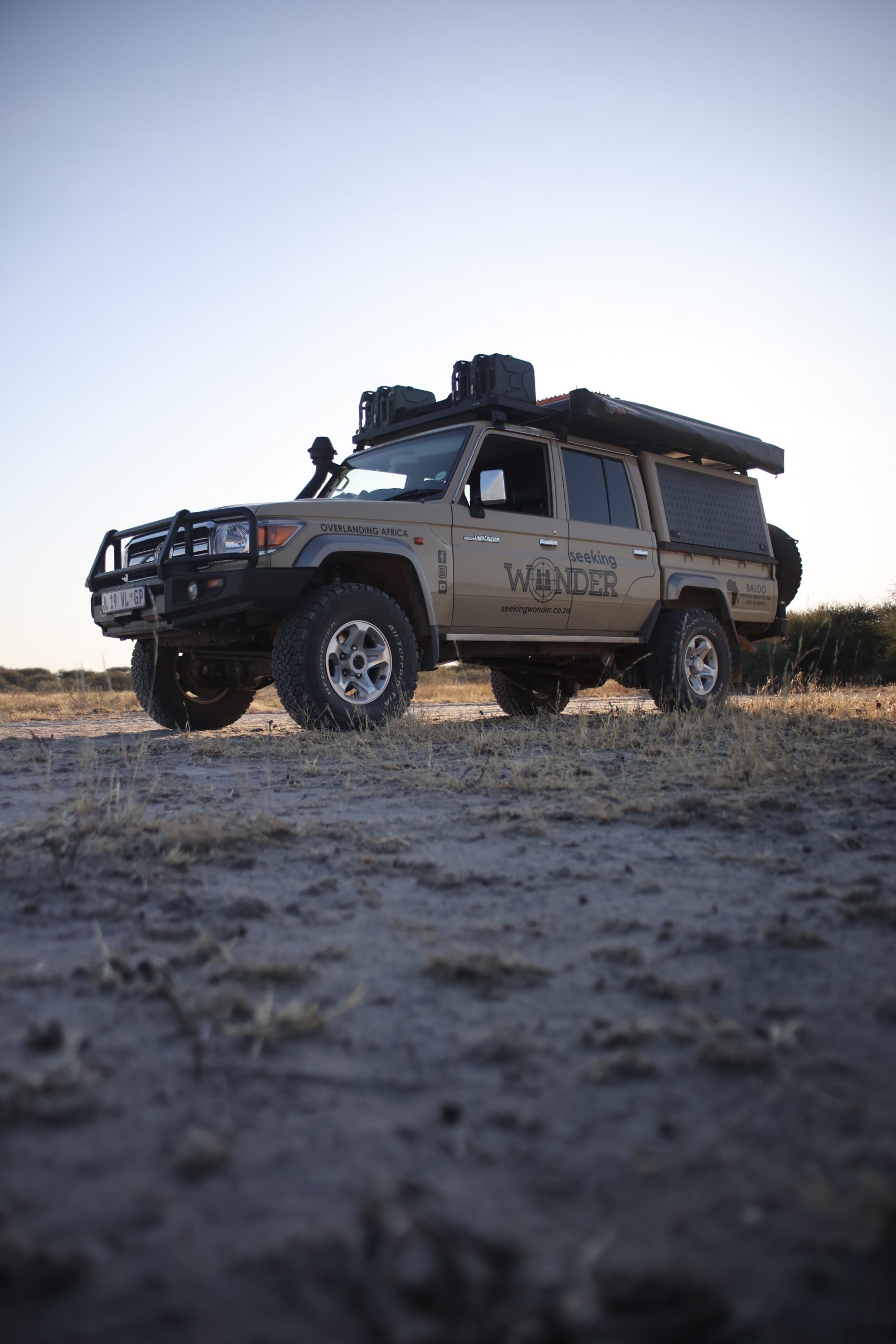
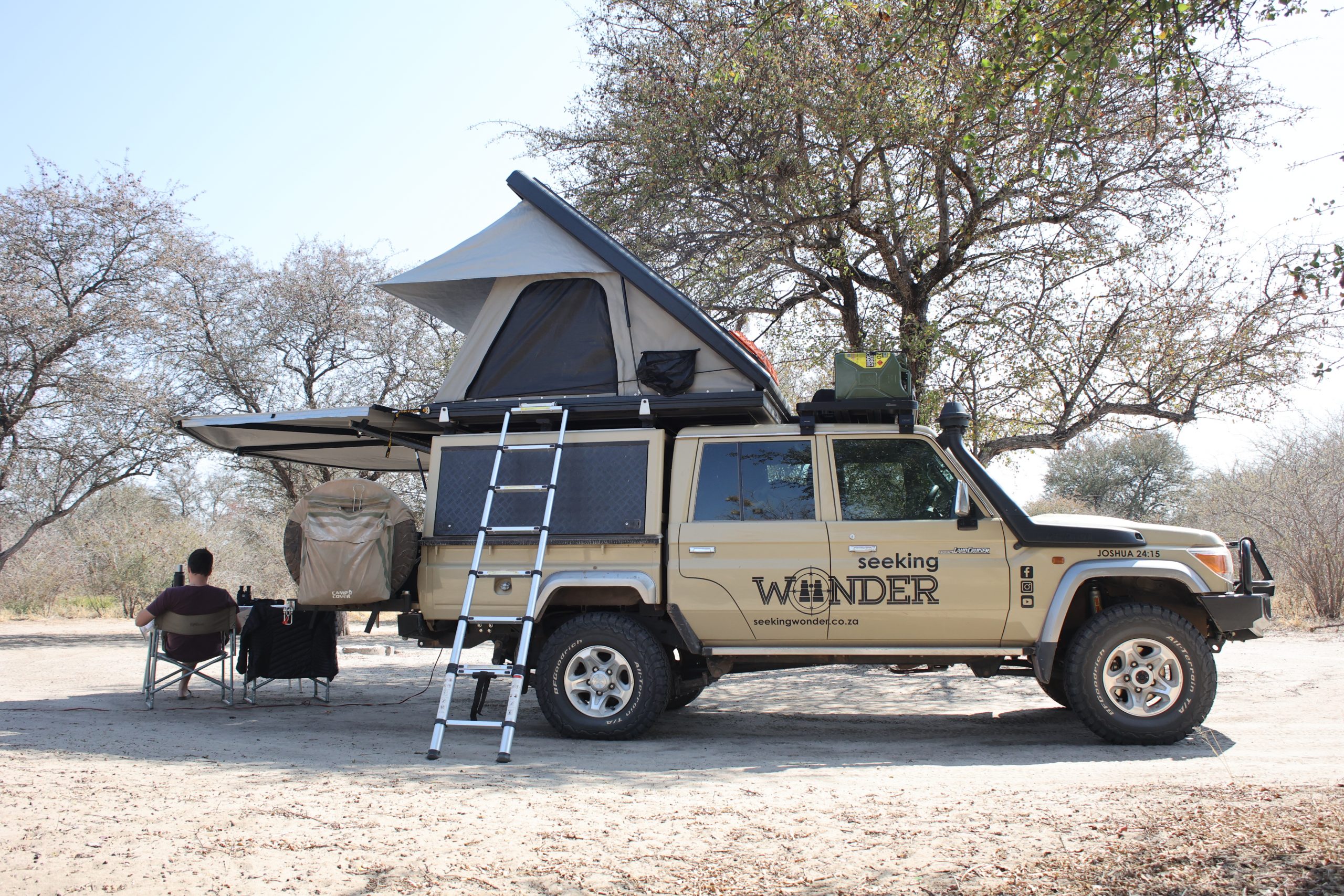
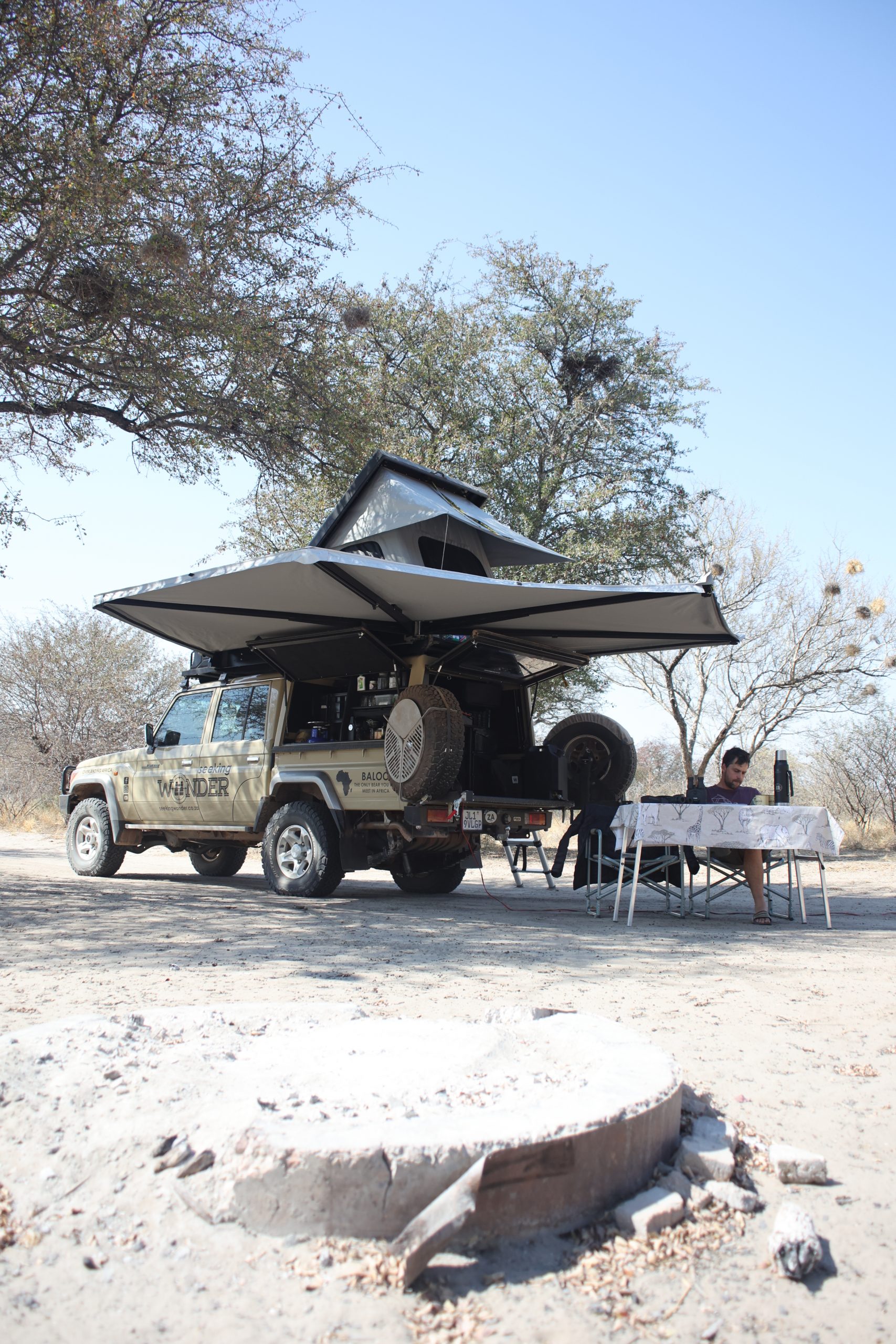
Although we consider gear primarily a means to an end, following requests from our more technically-minded friends, we thought it fitting to give a rundown of all Baloo’s current features, gear and modifications as well as why we decided on each item. Our take on things will not be everyone’s, but we did learn a few things along the way so far and we gladly share this with like-minded overlanders.

Male lion / Kgalagadi

1. One car to rule them all

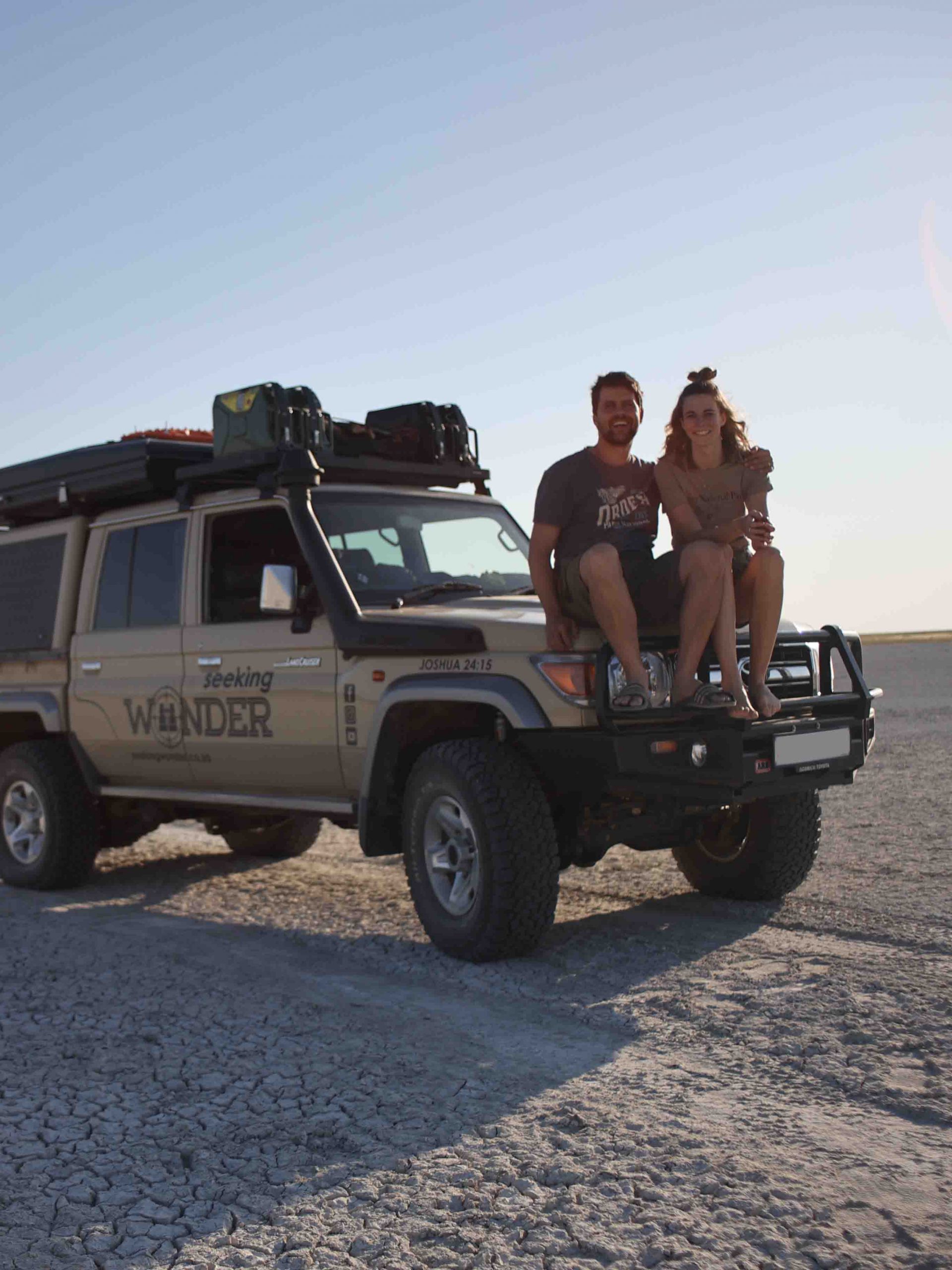
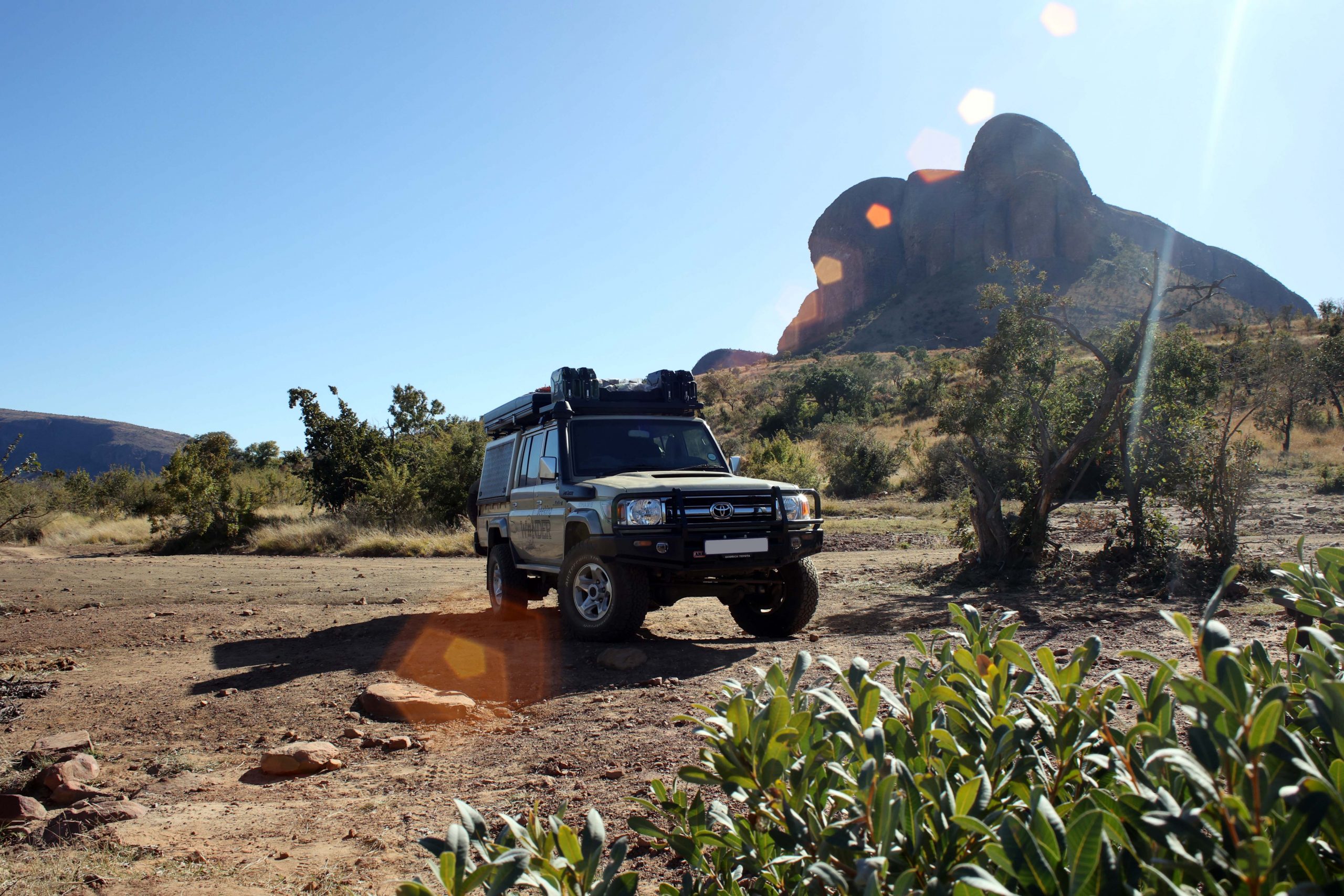
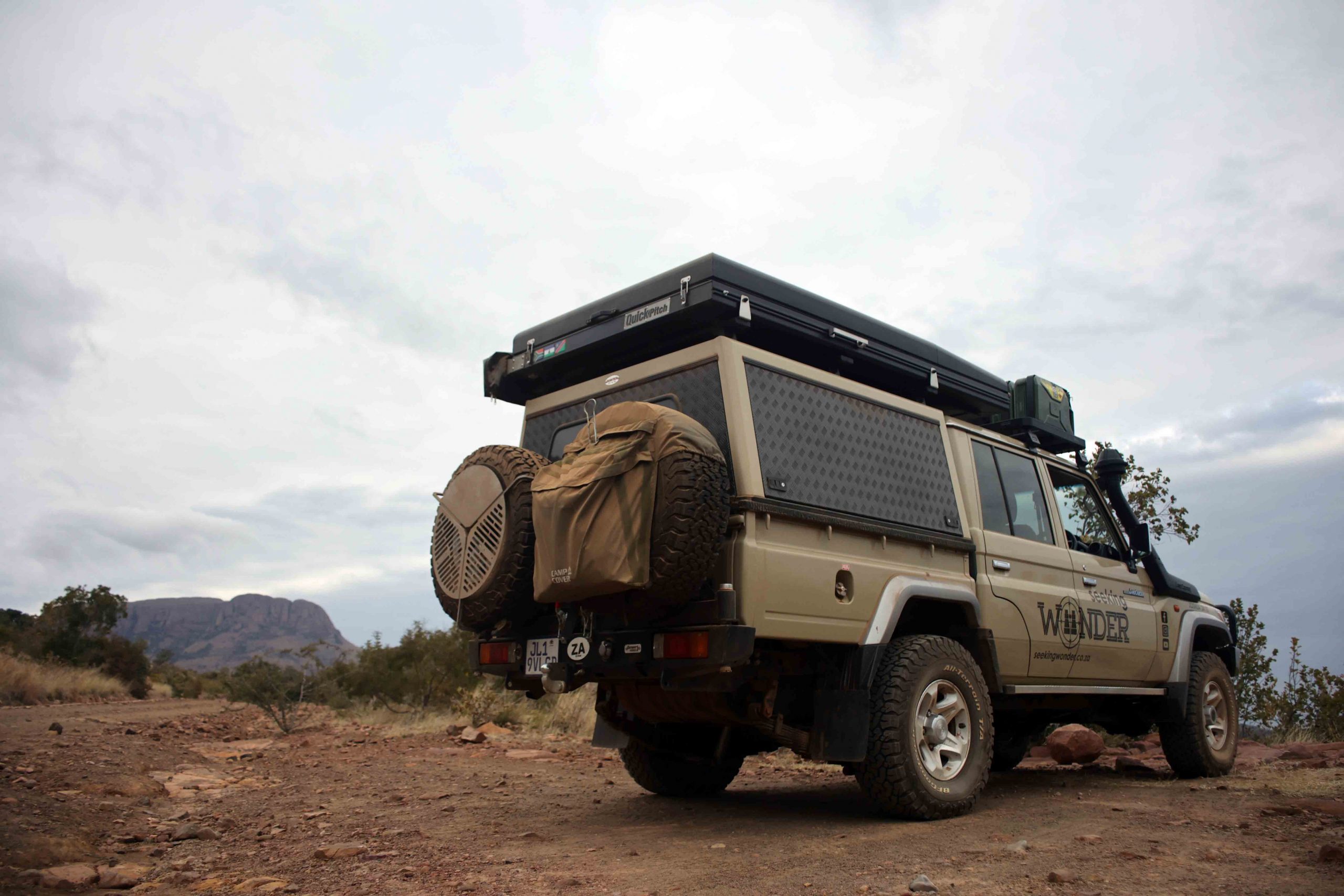
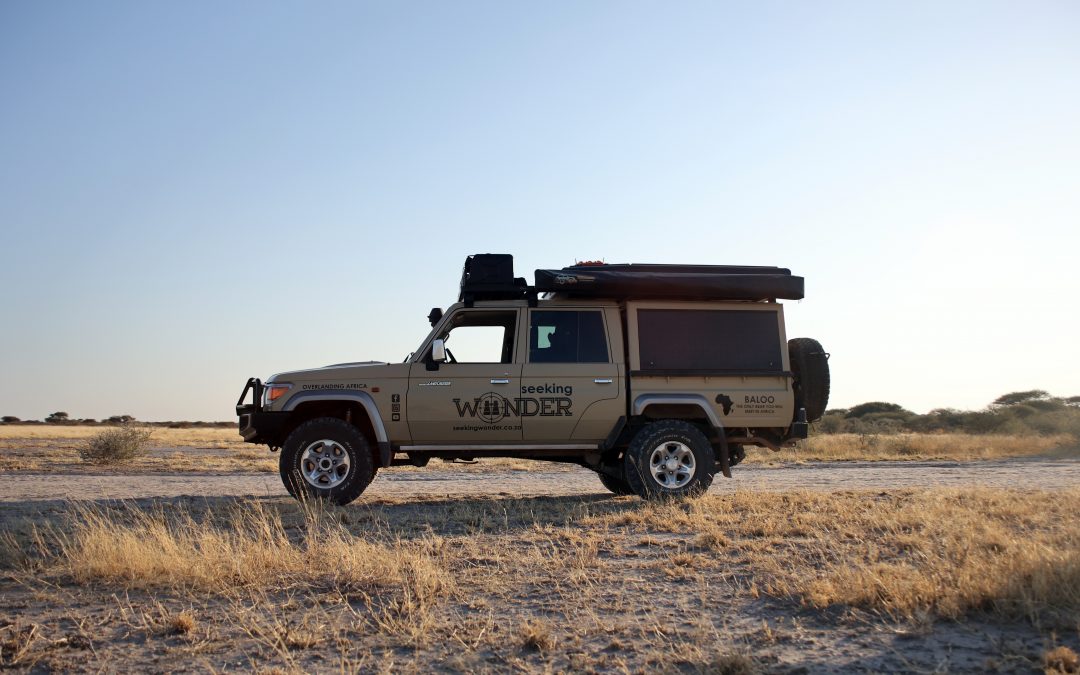
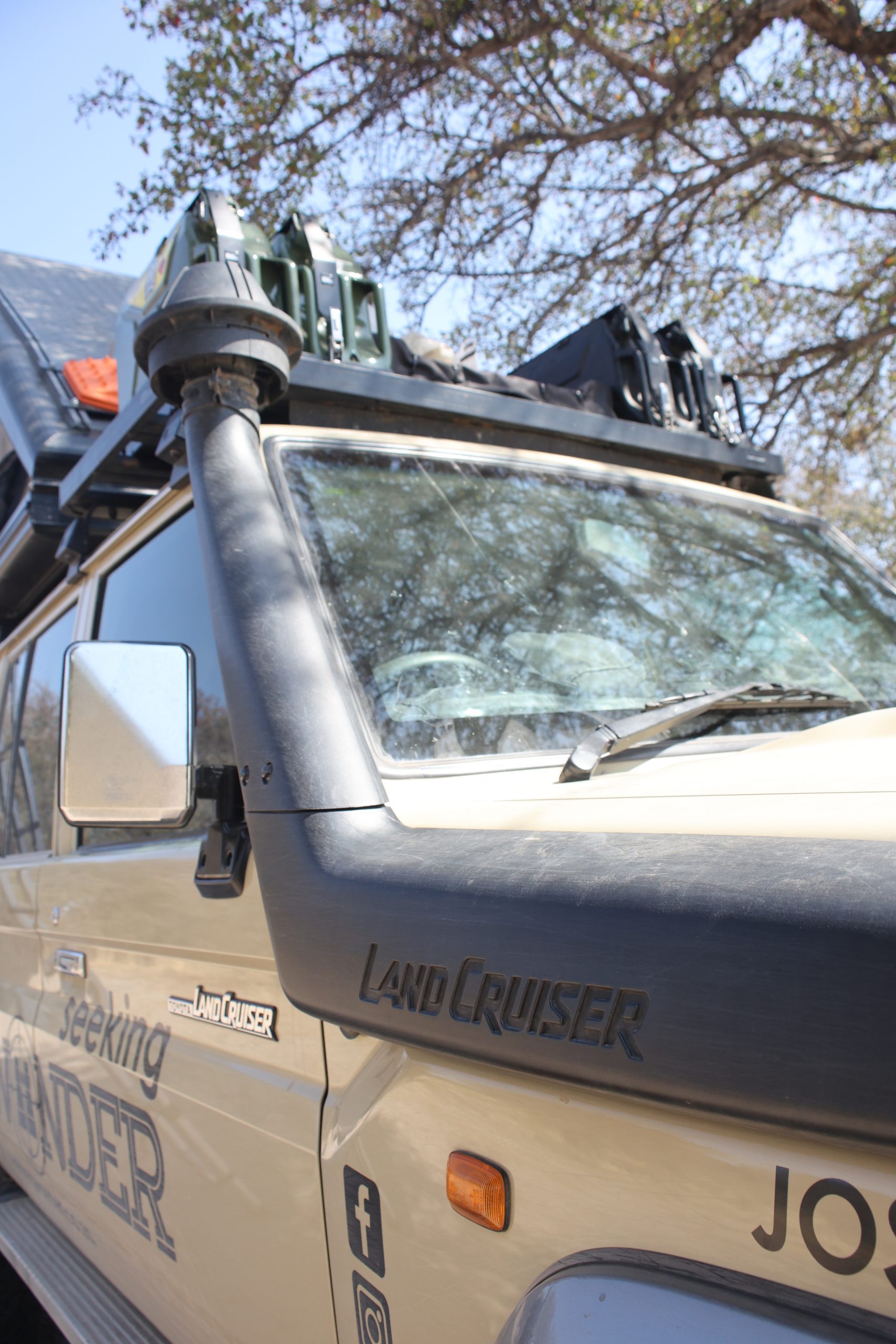
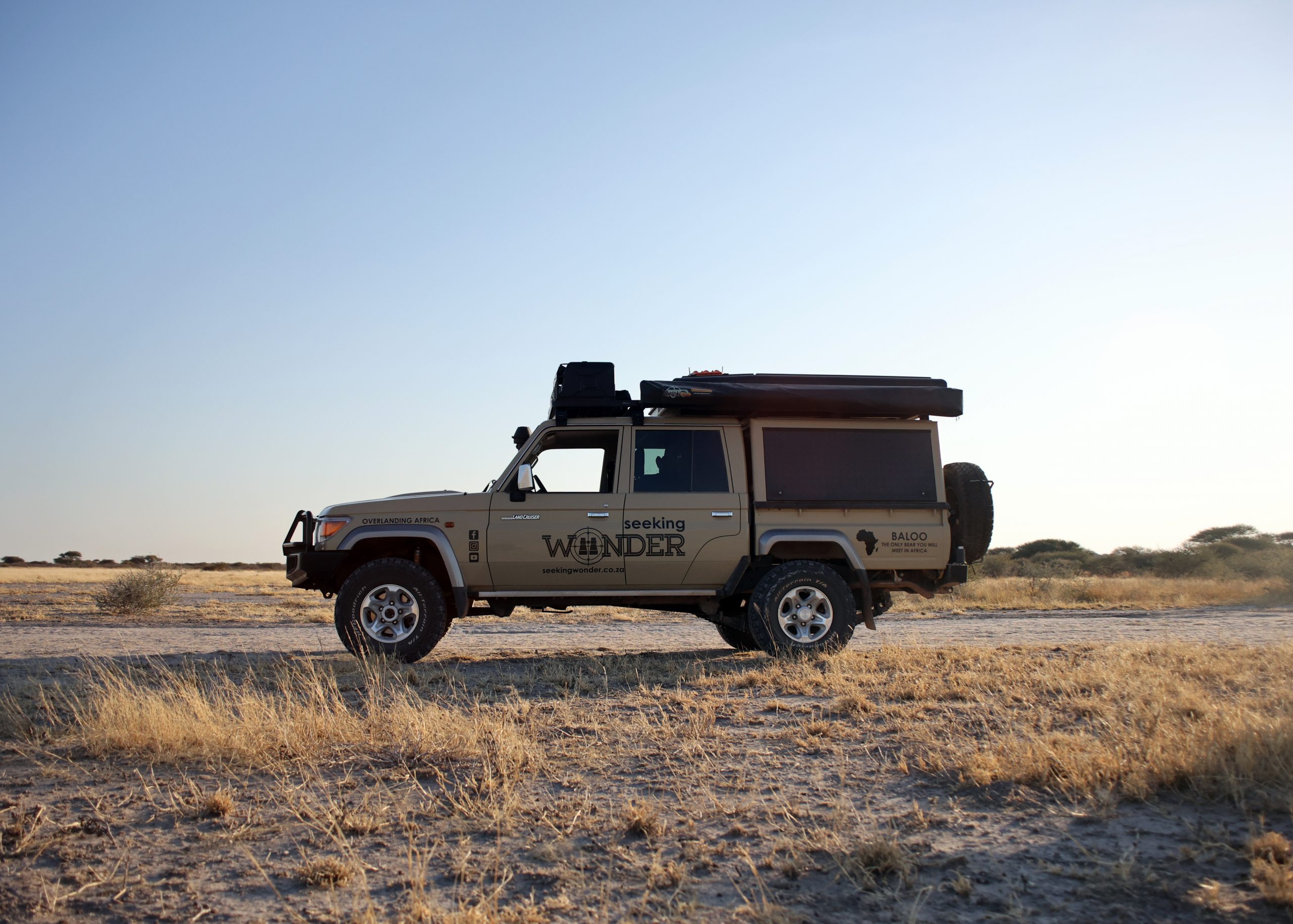
We chose the legendary Toyota Land Cruiser 79 series (Double Cab, 4.5L V8 Diesel) as vehicle and have used it on many trips since 2020. In one word: reliability. No vehicle is immune to issues, but following many bad experiences with our Jeep we have not looked back since. There is a reason why the solid no-nonsense, no-frills, robust workhorse ethic of the 70 series Cruiser design appeals universally to serious African overlanders, farmers, and bush folks alike. The sizeable double cab configuration helps us to make it a liveable space, while the V8 power enables it to be equally at home on the N1 passing a truck as it is slowly crawling along our favourite remote bush trails.

2. Can you do the can-canopy?

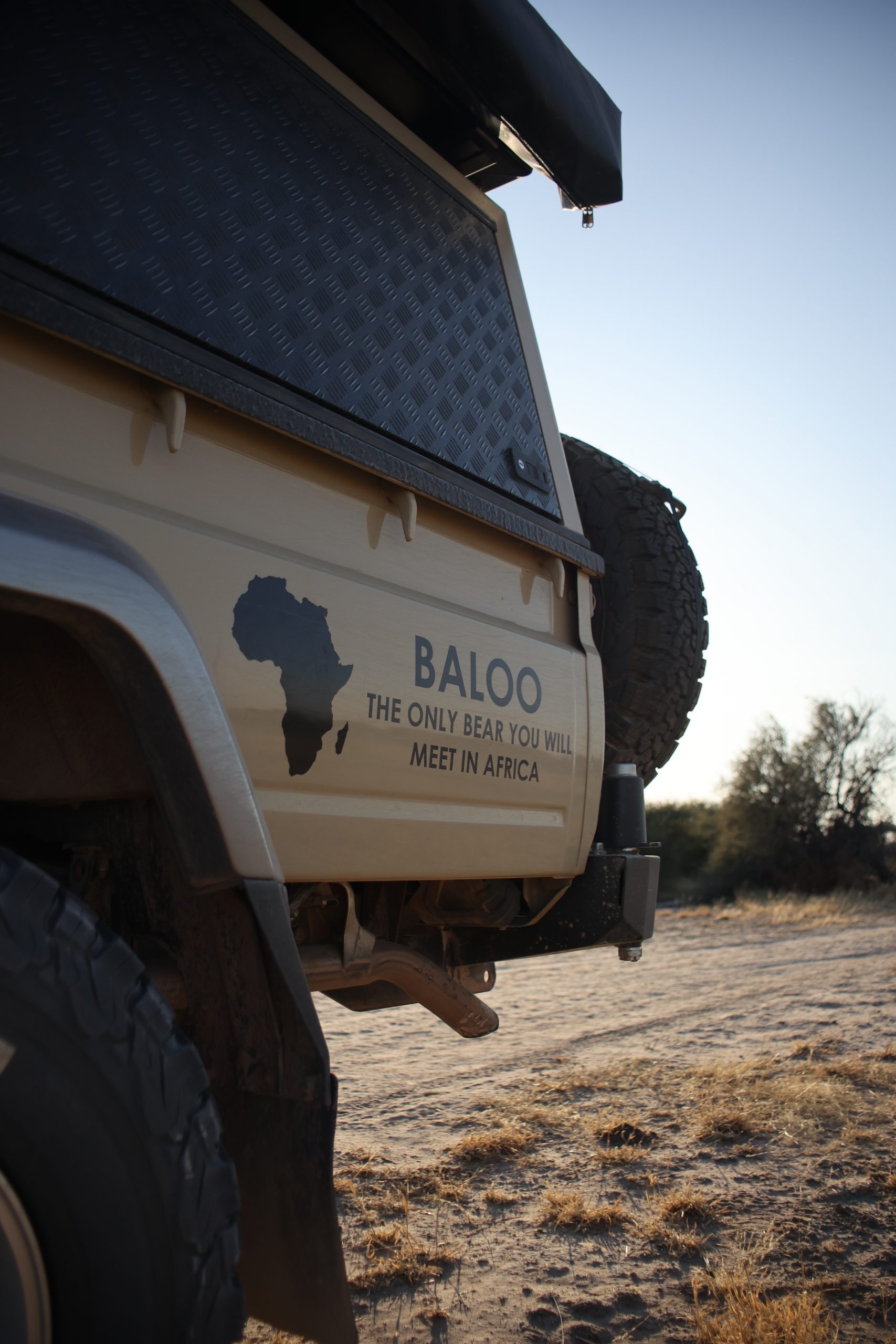
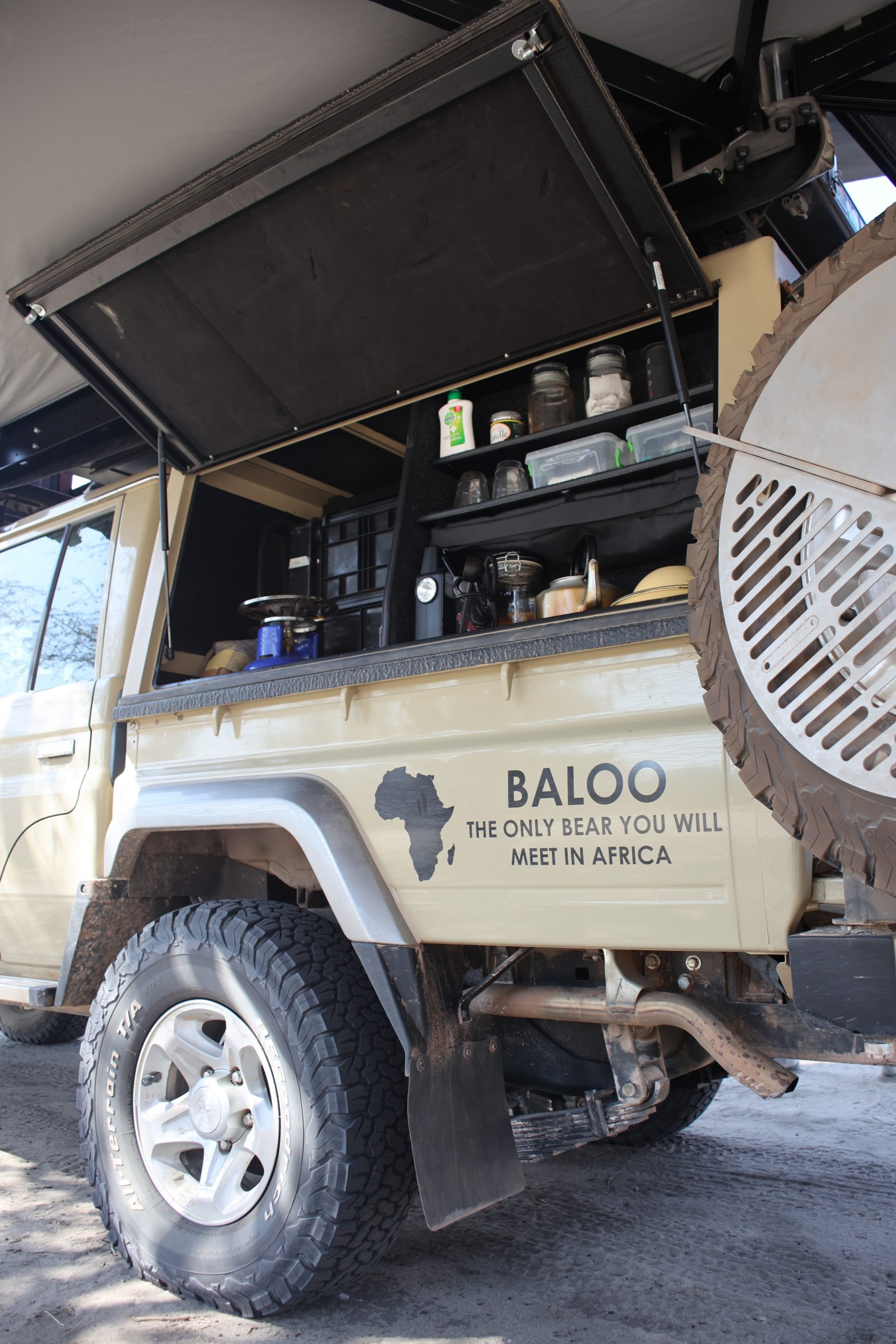
We fitted a Bushtech aluminium canopy, mainly due to its reputation for durability, practicality and versatility. Internal and external structural members are all slotted, allowing M8-bolted items to be added just about anywhere you like. Also, it simply looks the part on a working cruiser. The small core group at Bushtech is a really friendly and efficient bunch and know their products well. Our canopy has operated under heavy loads and very dusty conditions and have not once let us down.

3. Steel yourself

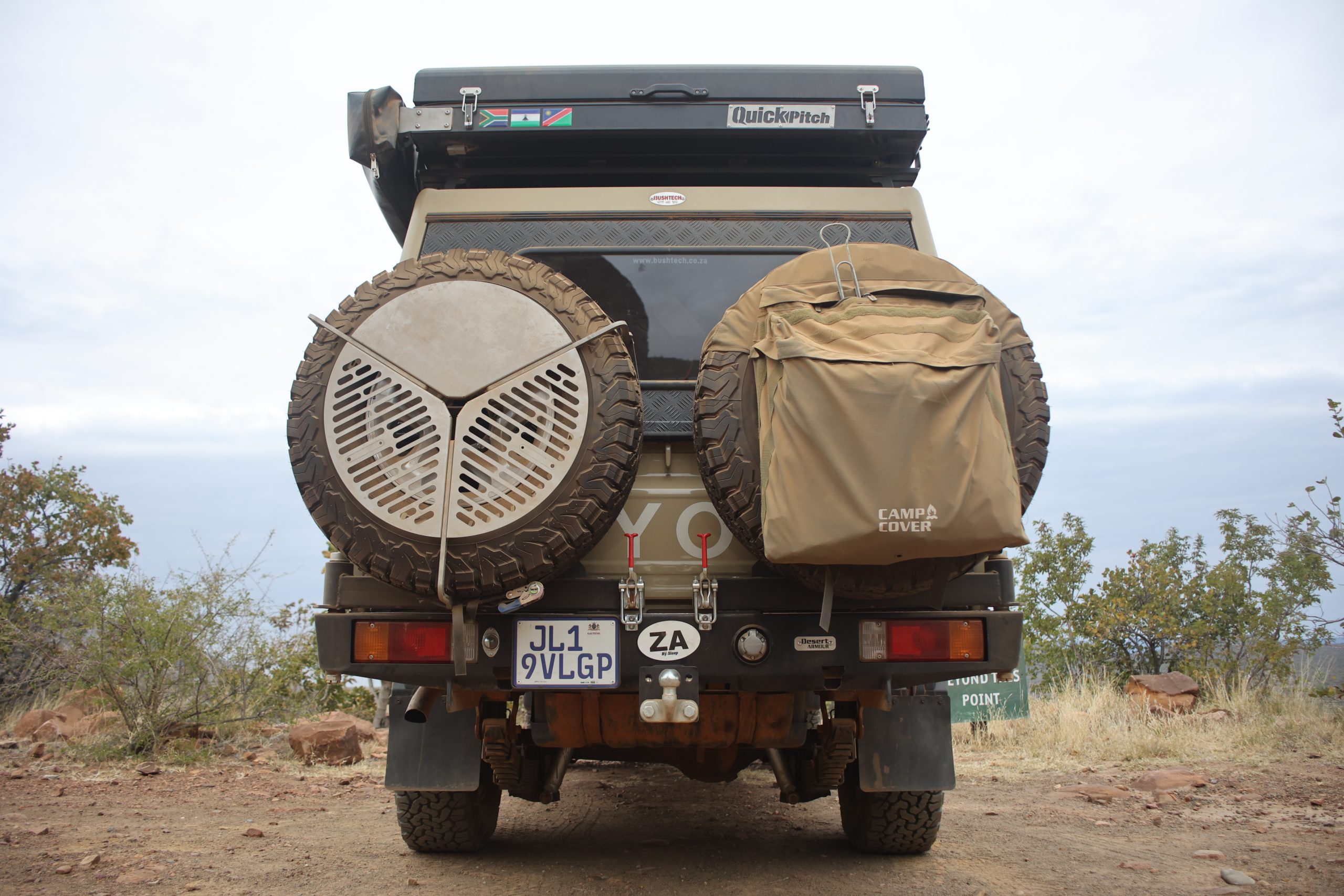
The factory issue Land Cruiser comes in a plaasbakkie configuration – without canopy and with a spare wheel on the back, ready for Boela the Boerboel to jump on the back as you go and check on the mielies. If this is not how you are going to use it, and you need packing space in the canopy, then that spare wheel must move somewhere practical, like on a rear swing gate. We fitted the Gobi-X Desert Armour rear replacement bumper and swing gate. It has a very robust design and allows for future fitment of a second spare wheel, which we subsequently added after we got caught out in the middle of nowhere with a damaged sidewall. At this point Baloo sat on its haunches, so we needed some counterweight at the front (refer the dark spiral I was talking about). We therefore also fitted an ARB steel bulbar. It also serves as a safety crash bar, proper recovery point location, aesthetic improvement and future reason to mount unnecessary gadgets onto.

4. Rooftop hotel

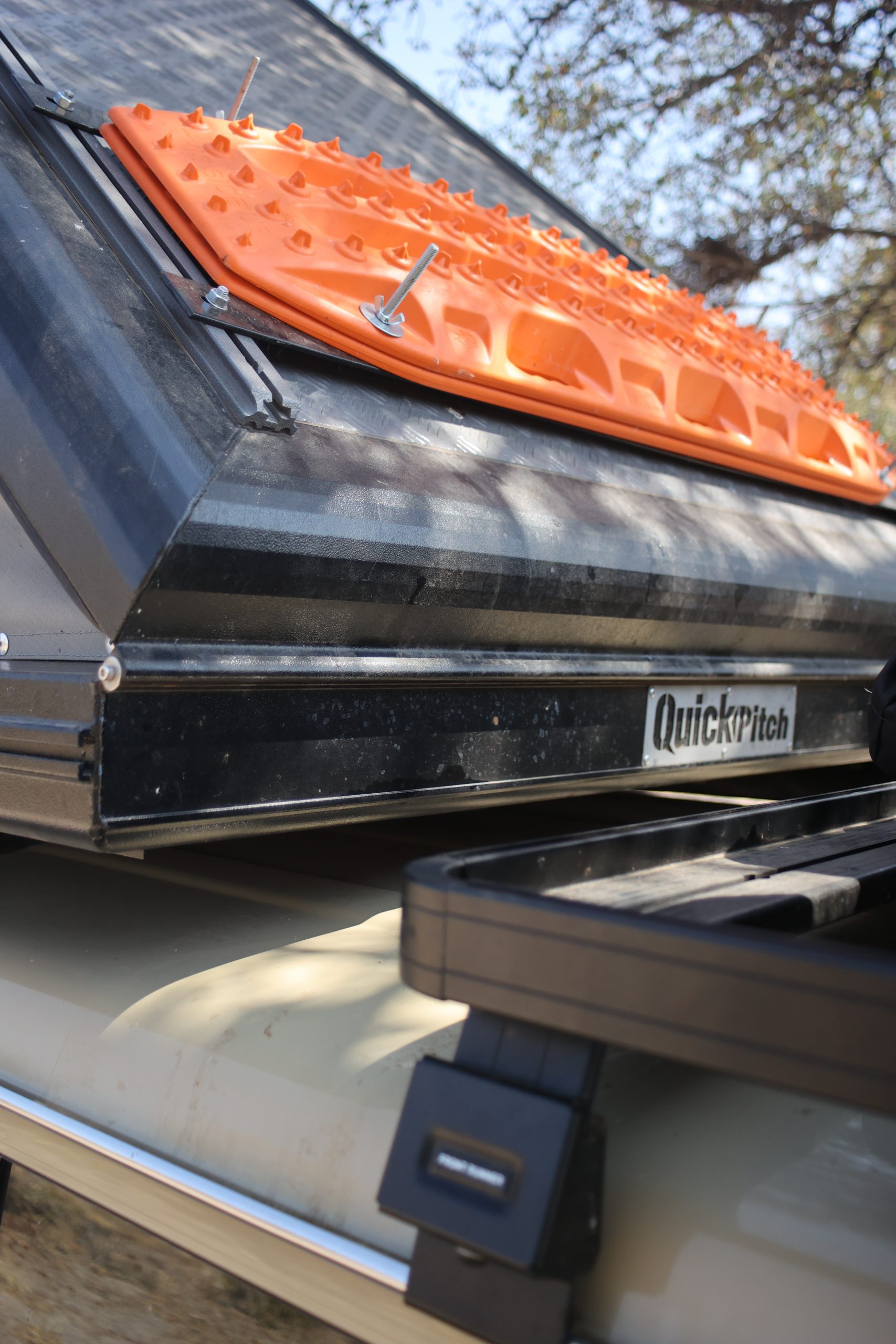
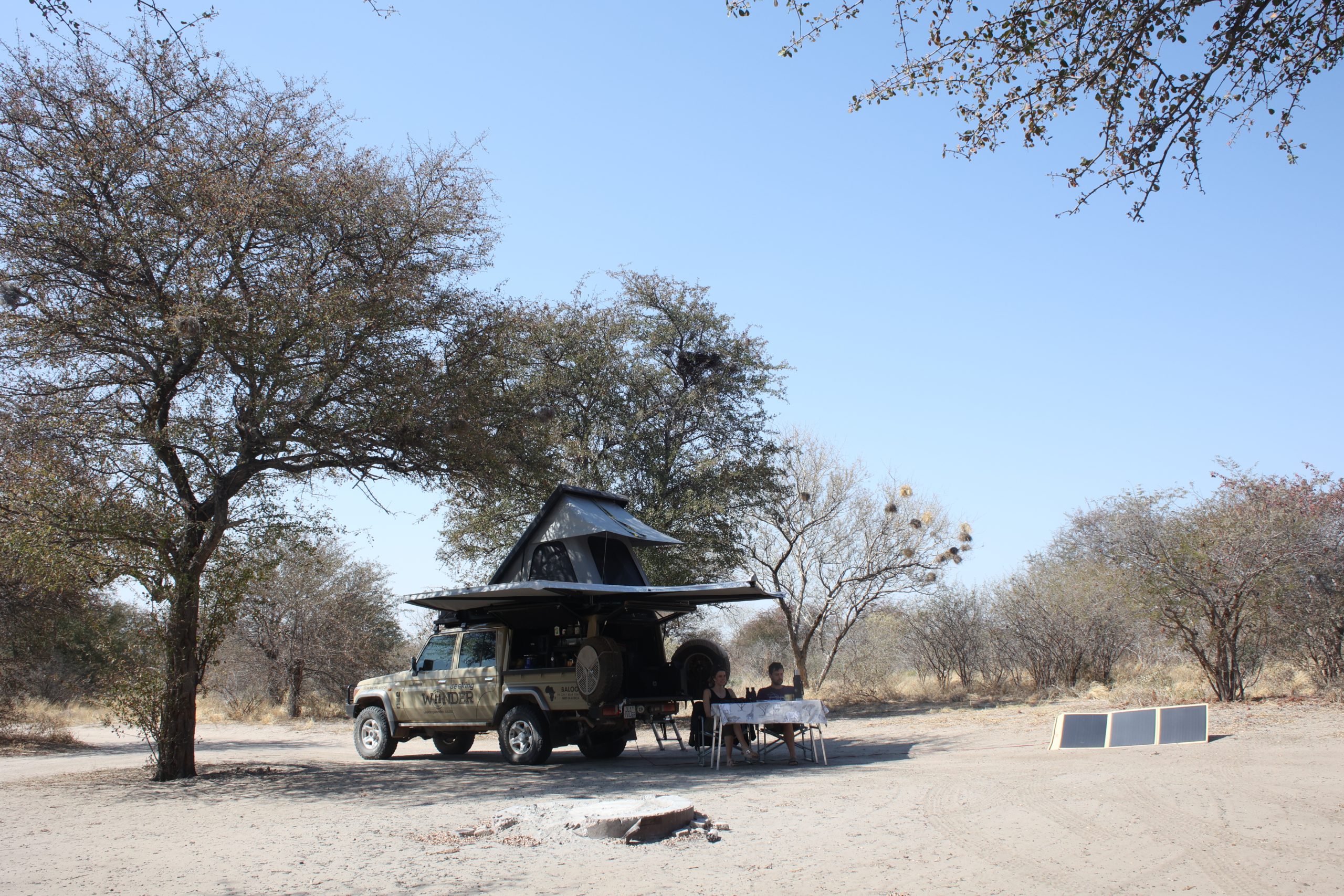
You certainly don’t need a rooftop tent, and we went without one for long. However, when we started venturing into unfenced wild camping in lion country more and more, it became a bit of a prerequisite for a good night’s rest. We went with the Quickpitch hard-top clamshell type tent. It made our camp-life much more efficient with its quick and simple deployment and provides us with a very comfortable resting space after long days in the bush.

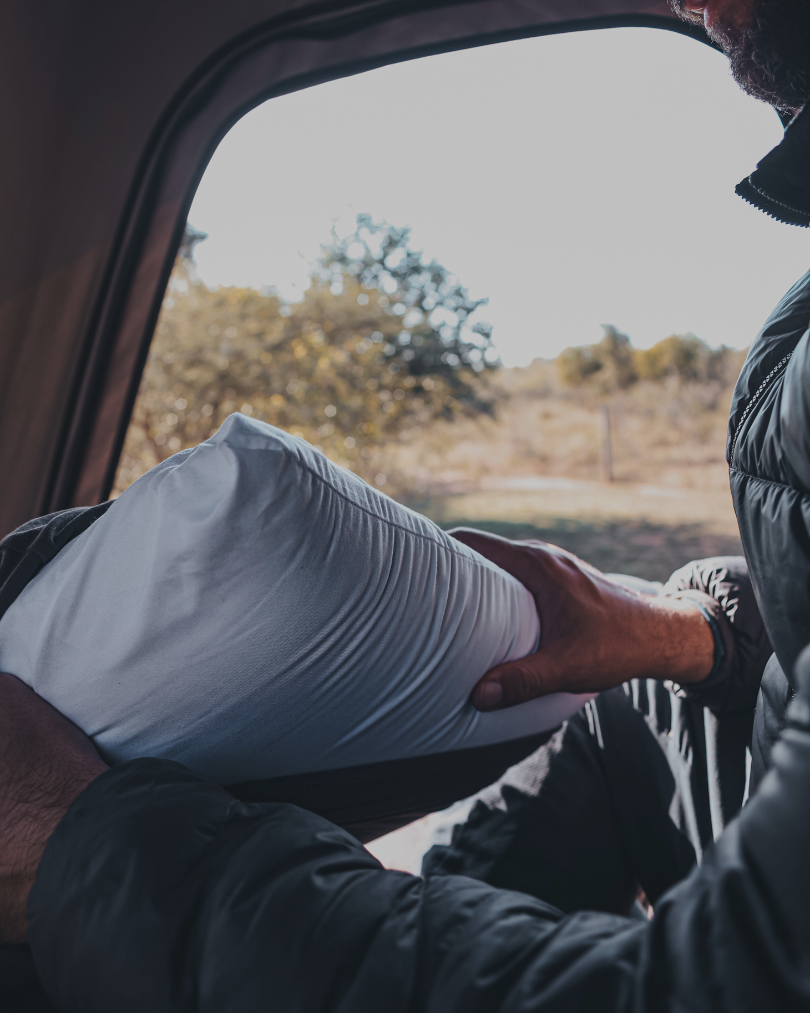
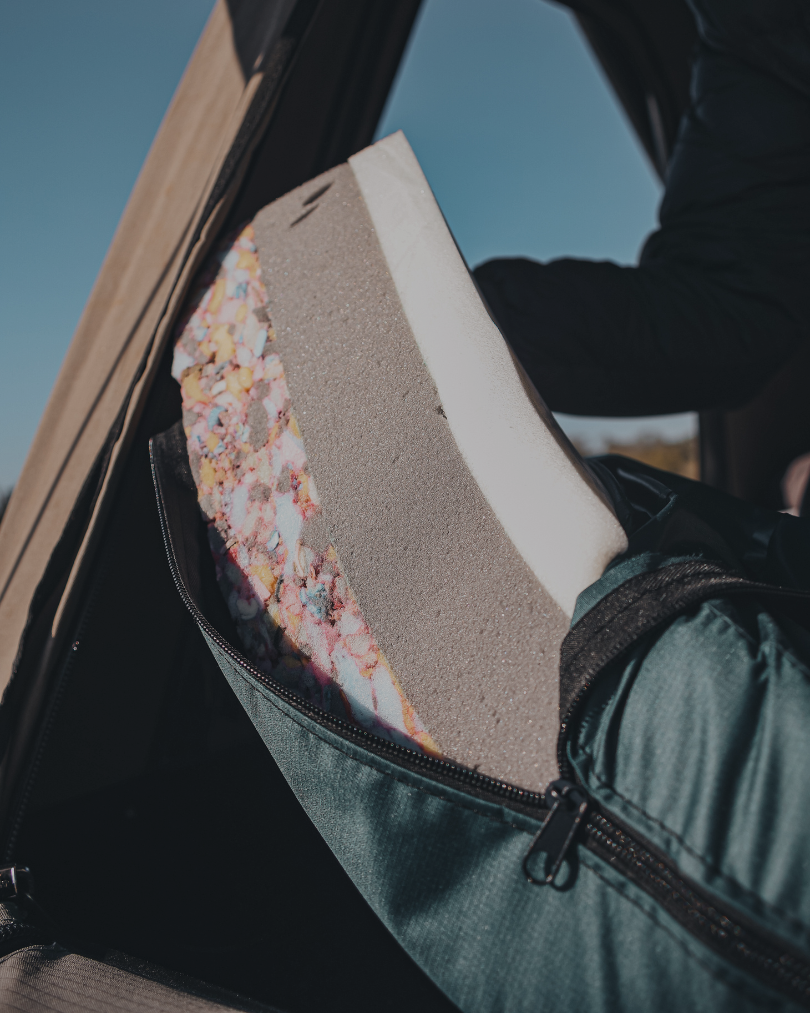
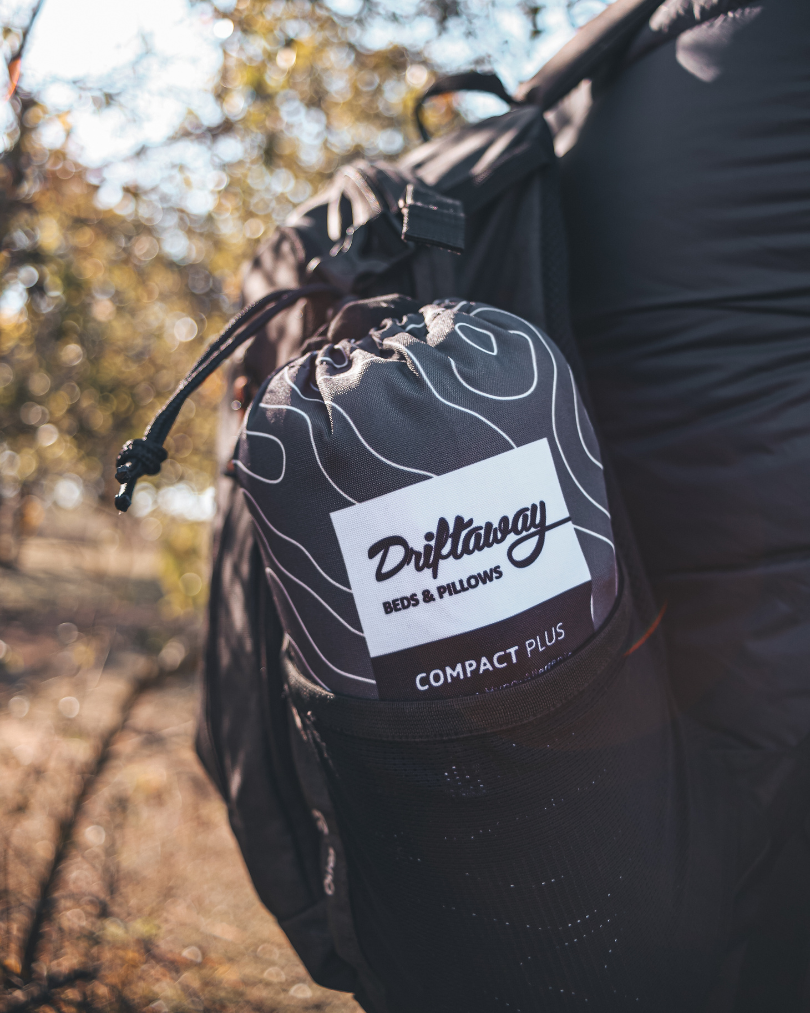
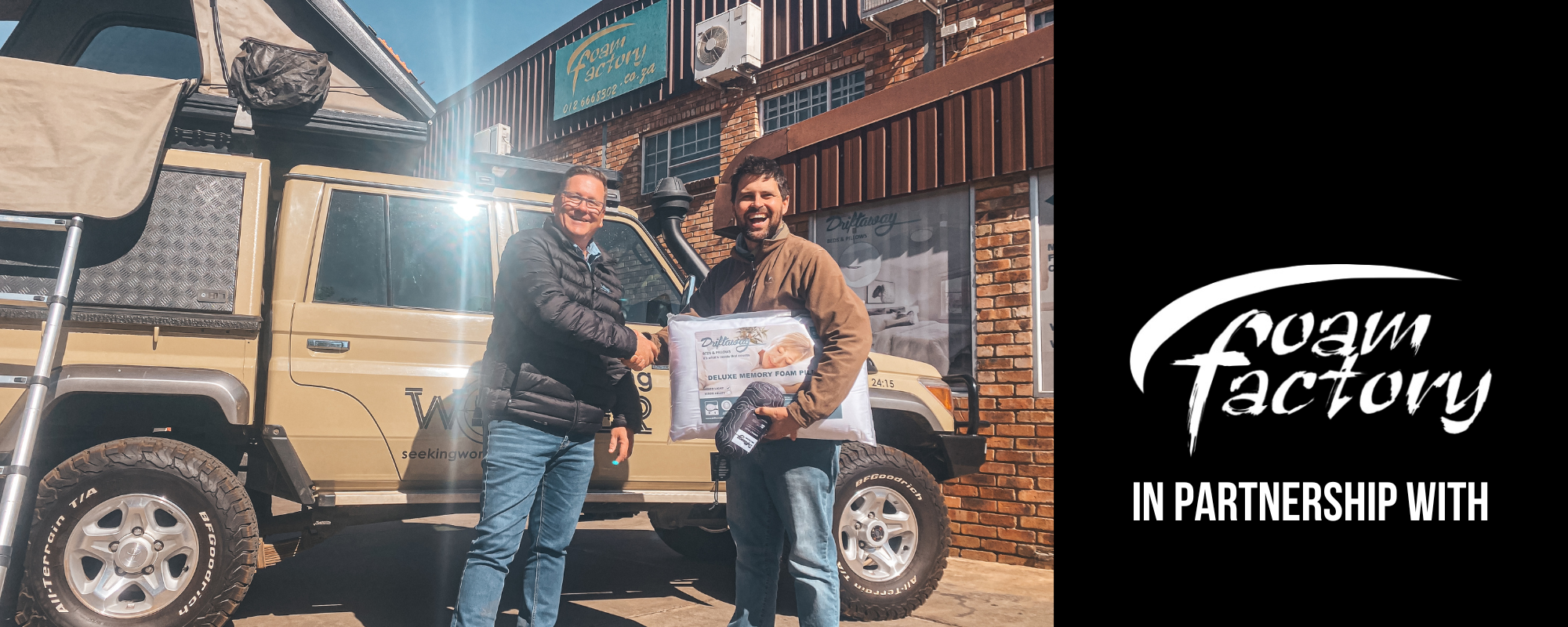
We replaced the standard 70 mm mattress in the tent with a 135 mm, three-layered (25mm memory foam, 55mm high density foam and 50mm chip board) mattress custom-made to our dimensions with a waterproof ripstop cover and zip by Foam Factory. Our backs thanked us greatly and we used our first custom mattress every night for two years before needing replacement. The first one was so ridiculously comfortable and durable that we replaced it by the exact same mattress spec. We also added two Driftaway Beds Memory Foam Pillows as well as two Driftaway Beds Compact Plus Memory Foam Pillows (great for hiking and picnics!) to our sleeping crew and so far they have really impressed us. They are hypo-allergenic, anti-bacterial, non-toxic and anti-static! Our custom layered RTT high-density foam mattress, Driftaway Beds Memory Foam Pillows and Driftaway Beds Compact Plus Pillows are kindly sponsored by Foam Factory.

5. Awesome awning

Another item that was delayed by some time on our list. We always trusted in the good old gazebo, and still believe this has its place for weekend or holiday trips. For our mobile home setup, we opted to add the Quickpitch 270° awning, mainly as it easily bolts to the tent and is a good value for money option to keep you out of the rain and sun. The zip-on side covers can create a cozy tented space joined to your vehicle or enable you to light the Cadac in the West coast wind. However, the pricetag of this add-on was too much to stomach so we made our own ripstop side covers for a fraction of the cost.

6. Do you even lift?

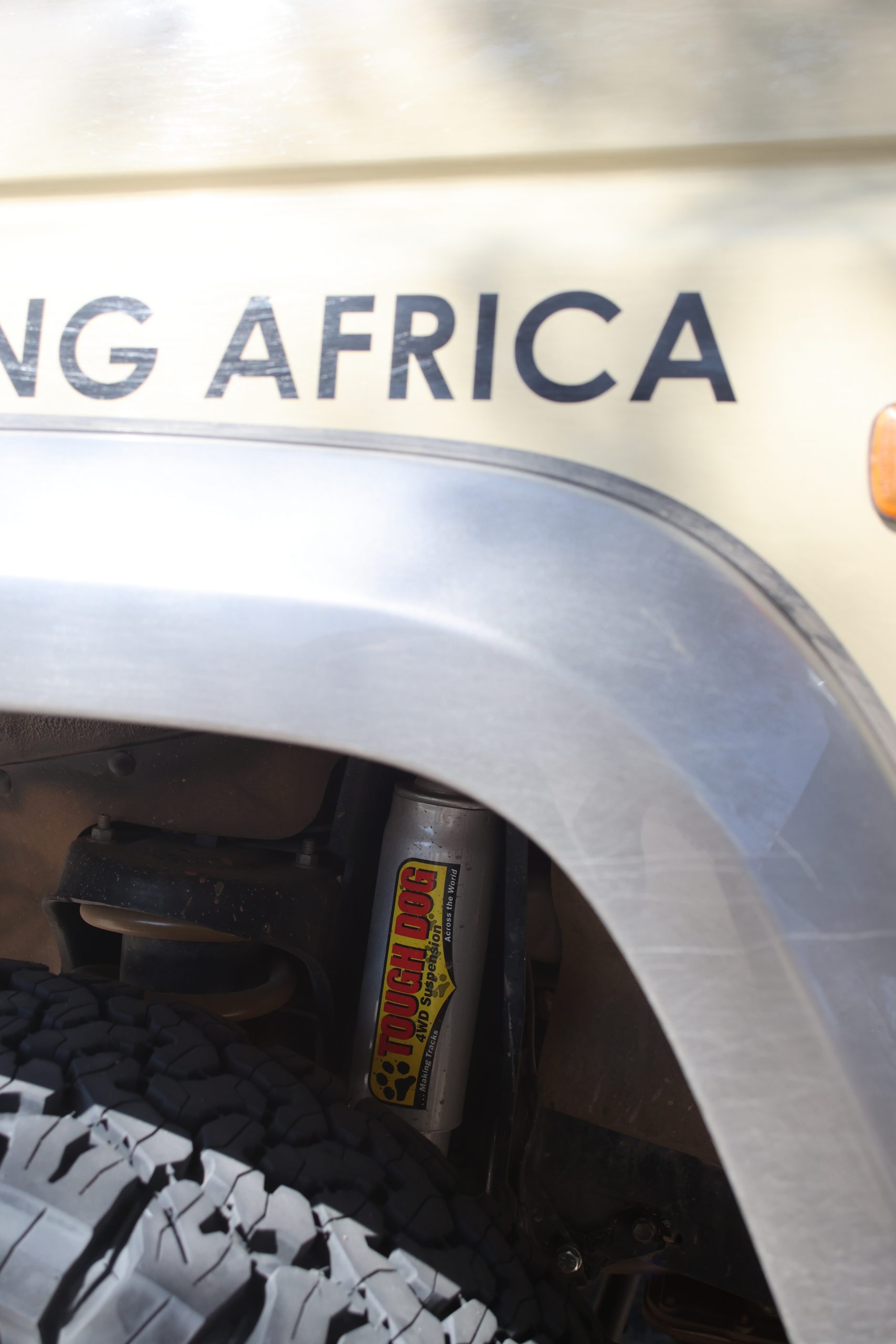
We intentionally kept the replacement of suspension for last until the vehicle was fully loaded. Or at least, this is our excuse when in reality we only delayed the painful cost. The factory-fitted suspension system is very strong and rated to carry +/- 1 ton load, which is fine when done every now and then. However, the rear leaf packs are also notorious for sagging when loaded heavily. After completing a few trips with all our overlanding paraphernalia and looking like a Beitbridge-bound Hiace, we decided it would be best to upgrade to something that can support the inherent heavy loading of our overlanding setup well and on a permanent basis. After much deliberation we settled on Tough Dog’s Extra Heavy Duty leaf springs, front coil springs and 41 mm foam cell shock absorbers. To date we have been very impressed. No more sagging at full load and the two-inch lift that comes as a by-product certainly helps when you are in the sticks. The ride quality is perfect when loaded and not bad at all when unloaded – city smooth ride quality is not a top priority for kidney crushing Cruisers anyways.

Elephant / Mapungubwe

7. Going to tekkie town

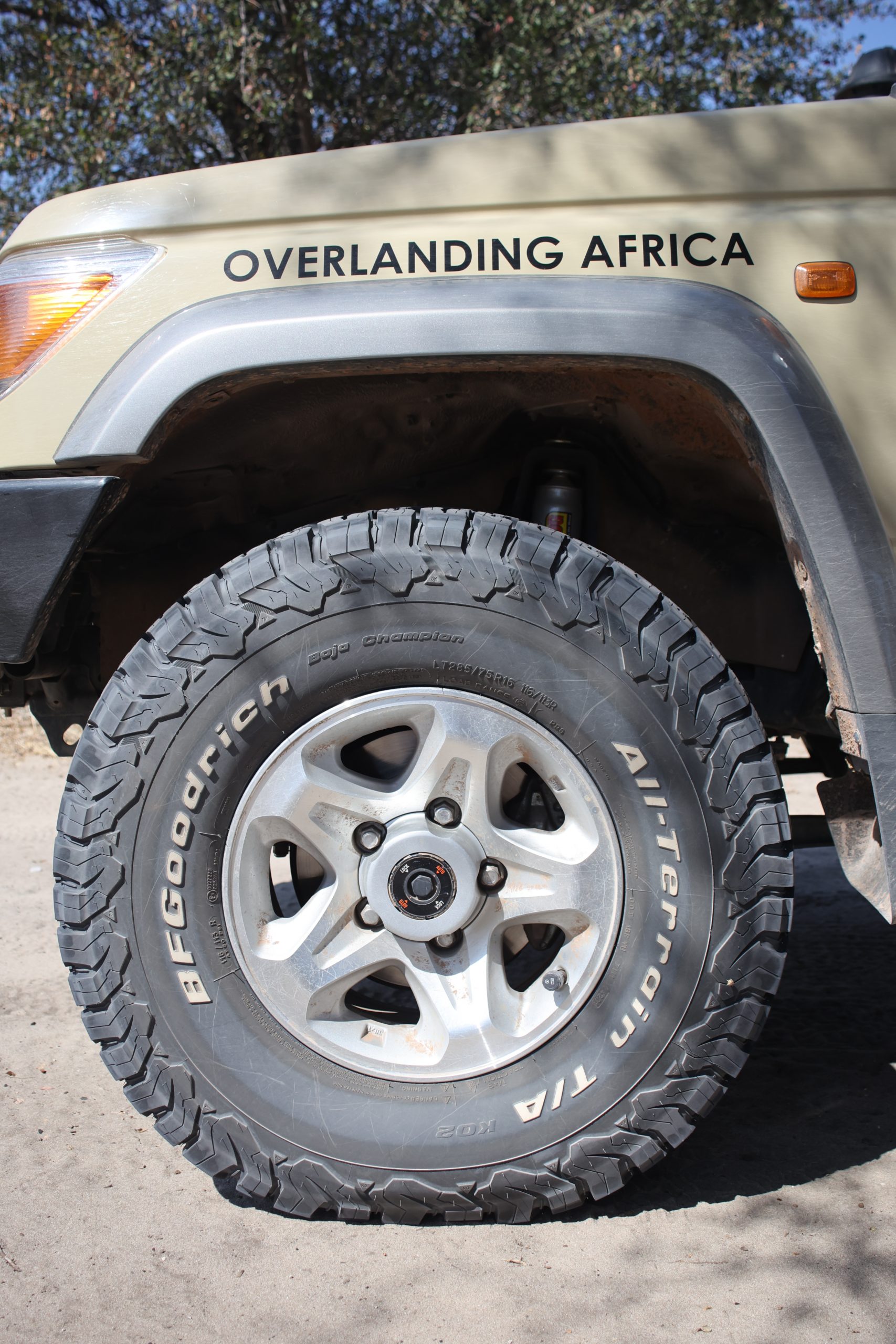
Proper tyres should be rather high on the to-do list when venturing off the beaten track. We used the factory-fitted Dunlop Grandtreks for about 40 000 km and they did well with only three punctures and one sidewall write-off. In the process we also learnt the hard way that a second spare tyre is a good insurance policy. We decided to upgrade Baloo’s tekkies to the tried and tested BF Goodrich All Terrains in the fairly widely available 285/75 size. We kept the original 16 inch Toyota rims due to their good strength. Unfortunately, about 50 000 km in, all four BFGs developed sidewall cracks (no, we did not deflate them too much..). The folks at BFG did come to the party by crediting us for the remaining tread. The fact that BFGs seem to prefer higher pressures due to their stiff sidewalls and yet is marketed as the perfect all-terrain tyre for applications where lower pressures are required still seem to be a bit of a paradox to us. For now, it seems as if their life are simply significantly reduced if you are going to spend most of your time off the tar.

8. It’s on top

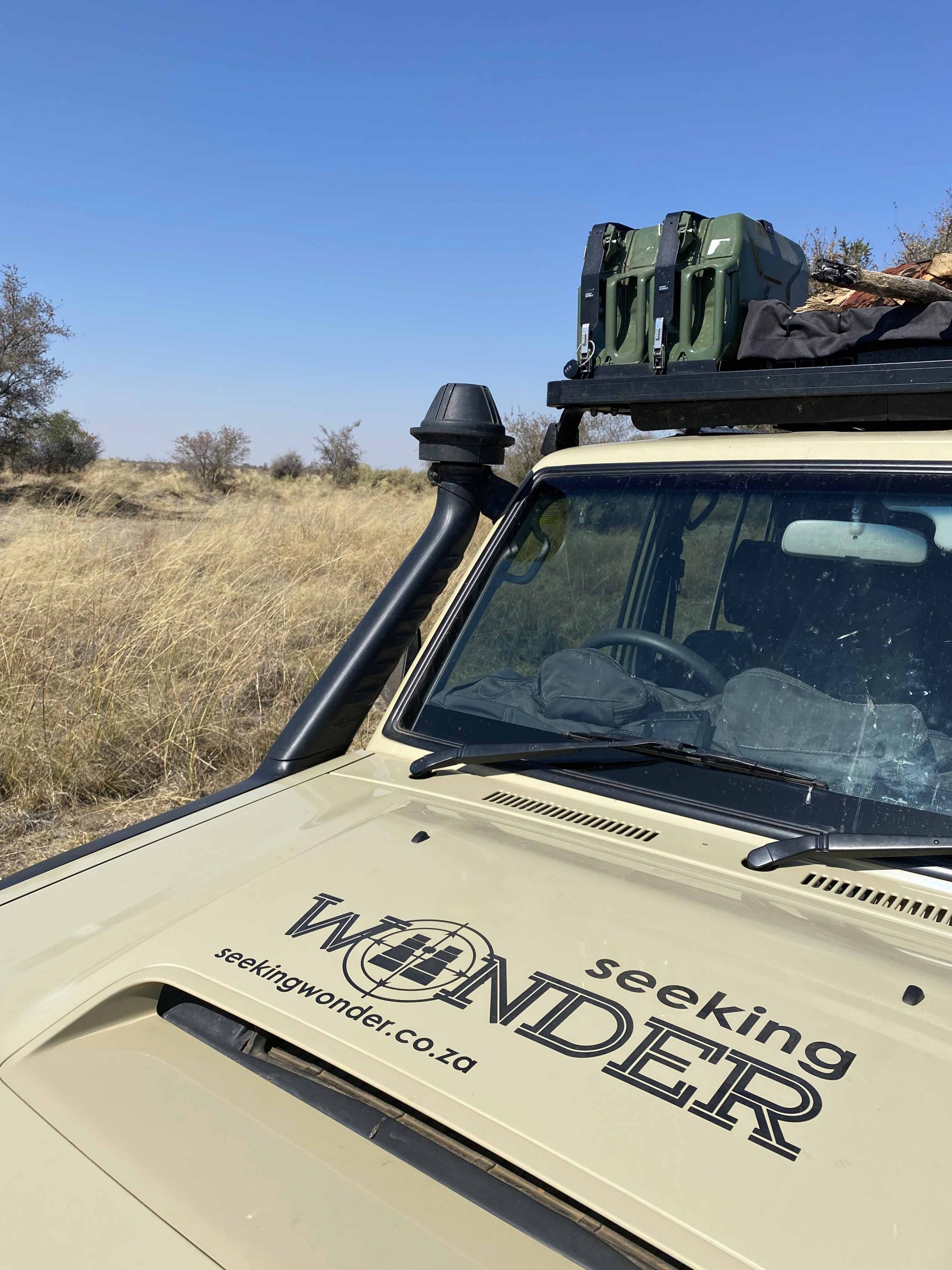
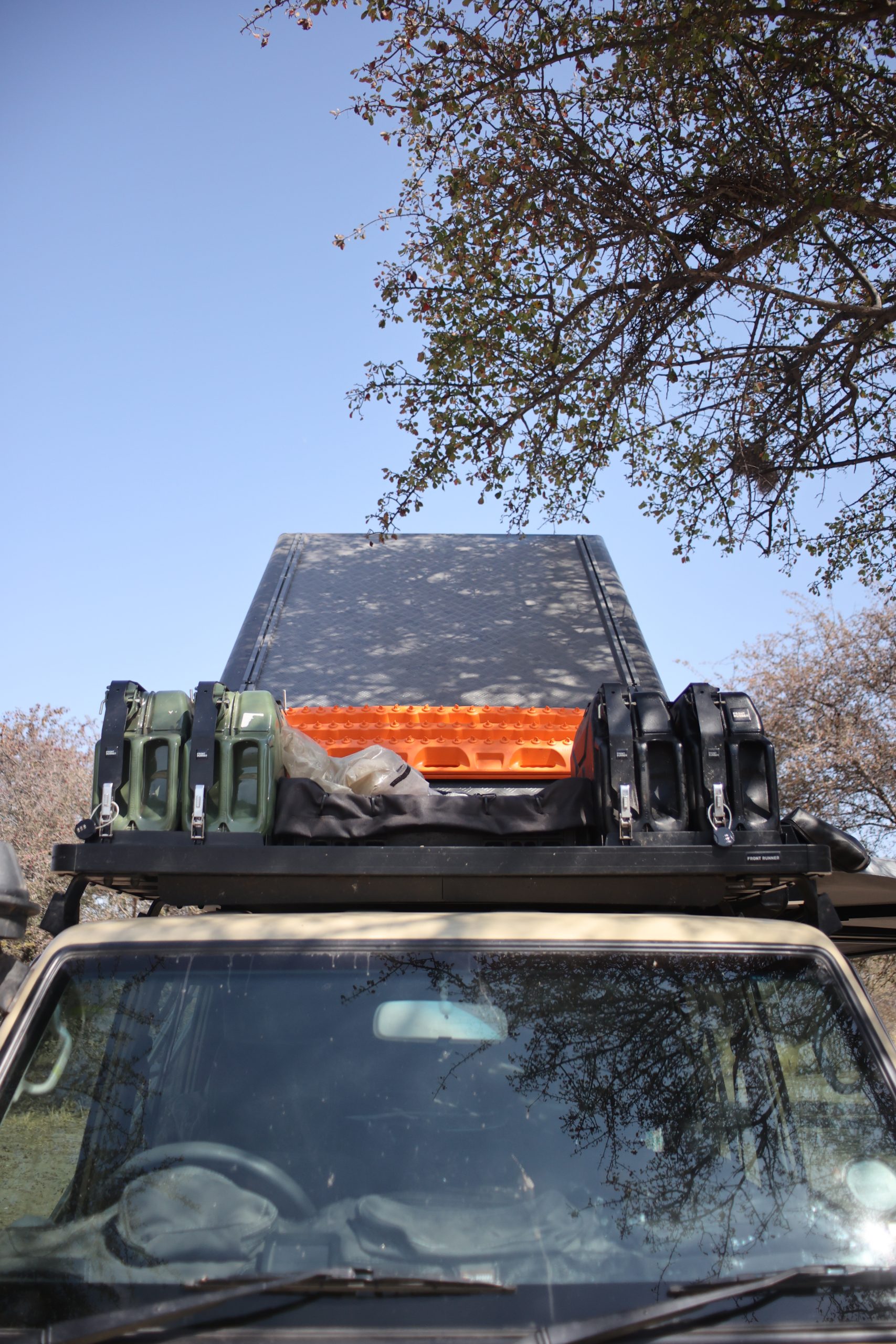
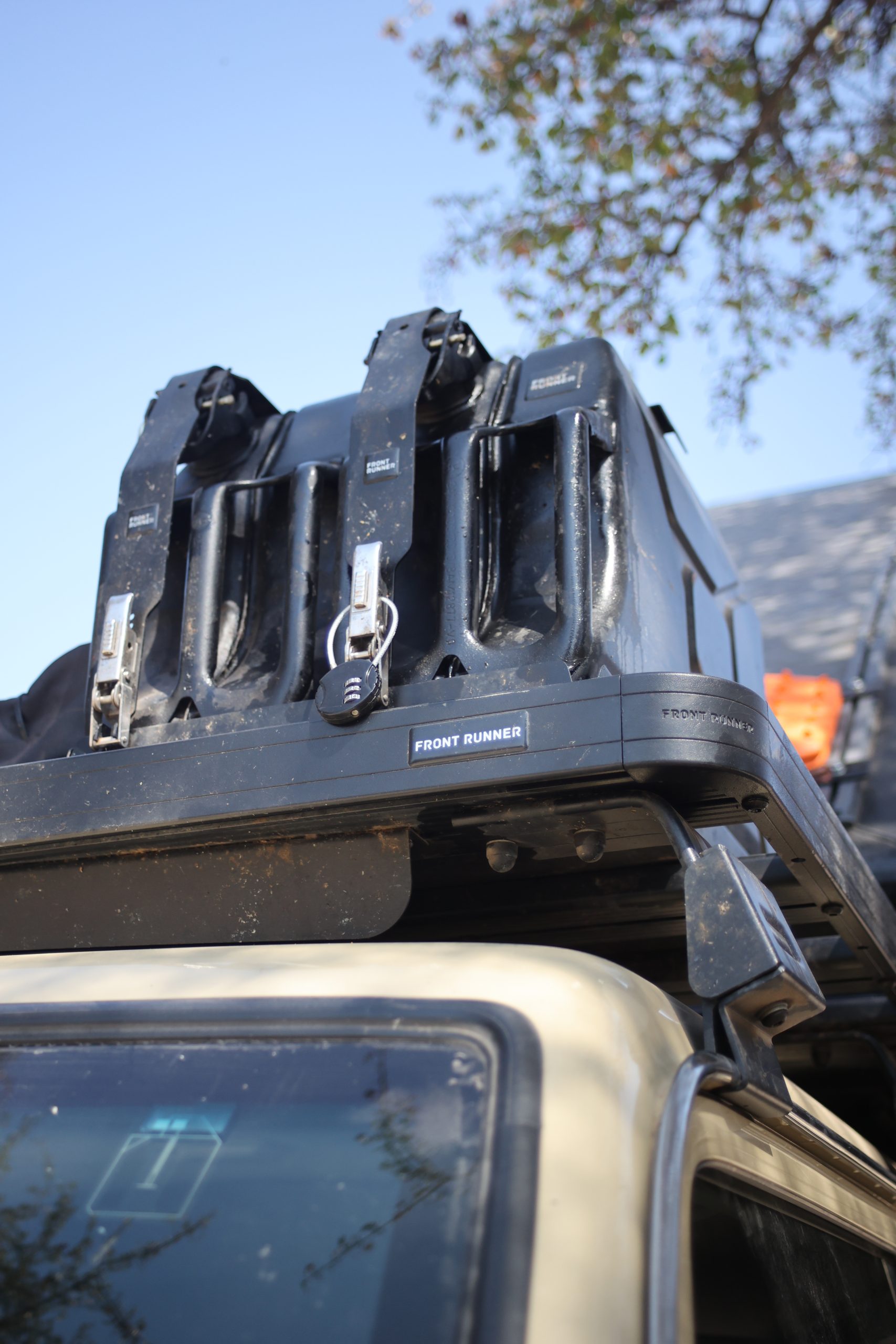
In an attempt to blend in with African traffic and its famously overloaded vehicles, we invariably carry some bulky items on the roof. After not having fun wrestling jerry cans from deep within the canopy on previous trips, we now carry four jerry cans of diesel on the roof despite its non-ideal location. This gives thirsty old Baloo some extra range when we need it. Between them is an open anything-goes Westpack crate, ideal for carrying wood, heating bush shower bags or for nesting storks if they can find space. We bolt all of these to a single cab Front Runner roof rack. On top of the tent we have bolted our Max Trax recovery tracks using homemade steel spacing bars. The tent itself used to be mounted on Front Runner load bars with six support feet, all six of which failed within its first year. Since then, we replaced the system with full-length Quickpitch load bars and life has become a lot better – no issues at all! We currently carry spares of these until we can replace them with a better more reliable product.

Elephant / Mapungubwe

9. Party at the back

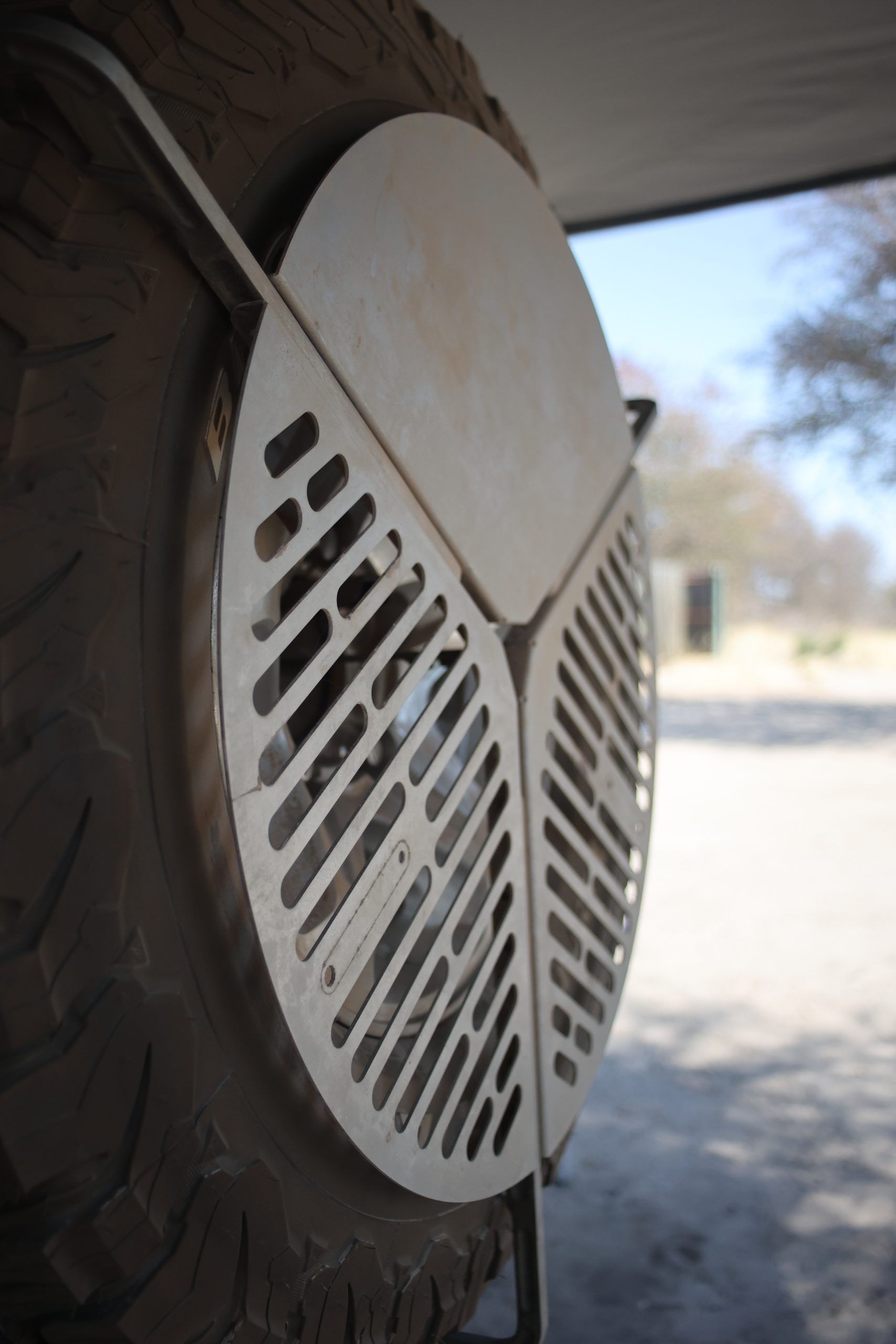
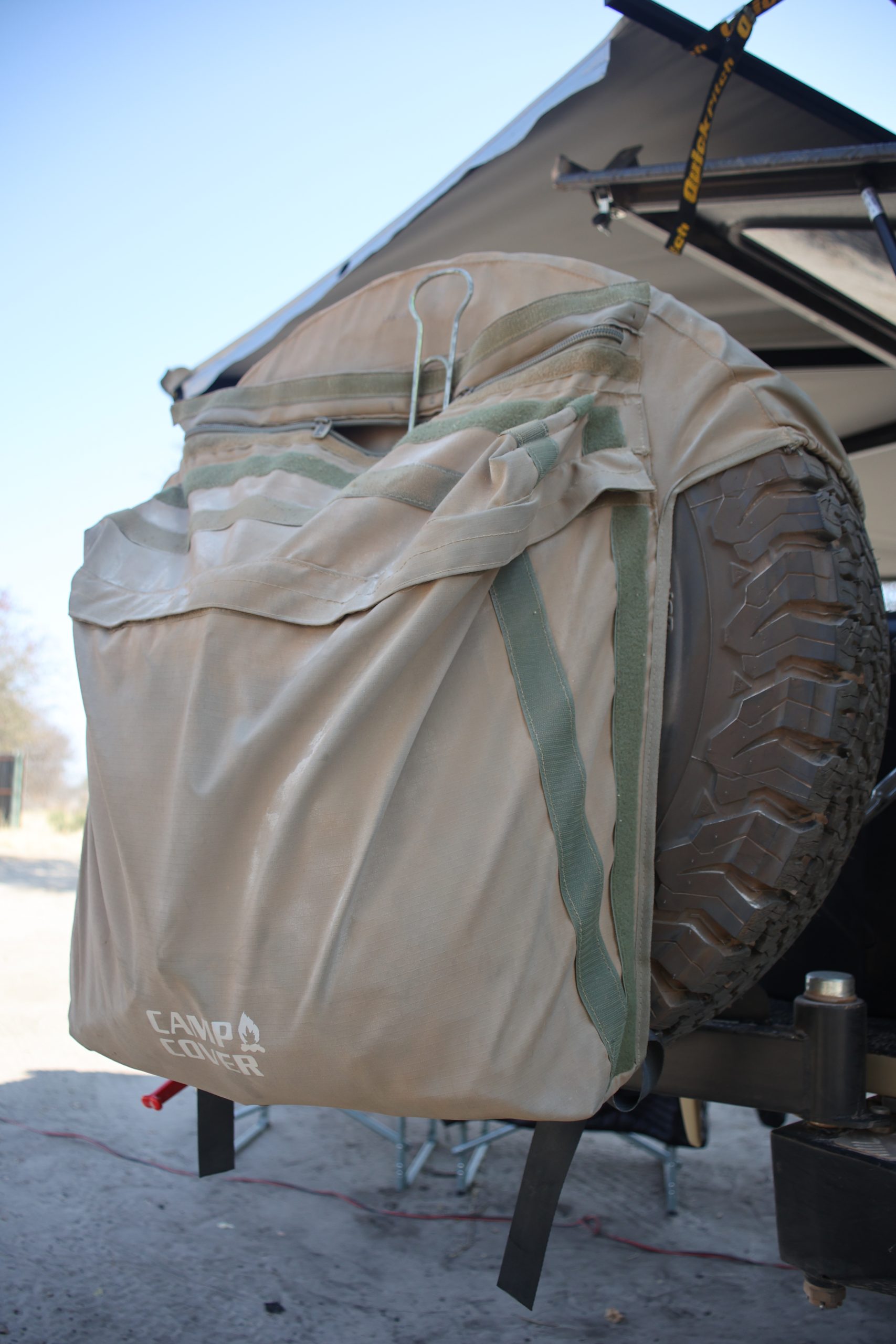
We chose to add a Camp Cover spare wheel bag onto one of the spare tyres. This is a handy heavy-duty bag that keeps dirty and dusty items outside such as rubbish or extra wood. We strapped a Front Runner braai grid to the other wheel to save interior space.

10. A swift recovery

Even Land Cruisers get bogged down in rough country. Unlike Jeeps however, they are usually recovered without using a flatbed truck afterwards. Baloo carries a few basic tools needed for most recoveries such as a set of Max Trax, a snatch strap and bridle with shackles, a normal and hi-lift jack with baseplate, and a spade. We also carry an ammo crate of basic tools, spanners, filters, wiring, tapes and suchlike to help ourselves out of the dwang  when needed.

11. The kitchen is open

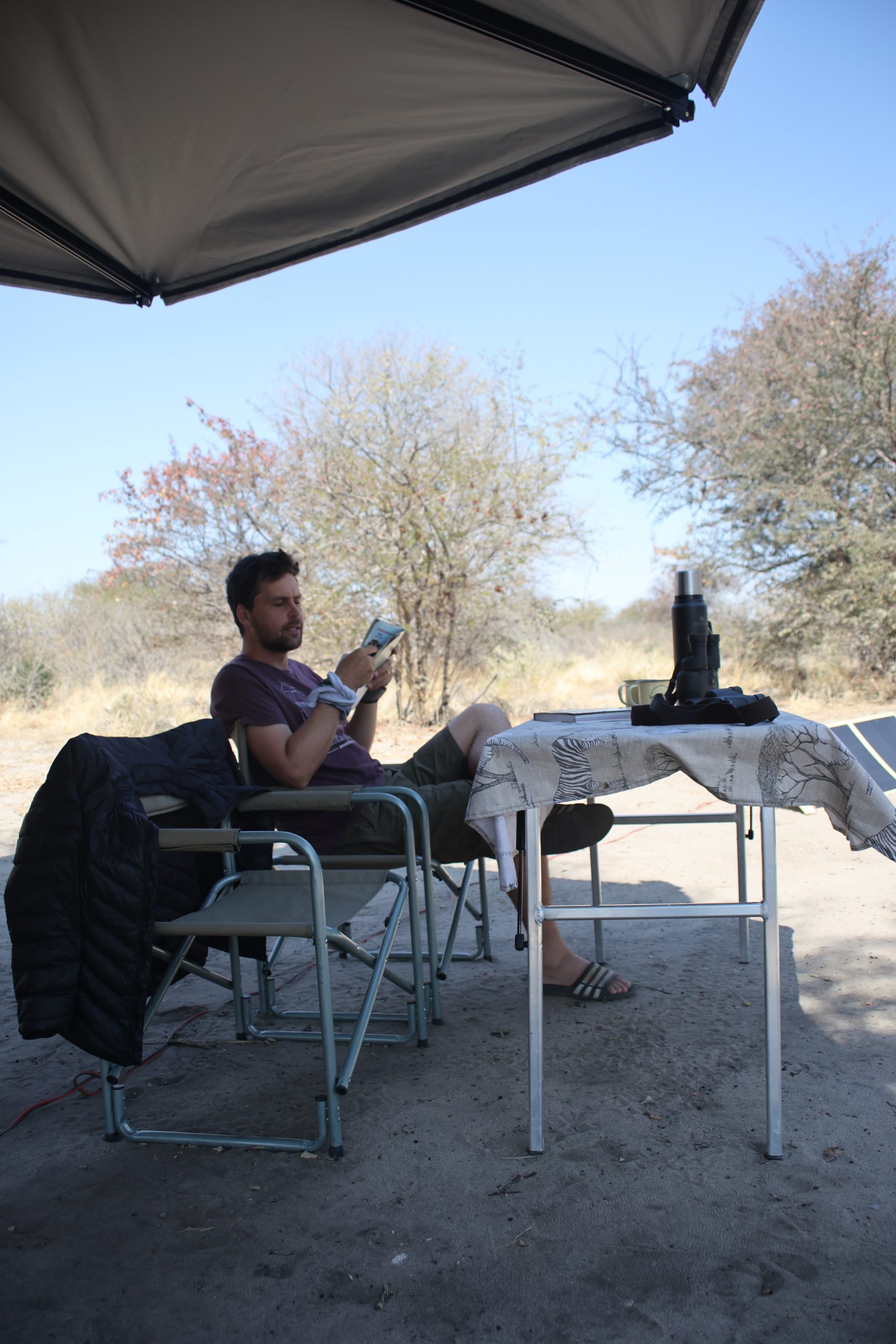
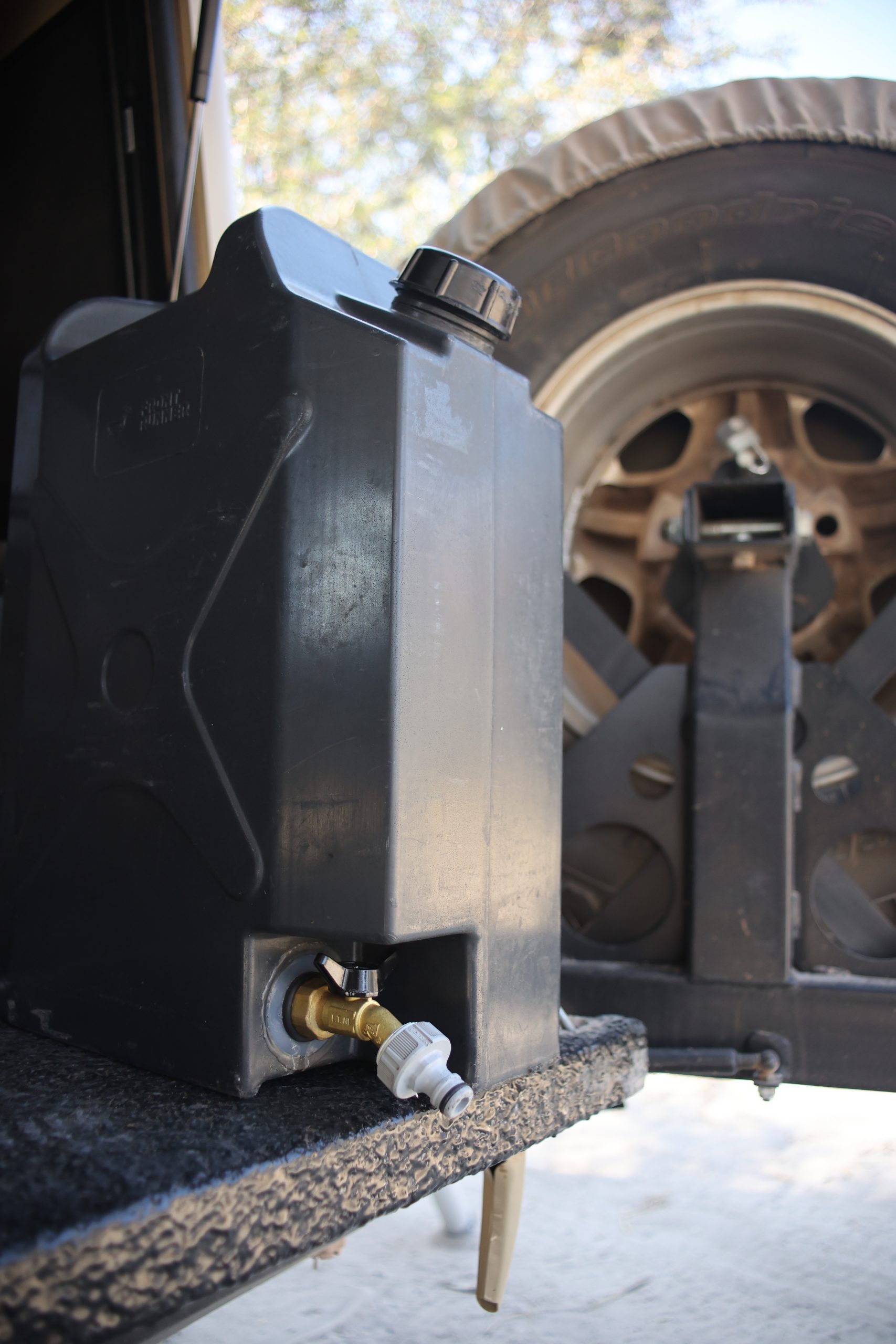
As a luxury item we installed Bushtech’s kitchen insert into the canopy to keep our lives organised. We made our own carpeted footprint cut-outs of our most-used items to keep everything in its place and as a bonus we get to play a fit-the-shape puzzle every day and relive our pre-school days. We also mounted a cutlery roll to the back of the kitchen to be permanently and easily accessible. Accessed from the back we have our trusted Engel 45L freezer, the Cruiser of camp fridges as far as we are concerned. This guy has shaken, rattled and literally rolled (once, onto its head) for more than 20 years and is still going strong. We keep it simple and avoid any fancy railed drawer systems that attract further weight and potential issues. Our pantry comes in the form of two state of the art Westpack plastic drawer racks that work perfectly. We carry a 50-liter Outdoor Warehouse water container between the wheel arches, fed via good old gravity and a homemade hose and tap system to the back. In addition, a 20 liter plastic jerry can with integrated tap tops this up for when we need more water carrying capacity. Two 3kg Cadac gas bottles ride within easy reach and last us about 8 weeks at a time. We carry a simple aluminium Bushtech table that slides into otherwise unused space directly under the canopy roof. Our outspanning setup is rounded off by Natural Instincts director’s chairs that fold neatly, looks neat and is amazingly comfortable next to the fire under a million stars.

12. Tetris is a thing

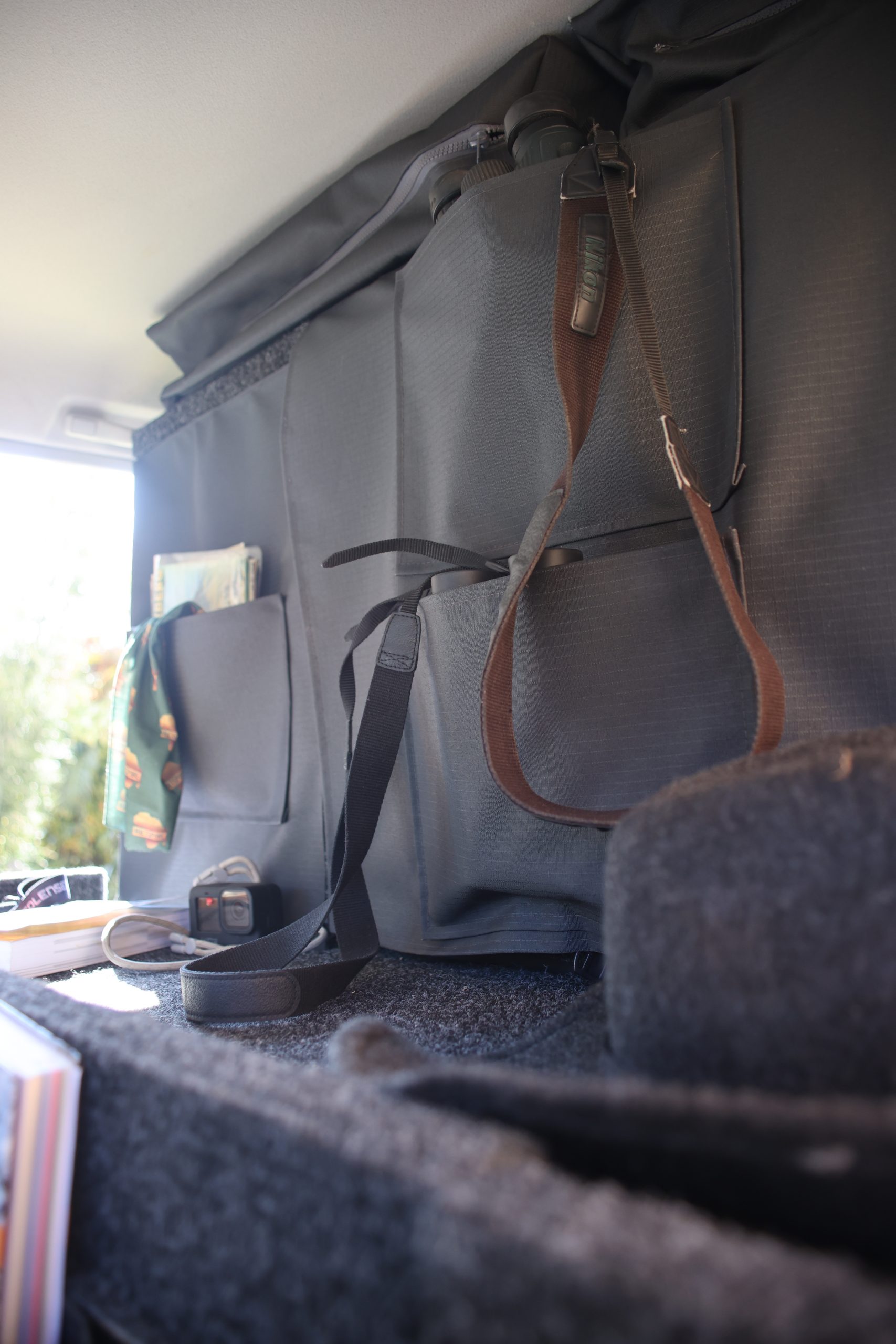
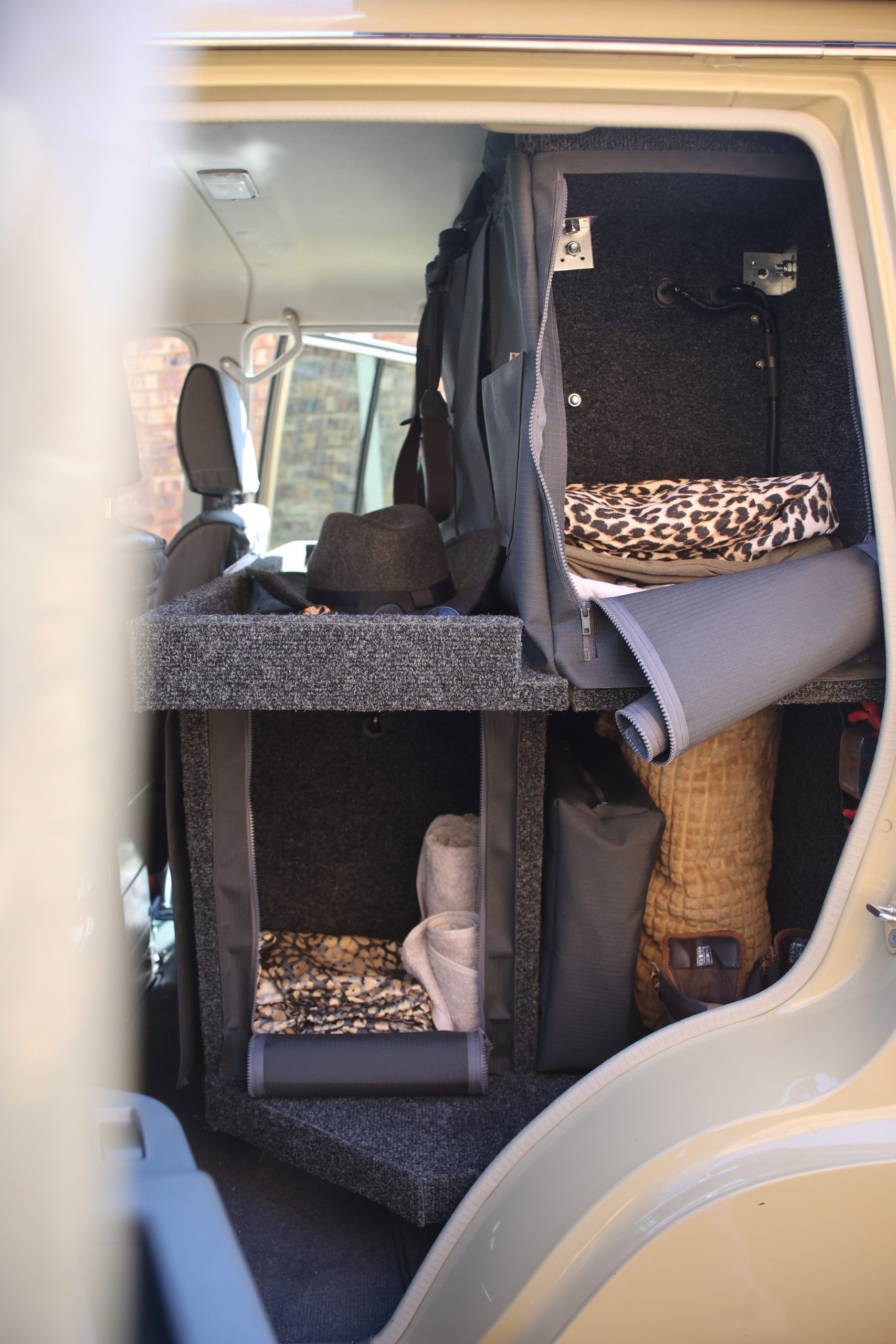
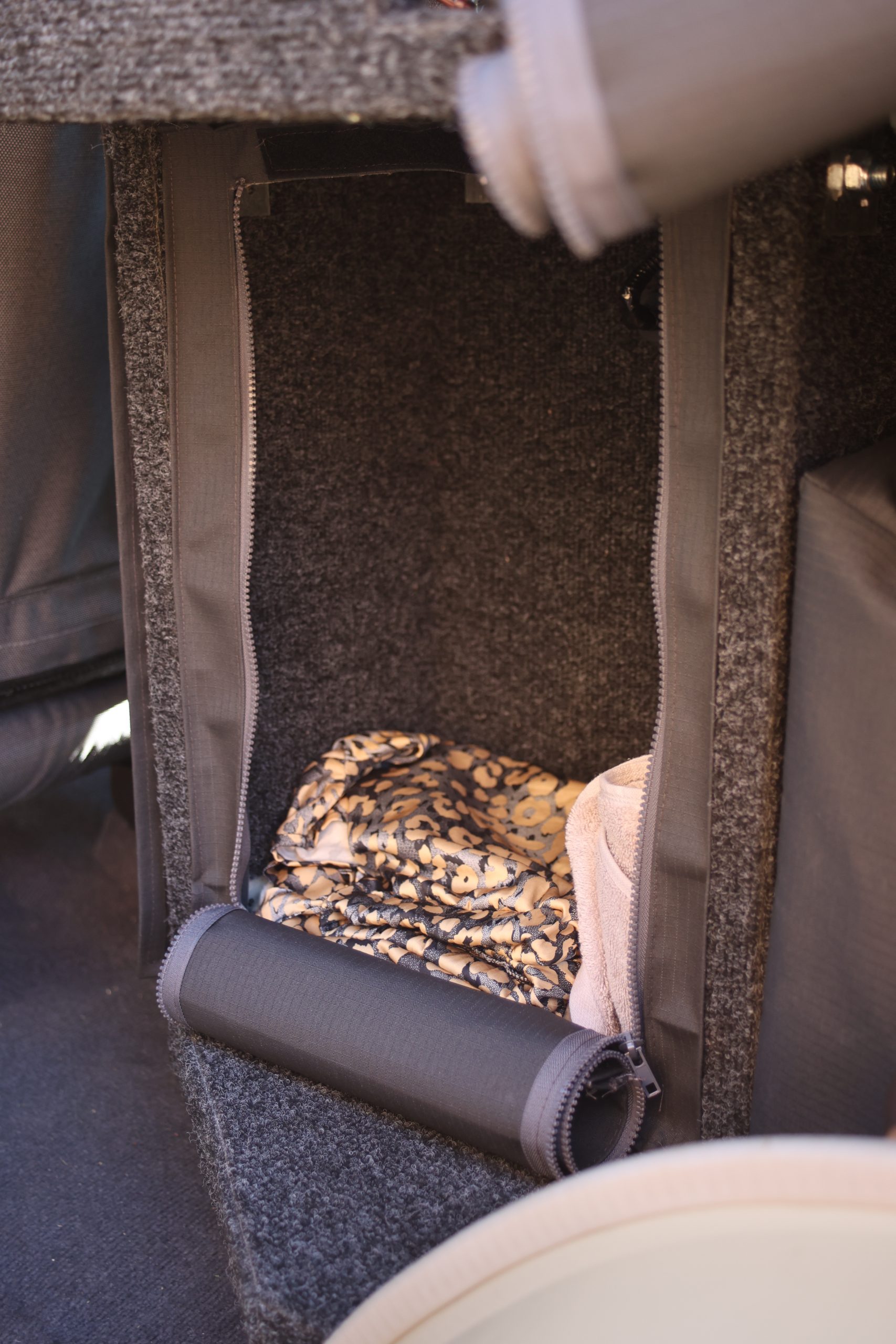
Nowhere is space more valued than in an overlanding Cruiser. Even after an item has passed our test of having at least three uses, it must still find a home. Baloo’s canopy space is organised efficiently by the use of Bushtech’s rifle box and rails (we dubbed it the vark troggie) that fits six ammo crates neatly on top of it whilst still providing space underneath. We decided to make our own interior living space by removing the double cab’s back seats and then designing, modelling and building our own decked DIY backseat cupboard. After roughly one thousand design iterations, we settled on the final version that effectively uses the space volume and includes sizable and lockable sub compartments for clothes, books and gear, as well as various 12V power points run from the auxiliary battery. We used laminated pine and covered it with vehicle carpeting, bolted them together with (118) angle brackets, and rounding it off with homemade zipped ripstop covers with various pockets for loose tjirtsies such as sunglasses, caps, torches and last-minute cookie jars. After adding a multi-pocketed dashboard cover, removable backseat covers for toiletries, and pocketed Caprivi seat covers we can safely say we are close to exhausting every usable cubic centimetre Baloo has on offer.  

13. No Eskom no problem

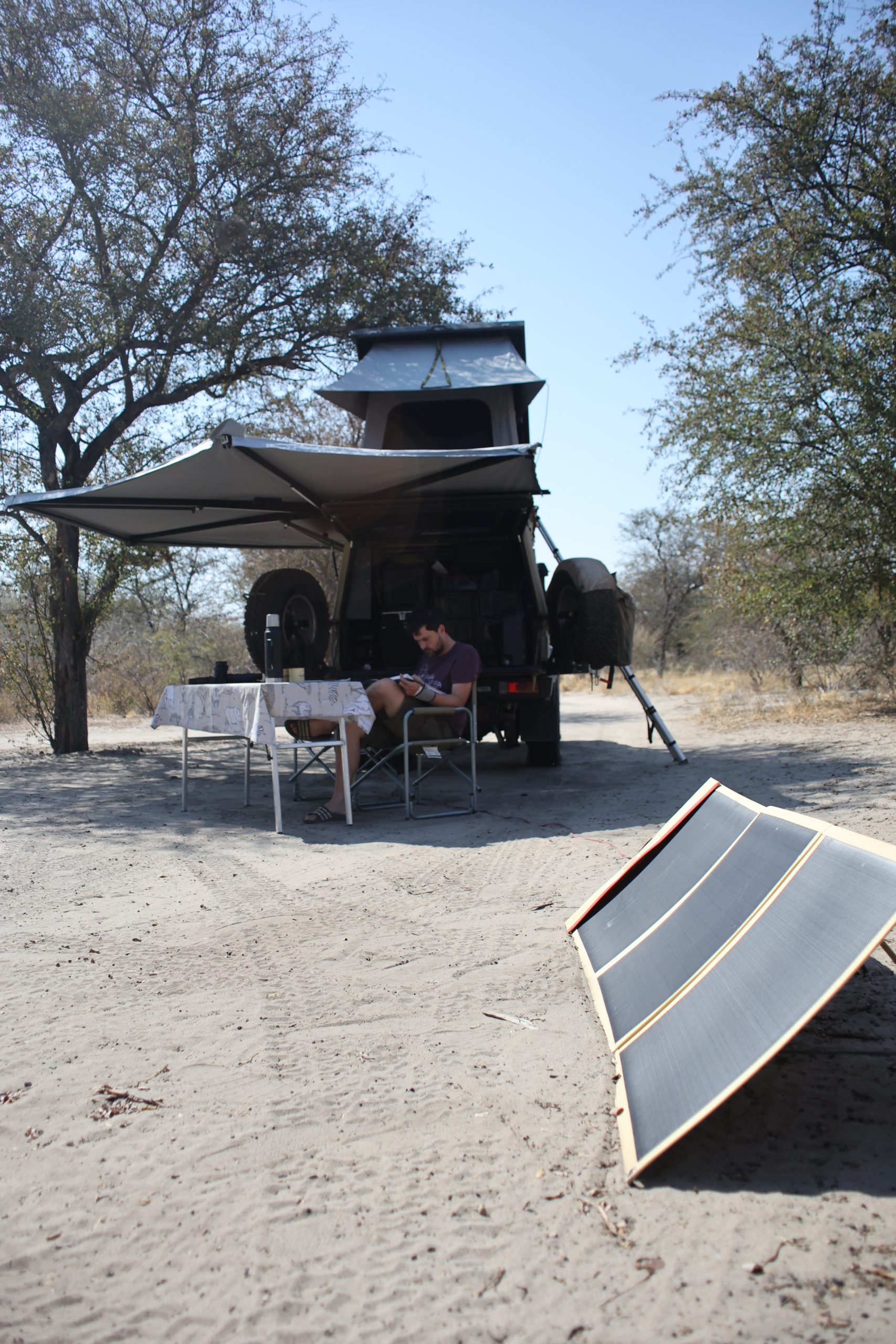
After dabbling with various ways of running our fridge and occasional auxiliaries over time, we installed the National Luna 25A Green Box a few years ago. Housing a standard auxiliary deep cycle battery, it has an integrated DC-to-DC charger that keeps the battery topped up correctly from the alternator (via the main battery) when driving. It also has a built-in regulator for direct solar power input. Its simplicity of use is a pleasure. We run our fridge directly from it, as well as various fused extensions for small power use. We try to keep things 12V as far as possible, charging all electronics directly from 12V points with suitable step-up transformers. When absolutely needed, we carry a 300W portable inverter to complete the band and add some AC to the DC so to speak. To keep our battery happy when we stand for too long, we use a FlexoPower 150W Namib portable solar PV panel.     

14. Gearing up and heading out

We use gear that has served us well over years on our adventures. If any of these brands read this and would like to give us free things to reward our loyalty, we will be willing to oblige under protest. We use Canon camera equipment and Sigma and Canon lenses when dabbling with photos. Our humble video skills are being expanded with the GoPro Hero 9 and DJI Mini2 drone. We discover the world of birds using Canon and Nikon binoculars as well as the Roberts Bird app. Similarly, the South African Tree app helps us identify the most beautiful plants and trees around us. Our hiking arsenal consists of well-travelled security guard boots, the Gaia GPS app, various bits and bobs and a Naturehike hammock and sleeping bags. Our fly fishing gear includes various 3-9 weight rods from TFO, Stealth and Explorer, reels by Shilton and Explorer, a range of Scientific Anglers and Rio fly lines in various sink rates and tapers, and a plethora of flies under continuous development from the vice or stolen from friends. Our coffee addiction is fuelled by AeroPress. Lastly, since our musical escapades are kept up to date on the road, Deo uses Vic Firth drumsticks and practice pads while Simoné uses a ukulele named Franklin.

15. The experts

We cannot complete a write-up on Baloo without acknowledging the experienced folks that we consulted in the process and helped realising our dream vehicle. Our friends Retief and Desireé van der Reyden of Wild Dog Photography listened to our many questions and kindly offered their tried-and-tested advice from the field. The larger fitments were done by the experienced workshop at the Voetspore 4×4 centre. Simoné’s parents kindly sweated with us to build our bulletproof backseat cupboard system. Kourt from Tyremart Centurion sourced and fitted our tekkies efficiently. Our own branding designs were printed and beautifully applied by Silver Signs. Lastly, a huge thank you to everyone not named who offered their advice and assisted us throughout the process.

There is no such thing as the perfect setup. There is however such a thing as a setup that makes you happy doing the things you love. We hope our humble gear rundown answers some questions or offers a slimmer of inspiration to those thinking of seeking their own wonder out there.

Look for the bare necessities, the simple bare necessities, forget about your worry and your strife.

PAID PARTNERSHIPS:

We are really excited to be in partnership with Foam Factory for our custom RTT high-density mattress, memory foam pillows and adventure foam products!

To find out more about Foam Factory or Driftaway Beds and the products they offer, visit their websites here:

www.foamfactory.co.za

www.driftawaybeds.co.za

Or find them on social media!